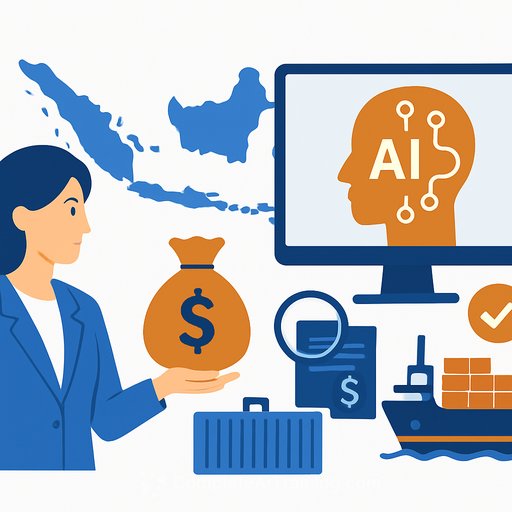
3 Ways AI Transforms Accounts Receivable Into a Leading Indicator
Traditional accounts receivable (AR) processes often rely on manual effort and focus on past due invoices, making them lagging indicators of financial health. However, artificial intelligence (AI) is changing this by providing real-time insights, predicting late payments, and generating dynamic risk scores. These capabilities help finance teams manage cash flow proactively, reduce bad debts, and customize credit and collection strategies.
From Manual to Real-Time Insights
Most companies still depend on monthly aging reports that categorize overdue invoices by days past due and use static credit scores. This method is slow, often inaccurate, and offers little foresight into customer payment behavior. Additionally, AR reports are usually isolated from broader business intelligence, limiting their usefulness in forecasting or understanding why payment patterns vary.
AI changes this by analyzing both structured data—like past payment patterns, invoice amounts, and contract terms—and unstructured data, such as customer email sentiment and dispute history. This approach allows companies to spot anomalies and shifts in customer behavior early, providing a dynamic risk score for each invoice or customer in real time.
Predicting Late Payments Before They Occur
AI-powered machine learning models integrated with enterprise resource planning (ERP) systems can forecast the likelihood of late payments even before invoices are issued. This predictive ability lets finance teams prioritize collections efforts and adjust credit limits or payment terms proactively.
Such AI models detect subtle signals that traditional rule-based systems might miss. For example, a customer who usually pays on time but suddenly delays payments or submits partial payments with unusual references may indicate financial or operational issues. By grouping customers according to behavioral patterns—such as consistent slight delays or frequent disputes—companies can implement targeted collection strategies that balance effort and relationship value.
Strategic Benefits for CFOs and Finance Teams
Integrating AI into AR shifts finance functions from reactive to strategic. Early detection of deteriorating payment behavior helps reduce bad debt write-offs and align credit exposure with real-time customer health indicators. This visibility is essential in B2B settings, where a small number of clients often represent a large portion of receivables.
Despite these advantages, many organizations have not yet fully automated their AR functions. Data shows that 83% of firms still rely heavily on manual processes. Those who adopt AI-driven AR stand to improve working capital management, investor reporting, and supply chain continuity significantly.
- Gain real-time, predictive visibility into accounts receivable
- Forecast late payments and generate dynamic risk scores
- Customize credit and collection strategies based on customer behavior
For finance professionals looking to advance their knowledge in AI applications for finance, exploring specialized courses can be valuable. Resources like Complete AI Training’s courses for finance professionals offer practical guidance on integrating AI technologies effectively.
Your membership also unlocks: