How AI Enhances Narrative Summary Quality: The Future of Legal Documentation
If your case hinges on medical records, you know the grind. Hundreds of pages, scattered notes, and timelines that don't line up. AI narrative summaries clean that up fast - clear, structured, and built for decisions.
What an AI medical narrative summary delivers
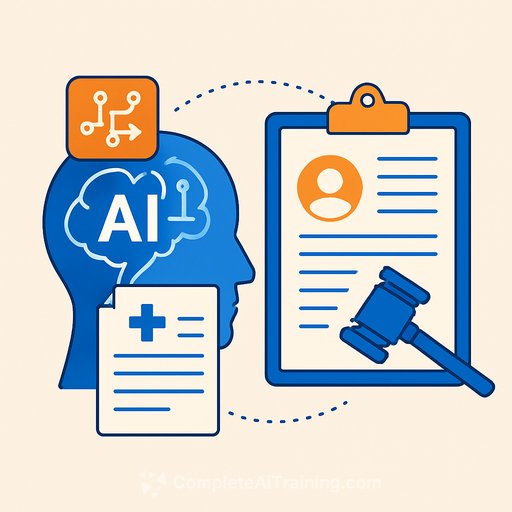
AI turns fragmented medical records into a single, organized report that's easy to scan. You see what happened to the patient, when it happened, and which treatments followed. That clarity feeds stronger case theories, sharper negotiations, and tighter trial prep.
Why it matters for law firms
- Consistency and accuracy: AI flags key facts, cross-checks conflicting entries, and builds a coherent timeline so small errors don't snowball.
- Speed: Work that used to take days or weeks can be processed in hours, which keeps matters moving and clients informed.
- Cost control: Less manual review means leaner budgets without sacrificing quality.
- Signal over noise: Summaries surface the facts that impact liability, causation, and damages, so your team spends time on strategy, not sifting.
- Reliability for legal use: Structured outputs, citations to source pages, and timelines that hold up to scrutiny.
For law-specific resources and best practices, see AI for Legal.
Human oversight is non-negotiable
AI speeds the heavy lifting, but professionals finalize the work. Attorneys and medical experts review the output, add context, and confirm that the summary meets court standards. Protect client data with HIPAA-compliant handling and clear access controls.
For reference on privacy obligations, see HIPAA guidance from HHS here. On professional responsibility, the ABA's Model Rule 1.1 comment on tech competence is worth a look.
Practical workflow you can implement this quarter
- Centralize records: EMRs, imaging reports, medications, and provider notes with Bates or source IDs.
- Run AI summarization to produce a timeline, key events, diagnoses, procedures, and medications with source citations.
- Have counsel and a medical expert validate the timeline and annotate pivotal facts tied to claims and defenses.
- Export a summary with page references, definitions of medical terms, and a short memo on methodology for defensibility.
- Apply a QA checklist: date accuracy, causation links, treatment gaps, pre-existing conditions, and conflicting entries.
- Log every revision for an audit trail. Keep PHI access scoped on a need-to-know basis.
Results you can expect
Matters move faster because your team gets to the facts sooner. You spend less on manual review and more on case strategy. Clients feel the difference in pace and clarity.
What's next for narrative summaries
Expect higher fidelity timelines, better reconciliation of conflicting notes, and tighter integration with case management tools. Outputs will become more specific to each case and easier to defend with clear source trails.
Vendors worth your attention
LezDo TechMed is recognized for AI medical narrative summary solutions that law firms, attorneys, and insurers use to streamline work. Their reports aim to be clear, concise, and reliable so teams can handle complex matters efficiently.
- Evaluate vendors on: citation traceability, HIPAA compliance, encryption, and audit logs.
- Check export formats (PDF/Word), redaction tools, and support for Bates ranges.
- Ask about deployment options (on-prem/VPC), conflict checks, and support SLAs.
Build team capability
If your attorneys and paralegals need practical AI skills for casework, explore role-specific training here. A few focused hours can save dozens later in the litigation cycle.
Bottom line: AI makes medical narrative summaries faster, clearer, and more dependable - while human review keeps them courtroom-ready. Put the two together and you get better outcomes with less drag on your team.
Your membership also unlocks: