What Will AI’s Impact on Software Development Look Like in 2025?
Artificial intelligence (AI) has already changed software development in many ways, and by 2025, its influence will be even more pronounced. The integration of AI into development workflows is reshaping team structures, required skills, and daily processes. This article breaks down the key changes AI has brought to the field and what software professionals should focus on to stay relevant.
How AI Has Transformed Software Development
AI’s role in software development has shifted the focus of many tasks and job descriptions. While AI tools have automated routine coding and testing work, they have also pushed developers to concentrate on higher-value activities like architecture and system design. However, this shift comes with challenges, including the risk of over-dependence on AI-generated solutions.
Code Generation and Assistance
AI-powered code generation tools such as GitHub Copilot and Amazon CodeWhisperer allow developers to convert natural language prompts into functional code quickly. In 2024, around 80% of developers used AI to assist with coding tasks, speeding up implementation and reducing repetitive work.
Despite these benefits, some developers report a decline in deep technical understanding, a phenomenon sometimes called “implementation amnesia.” This happens when reliance on AI suggestions replaces building a mental model of the system. Experienced developers who combine AI assistance with strong foundational knowledge remain vital for delivering high-quality software.
Testing and Quality Assurance
AI has also transformed testing by automating test case creation, detecting edge cases, and maintaining test suites with minimal human input. Tools like Mabl, Testim, and Applitools leverage machine learning to spot subtle UI changes and regressions rapidly.
Some advanced AI testing solutions use reinforcement learning to explore application states and find critical bugs before deployment, improving test coverage and reducing maintenance costs. Still, teams that rely solely on automated testing without proper verification risk false confidence in their systems. Combining AI tools with expert human judgment produces the best results.
Architecture and Design
AI’s arrival has increased the importance of solid software architecture and design. As AI simplifies implementation, organizations now spend more time refining system design, interface definitions, and architectural boundaries.
While AI can analyze data and monitor metrics to support decision-making, it’s not yet capable of validating architectural choices independently. This gap means developers and architects must remain deeply involved to ensure systems are well-structured and scalable. According to industry leaders, AI can accelerate development cycles by helping allocate resources more effectively, reducing costs and risks.
The Rise of AI-Focused Roles
AI has created new job roles within software development teams. Positions like generative AI prompt engineers, workflow architects, AI code auditors, and technical debt analysts are emerging to manage the complexities introduced by AI tools.
AI literacy is now among the fastest-growing skills companies look for. In some cases, AI automates tasks that previously required multiple roles, causing responsibilities within teams to merge or shift. For example, product marketing managers and product managers may converge as AI handles many marketing-related tasks, requiring deeper integration with product teams.
Preparing for the Future: Upskilling and Collaboration
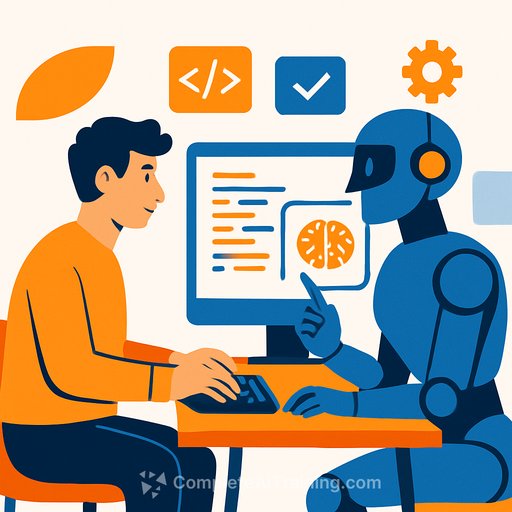
Successful software professionals will combine human expertise with AI efficiency. This hybrid approach not only improves productivity but also enables the creation of innovative solutions that push software capabilities forward.
Developers should focus on adapting their skills to complement AI tools, emphasizing strategic thinking, architecture, and complex problem-solving. The creativity and insight of human developers remain irreplaceable, even as AI becomes a standard part of workflows.
For those looking to build or expand AI skills relevant to software development, exploring targeted courses can be a practical step. Resources like Complete AI Training’s latest AI courses offer relevant learning paths tailored to current industry needs.
Your membership also unlocks: