Is the Art Trade Facing an A.I. Industrial Revolution?
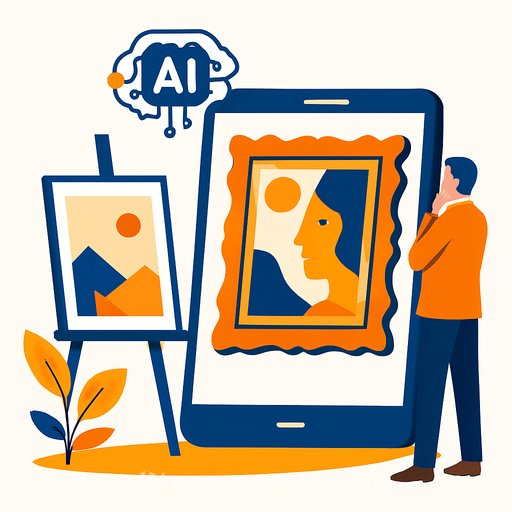
Art firms were slow to embrace the digital era. Now, with A.I. adoption accelerating in nearly every sector, the question is whether the art market can adapt quickly enough to thrive in what’s being called the “agentic era.”
According to a recent PwC survey of 300 senior U.S. executives, 88% plan to increase A.I. budgets within the next year, and 79% have already integrated A.I. agents into their operations, reporting measurable productivity gains. The art industry, despite only recently going online widely, is catching up fast.
From Passive Tools to Autonomous Agents
The shift from using A.I. as a passive tool to deploying autonomous agents capable of decision-making with minimal human input is underway. Martina Batovic, a former auction executive turned tech professional, highlights this shift during a recent conference.
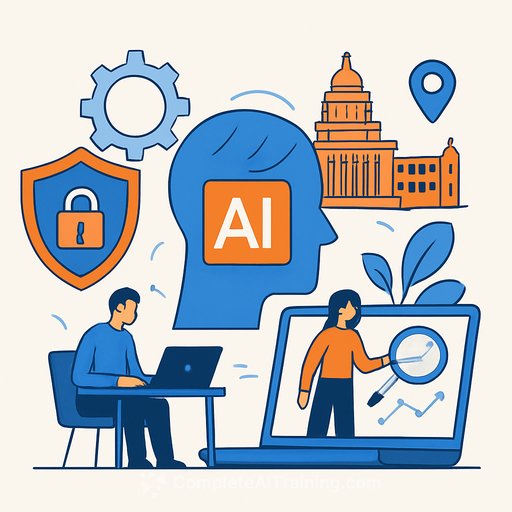
Art staff are embracing user-friendly large language models (LLMs) like ChatGPT and Google’s Gemini, alongside design tools such as Gamma and Canva. However, many firms lack formal policies on A.I. use. Confidential data entered into LLMs can become part of the AI’s knowledge base, posing risks for an industry that values discretion.
Meanwhile, operational improvements are visible. For example, Convelio uses A.I. for price-quoting and inventory management, making logistics more efficient. Carpenters Workshop Gallery is partnering with Convelio to overhaul shipping and storage — signaling a major operational shift supported by A.I. solutions.
Handling Data in a Private Market
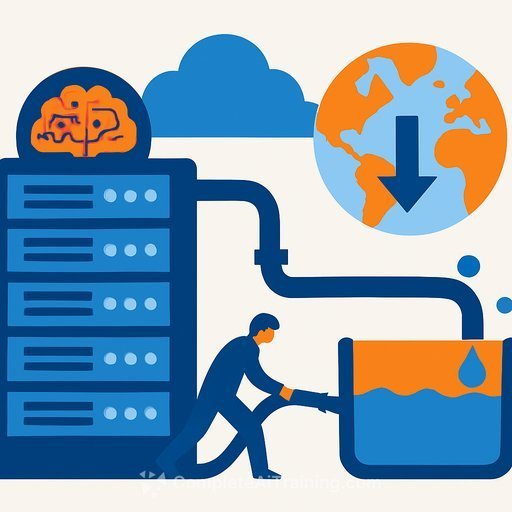
The art market’s private nature complicates training A.I., which thrives on large public datasets. One key resource is the Artnet Price Database, a massive repository of art sales data. Firms use A.I. tools here to synthesize market data and user intent, delivering smarter, conversational search results.
Artnet is developing an A.I. assistant based on Google’s Gemini, expected to launch later this year. It will suggest artworks based on user prompts, offering a more intuitive discovery experience. Operationally, A.I. also speeds up data cleaning for the Price Database, a task that is time-consuming when done manually.
Consumer-facing A.I. applications are also emerging. For instance, Art Basel’s app, built with Microsoft, debuted last year. Collector Jorge Pérez reportedly used it to assist in acquiring 24 works worth over $600,000 at Art Basel Basel. He describes A.I. as a tool providing data to inform, but not replace, his personal choices.
What This Means for Operations Professionals
The rise of A.I. and big data tech may be as transformative as the Industrial Revolution, according to a 2024 report from Columbia Business School. It’s driving innovation and efficiency but also causing job shifts and rethinking of value creation and control.
The art trade historically resisted major operational changes despite advances in transport and communication. Even the internet era didn’t fully alter how art is sold. Now, the real change is in how information is shared and used.
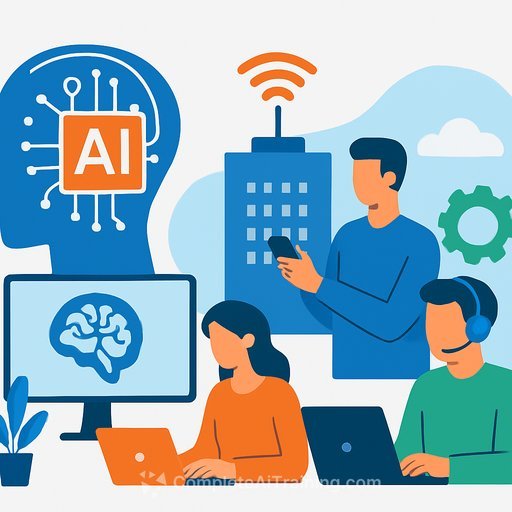
For operations teams in art firms, this means embracing A.I. tools that can automate logistics, improve inventory management, and enhance market intelligence. It also means establishing clear policies to protect sensitive data and maintain client trust.
Taking bold steps to integrate A.I. now could be the difference between staying relevant and falling behind. For those interested in upgrading their skills to meet these challenges, exploring relevant A.I. training courses can provide practical knowledge and tools needed in this evolving landscape.
Your membership also unlocks: