AI moves from pilots to day-to-day at BHP
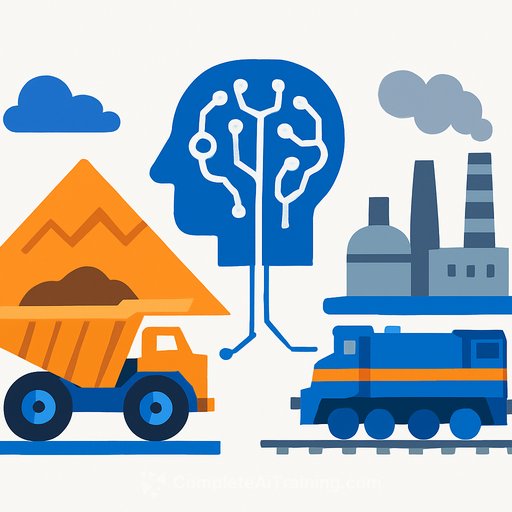
Artificial intelligence is now part of how BHP runs its operations. The company is applying it where it matters: safer teams, steadier plants, and more predictable throughput as demand for critical minerals rises.
"AI is no longer a future concept for BHP; it is increasingly part of how we run our operations. Our focus is on applying it in practical, governed ways that support our teams in achieving safer, more productive and more reliable outcomes."
Where it delivers value across the value chain
- Exploration: AI and advanced analytics review decades of geological data plus new inputs to flag targets earlier and with higher confidence. People still make the calls; the tools cut time and risk.
- Processing: At Escondida, live and historical data feed digital models so operators can test changes virtually before touching the plant.
- Reliability: Computer vision spots spillage, oversize, or foreign objects on conveyors, crushers, and rail loading systems in Chile and Western Australia, triggering alerts or automatic responses to avoid damage and downtime.
- Safety in the field: A voice-to-text mobile app lets employees log hazards on the spot. Entries are geotagged, linked to historical incidents, and turned into quick risk assessments so teams can act sooner.
- Governance and scale: As data quality and platforms improve, proven approaches are shared and extended with clear accountability.
Why operations leaders should care
- Faster, better decisions: Combine historical context with live conditions to set the right plan now, not after the shift.
- Variability under control: Changes in ore type and hardness are inevitable; AI helps stabilize plant response and hit targets more consistently.
- Less unplanned downtime: Early detection reduces damage, clears bottlenecks, and keeps material moving.
- Safer work: Lower exposure to high-risk interventions with timely alerts and automated safeguards.
- Repeatable wins: What works in one site propagates across the network under strong governance.
How it plays out on site
Exploration: Tools sift through historical and current geological data to surface patterns humans would miss at scale. Geoscientists get a shorter list of higher-quality targets and more time for the fieldwork that counts.
Processing plants: Natural variability-especially ore hardness-can disrupt flow. Digital models at Escondida help teams try scenarios virtually, understand how the plant will respond, then apply changes with fewer surprises.
Reliability and logistics: Using existing cameras, computer vision monitors conveyors, crushers, and rail loading in real time. The system flags issues early and can trigger predefined responses to protect equipment and throughput.
Frontline safety: The hazard logging app lowers friction to report, geotags the location, and ties it to incident history. The result is faster prioritization and tighter controls where they're needed most.
What BHP is seeing
BHP has been applying AI for several years, and adoption is growing as data quality, platforms, and internal capability improve. Teams are sharing what works and rolling out proven solutions with clear ownership.
"AI is helping us understand our operations in new ways and act earlier, with greater confidence. What excites us is the scale of opportunity ahead as we continue to apply these tools responsibly - learning, improving and expanding what's possible across our operations."
Next steps for your operation
- Start with a clear problem: variability, downtime, or safety reporting. Measure baseline performance first.
- Leverage existing data and infrastructure (cameras, historians, CMMS) before buying new systems.
- Pilot, document outcomes, and set governance early: data ownership, model monitoring, and change control.
- Standardize successful use cases and scale them with training and accountability.
If you're building capability for your team, explore the AI Learning Path for Data Scientists at Complete AI Training.
Your membership also unlocks: