How ChatGPT Health will change medical guidance and patient conversations
Image credit: Heng Yu/Stocksy
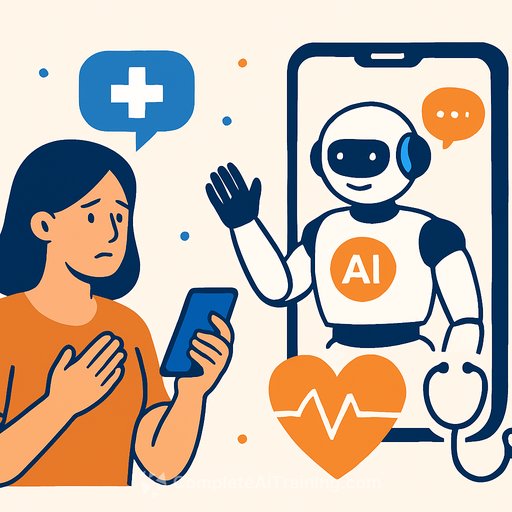
OpenAI's ChatGPT Health focuses the general chatbot on health and wellness questions. The move reflects a simple reality: people are already asking AI about their symptoms, labs, and next steps. Access is increasing. The challenge is making that access accurate, equitable, and responsibly used.
David Liebovitz, MD, an AI-in-medicine expert at Northwestern University, offers a useful lens for healthcare professionals. His take: the tool can raise the floor for patient preparation while adding new work for clinicians-verification, context-setting, and expectation management.
What this means for clinicians
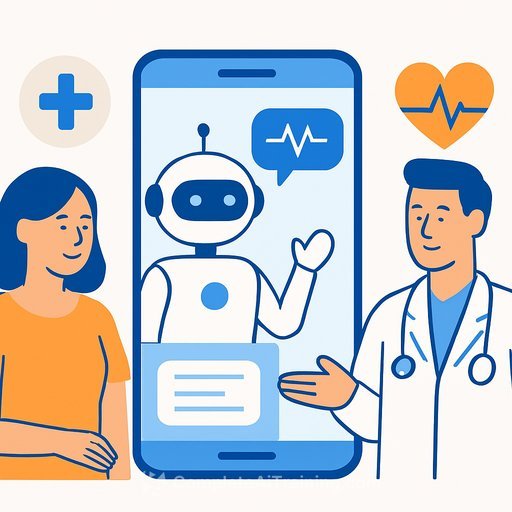
Patients may show up better prepared-lab trends summarized, questions prioritized, care gaps surfaced. That can shift visit time toward values, preferences, and shared decisions. It's an upgrade from scattered search results or no preparation at all.
The risk is overconfidence. Some patients will treat AI-generated output as equivalent to clinical judgment. Expect to validate inputs, correct misconceptions, and spot context the model missed.
How to talk about it with patients
Affirm the value, set boundaries. Try: "It's useful for organizing questions and learning basics. It doesn't replace a physical exam, your history with me, or clinical judgment." Avoid dismissing their effort-use it as a springboard. When something is off, turn it into a teachable moment.
A safe-use playbook you can share
- Preparation, not diagnosis: Use it to define terms, track patterns, draft questions, or flag gaps. Do not rely on it to decide what's wrong, predict outcomes, or pick treatments.
- Always verify: Any output that could change a decision is a soft suggestion until your care team reviews it. Helpful nuggets can be buried in noise.
- Know the privacy trade-offs: ChatGPT is not a HIPAA-covered entity. Sensitive topics (reproductive health, mental health, substance use, HIV status, genetics, legal matters) carry extra risk.
Reduce misunderstandings before they start
The biggest misconception: an AI response equals a second opinion. It doesn't. Large language models generate plausible text; they don't weigh context like a clinician or reliably check truth.
Be explicit: the tool can summarize and find patterns, but it can hallucinate, miss nuance, and lacks the exam, the relationship, and the unspoken details clinicians catch quickly. Confidence in tone does not equal correctness.
Where it helps vs. where it falls short
- What's better: Coherent explanations instead of ten conflicting links; synthesis across sources; personalization to a patient's data (e.g., lab trends, potential interactions, visit prep).
- Where it falls short: Hallucinations, unreliable citations, no physical exam or social context, limited chart access, and optimization for plausibility-not accuracy.
The accountability gap
Clinicians answer to peers, licensing boards, malpractice systems, and reputation. AI does not. Today, the main recourse is a thumbs-down. That gap matters when advice steers care.
How patients will realistically use ChatGPT Health
- Pre-visit prep: "Summarize my recent labs, spot gaps, and help me organize questions."
- Post-visit clarification: "Explain what my clinician said and what to watch for."
- Ongoing check-ins: "Weekly reminders for to-dos and healthy habits based on my history."
- System navigation: "Compare insurance options" or "Draft an appeal for a coverage denial."
- Health basics: General education on established topics. New or changing symptoms should go to clinical care.
Privacy and legal risk, clearly stated
Many patients assume any health conversation is protected. It isn't. HIPAA covers plans, clearinghouses, and providers who transmit health data-not consumer AI tools. That means data shared with ChatGPT could be exposed through legal processes, despite stated policies.
For sensitive topics-especially reproductive care in restricted jurisdictions, mental health crises, substance use, HIV status, genetics, or anything tied to legal matters-urge caution and offer safer channels. For reference, see HHS guidance on covered entities.
Five-year outlook for the patient-doctor relationship
Expect AI to become the background layer of care: documentation, history surfacing, and risk flags. On the patient side, persistent assistants will help track, interpret, and prepare. The core-trust, judgment, and shared decisions-remains human.
Clinicians who work with AI-assisted patients will have deeper conversations in less time. Those who refuse the conversation may see patients keep their AI use private-or seek care elsewhere. The infrastructure is coming fast via standardized APIs under the Cures Act; see the ONC Cures Rule overview.
Practical steps for clinics right now
- Set expectations: Publish a short policy on acceptable AI use by patients and staff.
- Add consent language: Document that third-party AI tools are not HIPAA-covered and advise against sharing sensitive details.
- Build a review workflow: Decide who scans AI outputs patients bring, how to verify, and how to correct without shaming.
- Triage for risk: Direct mental health crises, reproductive questions in restricted jurisdictions, and legal issues to secure channels.
- Template smart phrases: Quick scripts for "what AI got right," "what's inaccurate," and "what we'll do next."
- Train the team: Short sessions on LLM strengths/limits, privacy, and bias. Make it routine and consider curated ChatGPT training resources for staff.
Bottom line
ChatGPT Health can make visits more efficient and patients more engaged. It can also inject false confidence and privacy risk. Treat it like a capable intern: helpful when supervised, risky when it acts alone.
Want structured upskilling on clinical AI and prompt strategy? Explore curated programs and ChatGPT training resources.
Your membership also unlocks: