
AI news ·
How COVID-19 Accelerated Responsible AI Innovation to Revolutionize Healthcare Delivery
The COVID-19 pandemic accelerated healthcare AI innovation, enhancing clinical decisions and resource management. Responsible, transparent AI is key to future success.
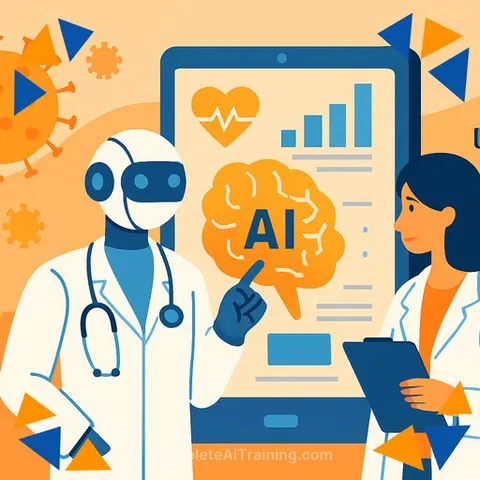
The Impact of COVID-19 on Healthcare AI Innovation
Five years ago, the COVID-19 pandemic shifted the global healthcare landscape in profound ways. It accelerated advancements in healthcare AI, pushing us to solve new challenges with innovative approaches. These developments led to smarter AI algorithms and improved systems that provide deeper insights into patient demographics, support better clinical decisions, and create efficiencies in resource and cost management. The result benefits both patients and healthcare providers.
As leaders in AI for clinical decision support and population health, we continue to face persistent challenges, especially around patient access and resource capacity. This includes funding, staffing, and adopting new technologies that shift care and engagement earlier in the patient journey to improve outcomes and community wellness. The pandemic taught us how to use AI responsibly to extend resources, personalize communications, and deliver measurable impact at local and national levels.
Today, those lessons drive a new wave of AI innovation heading into 2025. While enthusiasm for AI’s potential remains high, healthy skepticism and evolving regulations at state and federal levels aim to protect providers and patients while encouraging innovation. AI is advancing at an unprecedented pace, and responsible, transparent applications are proving their value in healthcare.
Principles of Successful AI Innovation
Experience over the last decade, especially during the pandemic, shows that successful AI in clinical settings rests on transparency and trust. Transparency builds trust and quality, anchored by four core elements that guide AI development and deployment.
By focusing on foundational AI technologies and processes, healthcare organizations can scale responsible AI solutions to address specific clinical and population health needs. Transparent and ethical AI enhances clinical decision-making, enables personalized patient engagement, optimizes resource use, and informs policy. But beyond the technology, a clear governance process is essential for success and sustainability.
Here are key principles refined from years of experience:
- Define a clear problem: AI should solve a real issue or augment existing processes. Without a clear goal, it’s just interesting math.
- Build a multidisciplinary team: Success requires collaboration from day one, including an engaged clinical lead who understands frontline needs and possibilities.
- Prioritize data quality: More than half the effort should go into sourcing, curating, validating, and analyzing data from multiple systems. Data is the foundation of any effective AI model.
- Follow a stage-gate process: AI development demands patience and transparency at every step to build trust and ensure quality before deployment.
The pandemic reinforced these principles, which continue to guide AI projects today.
Responsible and Trustworthy AI
AI’s potential in healthcare is vast. It can improve clinical decisions, enable personalized medicine, and build connected care networks that address patients’ full needs. But with this power comes responsibility. The primary focus must remain on improving patient outcomes.
Efforts to eliminate biases, protect data privacy, confidentiality, and security are critical. At the heart of responsible AI is transparency—making sure AI systems are understandable and accountable.
The challenges posed by COVID-19 pushed the healthcare community to innovate at speed. Moving forward, it’s vital to build on those advances and continue integrating AI thoughtfully into clinical and community health programs. The future will bring rapid innovation. Viewing AI as a tool to improve care, increase efficiency, and personalize patient engagement will be key to success.
For healthcare professionals interested in deepening their AI knowledge and skills, exploring targeted training can provide practical insights and tools to apply AI effectively. Resources such as Complete AI Training offer courses designed for healthcare roles focused on AI applications and innovation.