How Gen AI Can Triple Your Client Servicing Capacity
14 July 2025 | Intermediaries / Brokers | General
Account managers in South Africa’s top commercial insurance brokerages could soon manage two to three times more clients if generative artificial intelligence (Gen AI) is fully adopted. This insight came from the recent #InsureTalk online event, highlighting a major shift in client servicing capabilities.
Change Is the Only Constant
Soul Abraham, Chief Executive: Retail Insurance at Old Mutual Insure, shared his perspective on how technology is reshaping insurance, focusing on intermediated commercial and personal lines. With nearly two decades in intermediated insurance and working for a company with a 180-year legacy, his insights carry weight.
Abraham framed technological progress as a series of industrial eras:
- First Industrial Era (1760-1840): Transition from manual labor to machine manufacturing, mechanizing textiles and steam engines.
- Second Industrial Era (1870-1914): Introduction of internal combustion engines, steel production, electricity, telegrams, and telephones.
- Third Industrial Era (1970-early 2000s): Digital age with computers, electronics, telecommunications, nuclear energy, and the Internet.
- Fourth Industrial Era (4IR): Current era dominated by AI, automation, big data, cloud computing, and robotics.
Rethinking Insurance Distribution
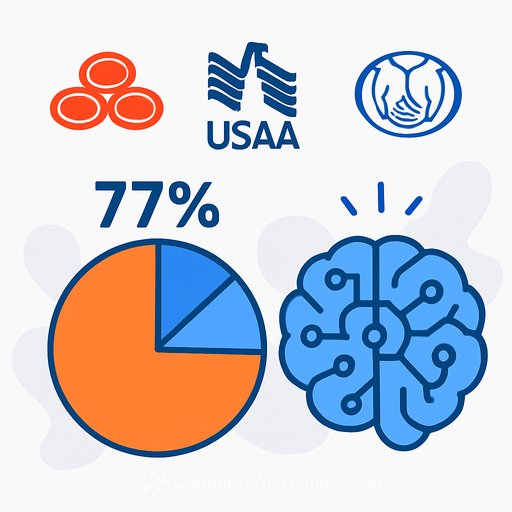
The Fourth Industrial Era has notably shifted how non-life insurance is distributed. Direct insurers have been gaining ground globally and locally since the mid-1990s. Abraham cited data showing the direct share of personal lines premiums rising from about 20% in 2007 to 47% today.
Customers are increasingly moving toward direct insurance options. Though personal lines often get labeled as commoditized, commercial insurance is not immune. Direct insurers have grown their commercial market share from about 4% in 2015 to nearly 12% today, excluding niche areas like Agri-crop insurance and large corporate accounts.
Abraham highlighted that generative AI, or large language models (LLMs), offer both an opportunity and a challenge to traditional intermediated insurance. He compared Gen AI’s learning process to a human’s full education journey compressed into a rapid, large-scale training involving massive data and complex parameters.
Instant Access to Knowledge
Unlike humans who absorb information slowly, Gen AI processes and retains vast amounts of data indefinitely. Abraham described LLMs as “super-powered auto-complete” systems capable of near-human interaction and far beyond typical chatbots.
He demonstrated this by using Google’s Gemini to request a detailed underwriting approach for a South African restaurant risk. The AI outlined the question, planned its research, gathered relevant data, and produced a report reviewed by senior underwriters who found minimal corrections needed. This example debunks the idea that commercial underwriting is too complex for AI or direct insurers to tackle.
Looking ahead, firms like Old Mutual Insure could license their own LLMs, embedding proprietary rating and underwriting knowledge to create specialized AI tools. Abraham warned that ignoring digital transformation risks accelerating the shift from intermediated to direct insurance across both personal and commercial sectors.
Relevance Is the Biggest Risk
The real threat isn’t that Gen AI will replace intermediaries, but that they might lose relevance by failing to keep up. Brokers and insurers must avoid falling behind in areas like pricing, risk modeling, and customer experience.
Clients already expect the seamless, personalized experience they receive from other AI-powered services. Meeting these expectations in insurance requires leveraging Gen AI to automate administration, improve fraud detection, tailor offerings, and enhance underwriting.
The path forward involves brokers and insurers working together to improve broker-led experiences and operational efficiency. This partnership can help the intermediated sector remain competitive and grow.
Gen AI Is Reshaping Insurance
As Abraham concluded, embracing Gen AI collaboratively could allow brokers to double or even triple their client base. The technology’s potential lies in increasing servicing capacity and improving the quality of client interactions. Ignoring these developments risks falling behind in an industry that’s already shifting rapidly.
For insurance professionals interested in adapting to AI advancements, exploring targeted training on AI applications can be a valuable step. Resources like Complete AI Training’s latest AI courses offer practical skills to stay competitive in this changing landscape.
Your membership also unlocks: