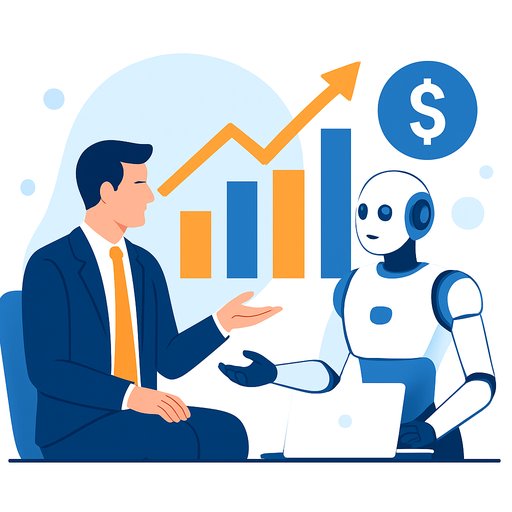
Delivering a More Personalised and Automated Expense Management User Experience
Generative artificial intelligence (GenAI) has captured significant attention since OpenAI’s ChatGPT launched commercially in late 2022. Its applications now span from generating software code and marketing content to creating smarter customer service chatbots. GenAI and large language models (LLMs) are set to influence digital transformation broadly, including in finance operations (FinOps) and expense management automation.
This article highlights the challenges GenAI faces in creating AI-driven insights for expense management and explains why LLMs will soon enable more personalised and automated user experiences in this area.
GenAI – A New Kind of Intelligence
AI and machine learning have been part of finance for some time, mainly focusing on analysing historical data and predicting numeric outcomes like fraud detection. GenAI differs by generating new content such as text, images, and videos. Models like Google’s Bard and ChatGPT, built on LLMs, understand and produce human-like language, making them promising for smarter, more personalised insights in expense management.
However, GenAI has limitations. It wasn’t designed for complex mathematical tasks. While LLMs can handle simple arithmetic, their accuracy declines with complex financial calculations. Since they identify language patterns rather than perform precise math, errors in calculations pose risks to financial data integrity in expense management automation.
Seeing Things That Aren’t There
Another issue with GenAI is the phenomenon called “hallucinations,” where the AI generates false or misleading information. This happens because the AI lacks true understanding of context or is trained on noisy data. In expense management, hallucinations can lead to inaccurate expense interpretations, duplicated entries, or even fabricated transactions, threatening data reliability.
Additionally, the quality and transparency of the training data matter. If LLMs are trained on datasets lacking financial or numerical depth, their outputs may be biased or suboptimal when applied to expense management.
Feeding the Machine
Using open-source or commercial GPT models like ChatGPT for expense management automation means less control over the training data. Often, the data is too broad or noisy for specific financial use cases. While large volumes of data are necessary, “drift” — changes in data patterns over time — can degrade model performance, causing tools like ChatGPT to lose accuracy.
Expense management systems also rely on internal company data for real-time tracking. Errors can occur if AI misclassifies transactions or reflects biases from the training process.
Compliance and Governance Issues
Expense data often comes from multiple sources, causing challenges like fragmentation, inconsistency, and accessibility problems. This can result in incomplete or inaccurate analyses.
From a compliance standpoint, many organisations hesitate to share real-time expense data with AI models that interact with public LLMs. Ensuring cloud-based software safeguards confidential financial information is critical.
The Future of GenAI and Expense Management Automation
Many enterprises remain cautious about fully adopting AI platforms due to imperfect outputs and potential financial or reputational risks. Still, responsible use of GenAI combined with traditional AI can enhance AI-driven insights and custom workflows in expense management.
Key success factors include prioritising data quality and maintaining human oversight. Building proprietary data models and controlling how GenAI handles financial data reduces errors and boosts reliability. This approach helps preserve data integrity and makes AI outputs trustworthy.
In our next article, we will explore both the challenges and the substantial potential of GenAI in expense management automation. We will discuss how addressing these challenges can lead to efficient and innovative solutions.
Your membership also unlocks: