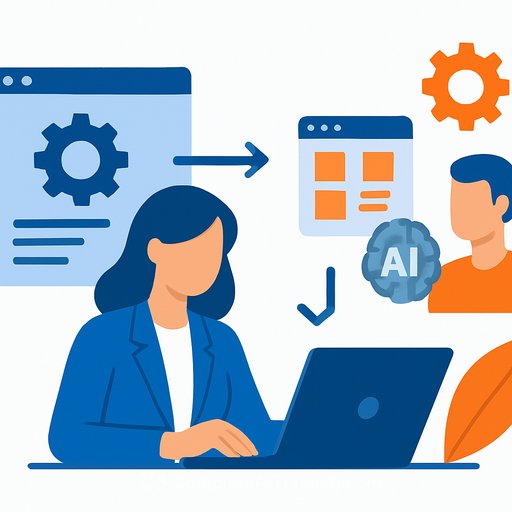
Security and Development Teams Should Work Together to Protect Data in the AI Era
As companies push forward with AI technology, balancing innovation with data protection has become critical. Developers face pressure to release new applications quickly, while security teams must safeguard sensitive information and ensure compliance. When these groups operate in silos, data leaks and policy oversights become common—and accountability often falls through the cracks.
The challenge intensifies with large language models (LLMs) and generative AI systems. These rely on huge, fluid datasets, making it difficult to track data in real time. Security teams are frequently involved only after development concludes, reducing their ability to prevent problems early.
The Challenge: Ensuring Security in an Unpredictable Environment
AI development magnifies the tension between speed and security. Developers need to deliver AI-powered products fast to support business goals. Often, privacy procedures are followed just enough to meet compliance requirements, and security involvement is seen as a roadblock to progress.
Security teams, on the other hand, must protect data throughout its lifecycle and enforce policies. This creates friction because developers are expected to fix security issues but often lack the tools or motivation to prioritize security over quick delivery. Meanwhile, security teams may not fully grasp AI development nuances, resulting in policies that slow innovation.
This disconnect leads to reactive security practices—issues surface too late, trust erodes, and collaboration breaks down.
DSPM: A Unified Approach to Data Security
Data Security Posture Management (DSPM) tools offer a practical solution. Instead of adding security as an afterthought, DSPM provides continuous visibility and control over data—no matter where it lives or how it moves across systems. This continuous monitoring is key in AI environments where data is constantly changing.
DSPM benefits both sides: security teams get the oversight they need without delaying development, and developers gain confidence knowing sensitive data is protected. Automated policies enforce protections throughout the data lifecycle, catching exposed data during testing phases. Built-in classification and risk assessment let developers work freely with non-sensitive data while keeping sensitive information secure.
Additionally, DSPM helps teams stay compliant with evolving regulations like the EU AI Act and California’s AI rules, supporting privacy without creating friction. Integrating these tools directly into workflows makes security part of the development process.
A Collaborative Path Forward
The real strength of DSPM lies in closing the gap between development and security teams. Instead of security being a final hurdle, DSPM weaves data protection into daily development tasks. Automated policies and risk assessments allow developers to identify sensitive data and apply proper safeguards quickly, keeping pace without delays.
Security teams gain real-time visibility, enabling them to catch potential problems early and support development proactively. This shift from reactive to proactive collaboration ensures data stays safe at every stage.
By aligning security and development through DSPM, organizations remove friction between compliance demands and development speed. The outcome is AI systems that are both secure and efficiently built, turning security from a challenge into a collaborative advantage.
Your membership also unlocks: