AI at The Boulevard Hotel: A Practical Playbook for Marketing and Operations
The Boulevard Hotel is using AI to solve real business problems: smoother bookings, smarter pricing, faster support, and experiences guests actually care about. It's not hype for them; it's a set of systems that make the hotel run cleaner and convert better.
As General Manager Gohrmann puts it, "You cannot stay in the market and not look at AI as an alternative or something that works with or utilizes AI." That mindset frames AI as a core capability-aligned to revenue targets, service consistency, and cost control.
Where AI Delivers Results Right Now
- Marketing efficiency: AI segments audiences, personalises offers, and improves creative through constant testing. Expect higher conversion and lower CAC when you align content to intent and timing.
- Direct booking uplift: Smarter booking engines reduce friction, pre-fill intent, and surface the next-best offer without clutter. That cuts abandonment and lifts look-to-book ratios.
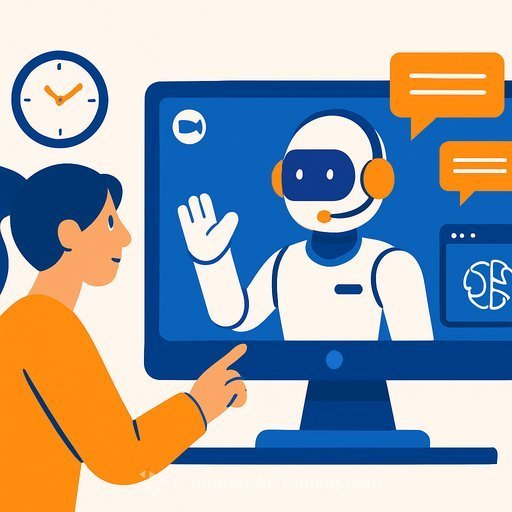
- 24/7 guest support: Chatbots and virtual assistants handle FAQs, basic requests, and bookings. Human agents step in for exceptions, so response times drop and CSAT stabilises.
- Operational clarity: Demand forecasts, staffing recommendations, and inventory signals reduce chaos. Teams plan with confidence and spend time where it counts.
Personalisation That Feels Human
Guests want to feel known without feeling watched. The Boulevard Hotel uses AI to adapt communication, room preferences, and on-property suggestions-based on consented data and past interactions.
Think pre-arrival check-in with preferred pillow type, a room at the guest's usual temperature, and dining suggestions that match previous choices. It's simple, helpful, and repeatable. That consistency builds loyalty because it shows you remember the person, not just the reservation.
AI also helps teams communicate in real time. If a guest prefers late housekeeping or quiet floors, that context follows them. The result: fewer service hiccups and a stay that feels smooth end to end.
Marketing Playbook: From Broadcast to Precision
- Segmentation: Group guests by trip purpose, frequency, and spend, then adjust offers by margin and likelihood to book.
- Creative iteration: Use AI to generate and test variations of headlines, images, and CTAs. Roll the winners into your evergreen flows.
- Lifecycle automation: Trigger pre-stay upsells, on-stay cross-sells, and post-stay reviews/referrals. Keep it useful, not spammy.
- Rate integrity + merchandising: Sync pricing signals with perks (late checkout, breakfast, lounge access) to protect ADR while improving perceived value.
Operations Playbook: Efficiency Without Losing the Human Touch
- Demand forecasting: Predict peak periods to adjust staffing, procurement, and housekeeping cycles. Fewer surprises, fewer overtime spikes.
- Dynamic staffing: Schedule by forecasted arrivals, MICE activity, and service requests so managers can reallocate in minutes, not hours.
- Housekeeping routing: Auto-prioritise rooms by ETA, VIP status, and maintenance flags to cut turnaround time and rework.
- Energy optimisation: Adjust HVAC and lighting by occupancy and preference data. This trims utility costs and supports sustainability goals.
Guest Service: Instant Answers, Real Empathy
AI assistants now resolve a large portion of routine inquiries within seconds-directions, parking, late checkout, amenities. That reduces wait times and frees staff to solve the hard problems with care.
The key is routing. The system needs a clear threshold for when to switch from bot to human, with a clean handoff and context preserved. Do that well, and guest satisfaction climbs while your cost-to-serve drops.
Data, Systems, and Guardrails
- Core stack to connect: PMS, CRM/CDP, booking engine, POS, ticketing, and marketing automation. If data can't flow, AI can't help.
- Consent + privacy: Make preference capture explicit and easy to edit. Respect opt-outs across every channel.
- Quality feedback loop: Tie outcomes (ADR, NPS, upsell take rate) back to campaigns and models. Kill what doesn't move the numbers.
What The Boulevard Hotel Measures
- Marketing: Conversion rate, incremental direct bookings, CAC, email/SMS revenue per send, review volume and sentiment.
- Revenue: ADR and RevPAR lift vs. control, upsell attach rate, look-to-book improvements.
- Operations: Response times, ticket deflection rate, housekeeping turnaround, schedule accuracy, overtime hours.
- Sustainability: Energy use per occupied room, waste reduction, water savings.
Pragmatic Rollout: 90 Days to Proof
- Days 0-30: Pick two use cases with direct ROI (e.g., booking engine optimisation + guest messaging). Map data flows. Define KPIs and baselines.
- Days 31-60: Launch pilots on a subset of guests and channels. A/B test offers and creative. Train staff on exceptions and escalation.
- Days 61-90: Compare to baseline. Keep what works, iterate what shows promise, and retire what doesn't. Expand to a second property function once ROI is clear.
Leadership View: Ambition With Restraint
Gohrmann is optimistic about AI but insists on careful evaluation before rolling it across the property. The message is clear: use AI to amplify service, not replace it.
Automation should take the repetitive tasks off the team's plate so they can be present where it matters-greetings, problem-solving, thoughtful moments that guests remember. That balance is the differentiator.
Risks to Manage (So They Don't Bite Later)
- Model drift: Revalidate prompts and models as guest behavior shifts seasonally or by segment.
- Overpersonalisation: Keep suggestions helpful, not intrusive. Offer controls and transparency.
- Change fatigue: Involve frontline teams early. Show them the time saved and the wins they own.
Why This Matters for Marketing and Operations Leaders
This isn't about chasing shiny tools. It's about building a margin and experience advantage you can measure. The Boulevard Hotel is proving that with clear use cases, clean data, and tight feedback loops, AI becomes a strategic asset-not a side project.
If you want a broader view of how AI is affecting travel and guest expectations, this overview from McKinsey is useful: Travel and logistics insights.
Next Steps
- Pick two high-impact use cases and set a 90-day target.
- Connect PMS, CRM/CDP, and booking data so your models have signal.
- Define three KPIs you will report weekly. Keep it simple and visible.
- Train the team on handoffs and tone. The tech is only as good as the service it supports.
If you're building capability in-house, these resources can help your team skill up fast: AI courses by job role and AI certification for marketing specialists.
The takeaway: AI works when it's tied to clear outcomes and delivered with empathy. The Boulevard Hotel is showing how to do that-one guest, one decision, one process at a time.
Your membership also unlocks: