What U.S. Schools Can Learn From China's AI Classrooms
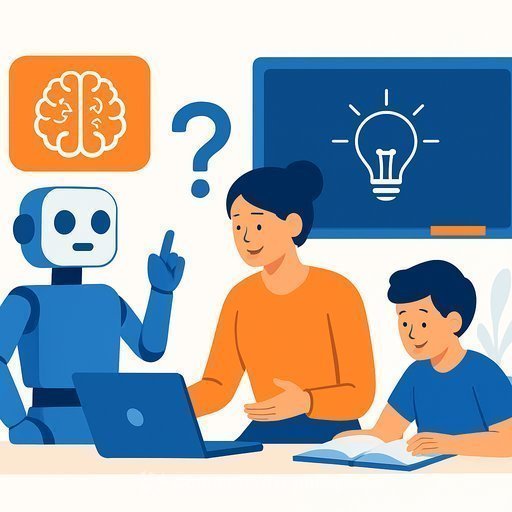
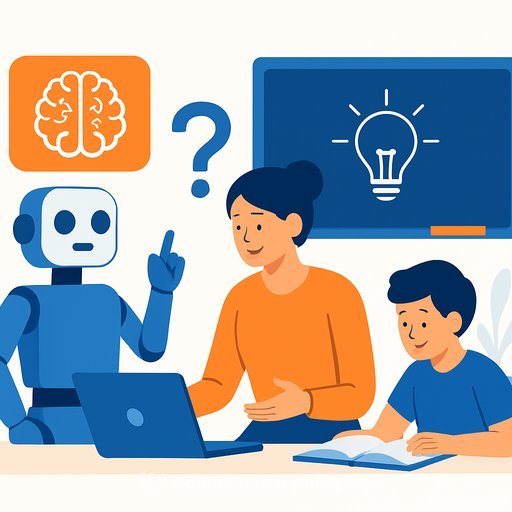
Fifth-graders in Shanghai used AI to study an 11th-century poet, then collaborated to produce original poems in a similar style. Each group's prompts and outputs were visible to the teacher. The tech didn't replace instruction; it became part of a guided, social learning process.
One student said AI was the teacher. Another called it the assistant. A third flipped it: "We are now the teachers, and AI is the student." That mindset-human-led, AI-supported-was the point.
What stood out in China's approach
- AI is infused into learning, not bolted on. Teachers prompt, students iterate, and the class sees the process, not just the result.
- Human-AI collaboration is a core skill. A robot factory told visitors the top skill they hire for is the ability to collaborate alongside technology.
- National alignment exists. Research labs inside universities produce at scale against national priorities, staffed half by engineers/scientists and half by educators-and they publicly share what works and what doesn't; see AI Research Courses for related evidence and methods.
- Teachers and students get support at scale. Every teacher has an AI assistant for planning, feedback, and growth. Every student keeps a development "portrait" (focused on proximal development). Every course uses knowledge graphs to map concepts.
- Smart campuses coordinate data. Operations and learning data connect, with clear visibility into how tools perform.
What the U.S. should avoid-and adopt
The U.S. won't copy China's centralized model-values, governance, and surveillance norms don't translate. But the U.S. can adopt the useful parts: set clear goals that tie education to economic needs, build educator-engineer R&D teams, and use transparent evidence to drive scale.
Given our decentralized system, states and districts become the engine. States set guardrails and enable structure. Districts pilot, measure, and iterate.
A practical playbook for U.S. districts and states
1) Start with learning, not tools
- Pick 2-3 priority outcomes (e.g., writing fluency, reading comprehension, algebra readiness, CTE skill pathways).
- Use AI to expose process: show prompts, drafts, and decision points so students learn how to think with technology, not delegate to it.
2) Build teacher capacity with AI co-pilots
- Adopt one vetted AI assistant for lesson design, differentiation, and feedback-plus a clear usage policy-and invest in role-based upskilling such as the AI Learning Path for Teachers.
- Pair each PD cycle with classroom sprints: plan with AI on Friday, teach Monday, reflect Wednesday, share Friday.
3) Give students transparent learning profiles
- Create a lightweight "portrait of learning" focused on proximal development: what a student can do solo vs. with support.
- Map course knowledge as simple graphs (concepts, prerequisites, common misconceptions). Use AI to suggest next-step tasks.
4) Treat prompt work as a literacy
- Make prompts visible to teachers and, when useful, to peers. Evaluate the quality of prompts and revisions, not just outputs.
- Teach critique: bias checks, citation checks, and "explain your chain-of-thought in your own words."
5) Build R&D habits, not solo pilots
- Form mixed teams: curriculum leads, teachers, data analysts, and a university or regional partner lab.
- Share results publicly-what worked, what didn't, and sample artifacts (prompts, rubrics, student work with permission).
6) Set state-level guardrails that invite innovation
- Privacy: common data agreements, prohibited data uses, and clear retention rules.
- Transparency: require vendors to disclose model behavior, data flows, and outcome reporting that educators can understand.
- Procurement: approve a short list of safe, interoperable tools; allow sandboxing for supervised trials.
A 90-day pilot you can run
Phase 1 (Weeks 1-3): Define and prepare
- Pick one course (e.g., Grade 5 ELA or Algebra I) and one outcome (e.g., argumentative writing).
- Train 6-10 teachers on a single AI assistant and your prompt transparency norms.
- Build a simple knowledge graph for the unit and a student portrait template.
Phase 2 (Weeks 4-8): Teach, measure, iterate
- Run two instructional cycles where students co-create with AI (draft → critique → revise) and teachers review prompts/outputs.
- Collect artifacts: student work, prompt histories, teacher notes, time saved, and short-form assessments.
Phase 3 (Weeks 9-12): Evaluate and scale
- Compare outcomes and time-on-task to a baseline. Identify which prompts and scaffolds worked best.
- Publish a short brief with examples, updated guardrails, and a plan to expand to a second course.
Data, ethics, and trust
Parents and educators need clarity on how models use data and whether they improve outcomes. States can require plain-language model cards, bias checks on core tasks, and opt-out options for sensitive data. Districts can run regular audits of prompt/response logs and error types to improve instruction and policy.
For broader context, see the U.S. Department of Education's guidance on AI in teaching and learning: AI and the Future of Teaching and Learning. For implementation networks, explore Digital Promise's work with districts: Digital Promise.
The bottom line
China shows what coordinated execution looks like. The U.S. can match the pace without copying the model: lead with learning, make AI use visible, invest in teacher co-pilots, and align state guardrails with district experimentation.
Start small, measure honestly, share openly, and scale what works.
Want structured training for your team?
Explore role-based AI upskilling paths for educators and instructional leaders: Complete AI Training - Courses by Job.
Your membership also unlocks: