HP to cut 4,000-6,000 roles by 2028 as it leans harder into AI
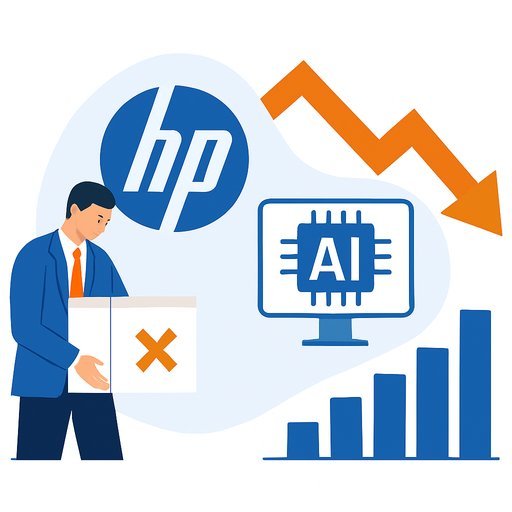
HP Inc plans to reduce headcount by 4,000 to 6,000 roles globally by fiscal 2028. The goal: streamline operations and apply AI to speed product development, improve customer satisfaction, and lift productivity.
Shares fell about 5.5% in extended trading after the announcement. The company also reduced 1,000-2,000 roles in February as part of an earlier restructuring.
Teams in product development, internal operations, and customer support will be affected. "We expect this initiative will create $1 billion in gross run rate savings over three years," CEO Enrique Lores said.
What's driving the move
AI-enabled PCs are scaling-now more than 30% of HP's shipments in the fourth quarter ended Oct. 31. At the same time, the memory market is tightening. With Big Tech building AI infrastructure, DRAM and NAND prices are rising, which can squeeze device margins for PC makers.
HP expects the cost impact to hit in the second half of fiscal 2026. Management is qualifying lower-cost suppliers, reducing memory configurations, and taking price actions to offset the pressure. HP says it has enough inventory to buffer the first half.
Numbers product leaders should know
- FY2026 adjusted EPS guide: $2.90-$3.20 (below the $3.33 analyst average, per LSEG data).
- Q1 adjusted EPS: $0.73-$0.81 (midpoint slightly below expectations).
- Q4 revenue: $14.64 billion (above the $14.48 billion consensus).
For official updates and filings, see HP Investor Relations.
Implications for product development teams
- Roadmaps: Prioritize AI features that deliver clear customer outcomes (on-device assistants, workflow automation, security, and performance telemetry). Aim for visible value within one release cycle.
- Design-to-cost: Treat memory as a volatile line item. Plan configurable RAM/SSD tiers, compress models where possible, and design SKUs to tolerate price spikes without rework.
- Supplier strategy: Pre-qualify alternate DRAM/NAND vendors and module form factors. Lock in options, not just prices.
- NPI velocity: Use AI to reduce cycle time-requirements summarization, spec drafting, test generation, code review, and defect triage. Track cycle-time and defect-rate deltas monthly.
- Support integration: Tighten feedback loops from customer support into product. Use telemetry and LLM-assisted summarization to spot issues earlier and deprecate low-value features.
- AI PC readiness: Optimize for on-device inference constraints (memory footprint, thermal, battery). Offer "good/better/best" AI tiers tied to hardware and subscription add-ons.
- Pricing and packaging: Prepare for margin pressure-bundle software services with hardware, pilot usage-based features, and create memory-light configurations for price-sensitive segments.
- Change management: Expect role shifts as automation takes over repetitive work. Upskill PMs, designers, and engineers in prompt-driven workflows, evaluation, and responsible AI guardrails.
90-day product playbook
- Portfolio triage: Rank features by customer impact, AI feasibility, and memory cost sensitivity. Cut or delay anything that can't clear a near-term value bar.
- Cost scenarios: Model DRAM/NAND at +10%, +20%, +40% for H2 FY2026. Define triggers for SKU changes and price moves.
- Tech plan: Standardize an on-device model stack, quantization targets, and evaluation methods. Publish a lightweight AI architecture doc all teams can reuse.
- Ops loop: Instrument telemetry for feature usage and quality. Pipe summaries into weekly product reviews.
- Supply hedges: Qualify a second source for memory now. Validate performance and compliance in pre-production builds.
- AI-in-prod tooling: Roll out AI-assisted test generation and code review to at least one critical product. Measure cycle-time savings and defects escaped.
If your team needs structured upskilling on AI workflows by role, browse AI courses by job.
Bottom line
HP is cutting costs and leaning into AI while preparing for higher component prices. For product teams, this is a clear signal: prioritize AI features with measurable customer value, design for memory volatility, tighten the build-measure-learn loop, and upskill fast. The companies that ship useful AI and control unit economics will win the next cycle.
Your membership also unlocks: