HPE CFO puts agentic AI at the center of 2026 finance priorities
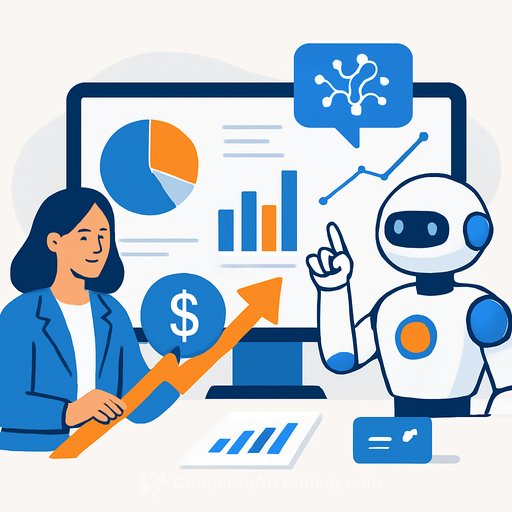
Hewlett Packard Enterprise CFO Marie Myers is making finance transformation a front-seat priority this year. After piloting an internal agentic AI tool in 2025, her team is scaling its use across forecasting, credit and collections, and accounts payable and receivable.
The tool, nicknamed "Alfred," was built with Deloitte and brings agentic and generative AI into HPE's finance workflows. The mandate is clear: move from manual reporting to real-time insight and decision support.
Why it matters to finance
Finance leaders are moving fast on agents. In Deloitte's latest CFO Signals Survey, 54% of finance chiefs said integrating AI agents is a digital transformation priority for 2026.
See Deloitte's CFO Signals for the broader trend line.
Inside HPE's "Alfred"
HPE's internal version of Deloitte's finance agent is called Alfred, a nod to Batman's trusted butler. It blends agentic and generative AI, pulling data across HPE's finance supply chain into one interface so teams can see what's happening and, more importantly, why it's happening.
Myers says the aim is forward-looking, enterprise intelligence: a live view of key stats and performance that helps the business act sooner, not later.
From rear-view reports to action
HPE started with a high-stakes use case: the weekly operational performance review with 40-50 people from finance and sales. Before Alfred, the call relied on hundreds of slide pages and days of prep-mostly backward-looking.
With Alfred, analysis is instant. The conversation shifts from "what happened?" to "what are we going to do about it?" Analysts who once ran shipment and accuracy calculations now spend time interpreting signals and shaping next steps, while agents handle the repetitive work.
Deterministic by design
HPE, Deloitte, and NVIDIA engineered Alfred for deterministic outcomes-ask the same question, get the same answer. That predictability tackles a long-standing challenge with large language models in enterprise settings: consistency under pressure.
That design choice matters for finance; consistent behavior comes from careful Design. If results vary, controls and confidence erode. If results are consistent, teams can build process around them.
Early results and scale-up
As part of the broader collaboration, the jointly developed finance tool-now referred to as CFO Insights-is cutting HPE's financial reporting cycle by about 40%. It's also sparking more targeted discussion around operational performance.
"By embedding agentic AI and generative AI into finance, HPE is showing what many teams are working toward: reimagined processes, production at scale, and measurable value," said Abdi Goodarzi, U.S. chief commercial officer for Zora AI at Deloitte.
HPE is also making the capability available to customers of HPE Private Cloud AI while continuing to expand internal use. Learn more about HPE Private Cloud AI.
What's next for HPE's finance stack
The 2026 focus goes deeper into transactional finance-credit, collections, accounts payable, and receivable. Several of these streams are already in production with Deloitte.
Forecasting is likely the next major push, bringing agent-driven scenario analysis and plan updates closer to real time.
A practical playbook for CFOs
- Start where attention is highest. Pick a recurring, high-visibility process (weekly ops, monthly close) so wins are obvious and adoption sticks.
- Instrument the data. Agents are only as good as the pipes-standardize sources, define metrics, and settle naming conventions upfront.
- Demand deterministic outputs. Consistency builds trust, speeds controls sign-off, and reduces reconciliation cycles.
- Refactor analyst work. Move routine calculations to agents; retrain analysts on investigation, storytelling, and action planning.
- Measure time-to-insight and decision cycle time, not just headcount savings. Those are the levers that move the business.
Resources
- Deloitte CFO Signals Survey (trend data on AI agents in finance)
- Curated AI tools for finance (useful for building your first agent stack)
The takeaway: pick one critical process, wire it with agents, prove the lift, and scale. That's how you move from pilots to production and turn AI into a real operating advantage.
Your membership also unlocks: