Reimagining insurance with AI: How ACKO is building human-centered intelligence
Insurance has treated AI like a cost tool for too long-deflect tickets, cut minutes, trim budgets. That model hits a ceiling. It also chips away at trust.
ACKO took a different path. As India's first fully digital insurer, the company treats AI as an operating layer that brings precision, empathy, and transparency across claims, pricing, and conversations. The focus is simple: fewer loops, fewer regrets, more trust.
A platform mindset, not a bolt-on
"From day 1, ACKO set out to be a tech company, not a legacy insurer," says Vishwanath Ramarao, Co-founder and Chief Product and Technology Officer. "AI evolved from a project to a mindset-the way we ship, powered by proprietary infrastructure, SaaS-inspired frameworks, and built-in observability."
This matters in a regulated space. You can't duct-tape AI to legacy processes and expect better outcomes. You build the platform once, then let it learn and scale responsibly across the stack.
Human + AI as the operating model
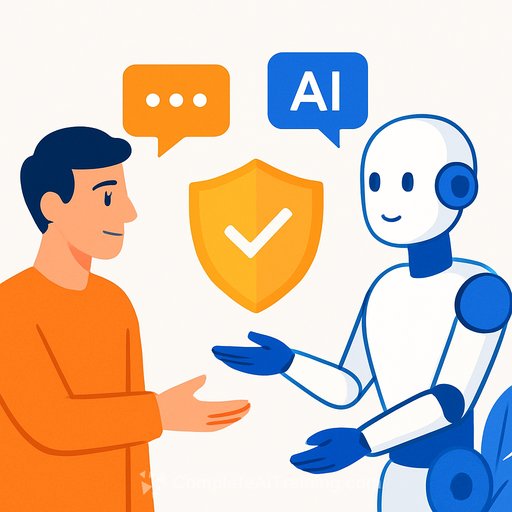
ACKO's stance: AI should amplify people, not replace them. Algorithms handle precise, context-rich, repetitive tasks. People handle complex, emotionally charged moments like accidents, negotiations, and sensitive conversations.
Every AI recommendation is explainable. Every action is traceable. And every customer gets an instant "escape hatch" to a human. That is how you preserve dignity and reduce rework.
The four pillars of change
- Consumer-facing: Conversation-first journeys that reduce friction and keep assistance helpful, contextual, and consent-aware.
- Advisor-facing: Copilots that pass full customer context so agents resolve faster-and warmer.
- Decision-facing: Transparent, auditable models for underwriting, pricing, and fraud detection with human-in-the-loop accountability.
- Productivity-facing: AI that accelerates coding, documentation, and planning-turning knowledge into a shared, searchable asset.
Efficiency and empathy: The new principles
Growth in regulated industries needs more than efficiency. It needs care baked into the product. ACKO's AI-native platform follows three simple rules:
- Human + AI collaboration: Machines do the precise work. People apply judgment and empathy.
- Conversation over clicks: Systems read intent and context to skip repetitive prompts and guide with culturally relevant responses.
- Proactive engagement: Reduce customer effort by anticipating needs and proposing next-best actions.
Technology as a philosophy
ACKO hired builders who think in platforms, not processes. The culture is demo-first, backed by shared AI infra, hackathons, and strong engineering practices. AI isn't a lab experiment-it's how products are shipped responsibly.
That mindset compounds. It keeps the company flexible and learning, closer to an adhocracy than a bureaucracy.
Building an AI-native workforce
AI enablement sits at the core of talent. Tools like Kula and Mettle assess cognitive agility, learning patterns, and problem-solving styles-going beyond static roles. In performance, GenAI helps create faster, more objective reviews while keeping space for human judgment.
This feeds a cycle: Assess → Develop → Coach → Elevate. Leaders were the first to be equipped, including a three-day immersive with ISB that grounded AI-native thinking in real use cases. Non-tech teams receive similar enablement so adoption isn't siloed.
Two competency layers guide the shift: an AI-native enablement layer for literacy and adoption, and a human competencies layer that strengthens behavior and leadership so the change sticks.
A culture of compassion
ACKO's internal AI layer, Amber, listens, learns, and acts autonomously. In seven months, it analyzed 1,100+ employee interactions, helped close 80% of feedback loops, and flagged early signs of disengagement before they showed up in surveys.
Access beats enforcement. Everyone gets approved tools, learning libraries, and clear guidelines for safe experimentation. Programs like "AI at Work" showcases, Acknovation, and the company-wide Ackathon invite every team-not just engineering-to redesign workflows and experiences with an AI-first lens.
"At ACKO we are letting AI be our telescope. It helps us see farther, clearer, deeper. But our human approach still decides where to look… That's our responsibility!", says Satheesh KV, Chief People Officer, ACKO.
Architecture and active experiments
The team is testing AI-based code analysis to assess engineering quality and impact-adding new, data-led signals to gauge contribution. On architecture, ACKO is adopting the Model Context Protocol to align with its microservices setup.
Data is being split into semantic and syntactic layers to build efficient agentic systems. Unstructured communication flows into AI-enabled pipelines, turning conversations into structured insight. The result: more proactive, context-rich interactions and better intent detection.
What insurance leaders can apply now
- Make explainability non-negotiable: Keep audit trails for underwriting, pricing, and fraud models. Ensure a human can intervene at any step.
- Add an instant human "escape hatch": Let customers shift from bot to advisor without repeating their story.
- Go conversation-first: Reduce forms and clicks. Use semantic cues to pre-fill, preload, and guide.
- Build advisor copilots: Hand off full customer context so frontline teams resolve issues in one pass.
- Measure what customers feel: Track loops avoided, time-to-assurance, and regret rate-not just handle time.
- Invest in literacy before tooling: Train leaders and non-tech teams on AI concepts, safety, and use cases.
- Create shared knowledge: Move documentation, code, and decisions into searchable systems with observability by default.
- Protect psychological safety: Be clear on reskilling, upskilling, and redeployment as automation reshapes roles.
- Design for compliance from day one: Map controls to regulations like those of the IRDAI. Treat consent and data minimization as product features.
The road ahead: Human-AI harmony
ACKO's next phase is about proof: AI-augmented work that shows up in outcomes, not decks. Psychological safety remains central so people can explore, experiment, and adapt. Where automation shifts responsibilities, the company commits to reskill, upskill, and redeploy into higher-value roles.
The aim is a mobile, future-ready workforce with AI as the quiet co-pilot-amplifying creativity, empathy, and judgment.
Further learning
- Model Context Protocol (MCP) for building agentic, context-aware systems.
- AI courses by job role to help insurance teams build practical capability.
Your membership also unlocks: