AI in Financial Services: Transforming the Future of Investment Management
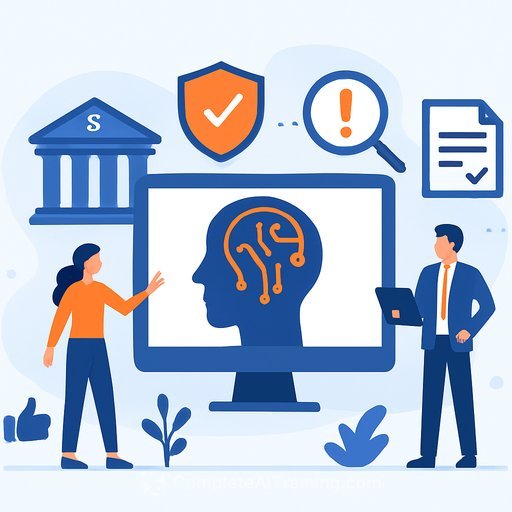
AI has moved from pilot projects into everyday operations across investment firms. The headline is simple: use AI to scale processes and improve consistency, while keeping human judgment, accountability, and regulatory responsibility exactly where they belong - with authorised professionals.
This article focuses on operational and decision-support use cases. It does not address regulated investment services, investment advice, or product promotion.
What AI means in investment management
AI is a set of practical tools - machine learning, analytics, and rule-based automation - that process data and support decisions. It augments professional workflows; it doesn't replace the investment team or take fiduciary roles.
- Machine learning: Spots patterns across large, messy datasets.
- Automation: Applies predefined rules consistently, every time.
- Decision support: Surfaces insights so humans can decide with context.
AI systems do not offer advice, execute trades, or assume fiduciary duty. When embedded in asset management software, AI functions like infrastructure. Humans set the rules, interpret outputs, and own the outcome.
Why adoption is accelerating
This shift isn't a trend. It's a response to industry structure and scale. The drivers are clear and persistent:
- Expanding data volumes: Market, client, risk, and operational data outpace manual processing.
- Operational complexity: Multi-asset, multi-jurisdiction processes need repeatable frameworks.
- Scalability: Grow without multiplying headcount or manual handoffs.
- Process efficiency and resilience: Reduce errors and apply methods consistently over time.
AI-enabled asset management software helps standardise workflows at scale while letting each institution define its own methodology and controls.
Where AI adds value in the process
AI is most effective around the investment process - inside the firm's walls, under its controls.
- Portfolio construction and optimisation frameworks
Process big datasets to support allocation logic, run scenario simulations against predefined assumptions, and apply optimisation within institution-set constraints. - Client profiling and data processing
Organise suitability inputs, support consistent segmentation, and cut manual handling of structured data. - Monitoring and rebalancing logic
Continuously check portfolios against targets, trigger alerts on thresholds, and streamline rebalancing workflows. - Advisory workflow automation
Automate repetitive admin, enforce process steps, and improve transparency and auditability.
How technology providers fit
- Regulated institutions: Provide regulated services, define methodologies, ensure compliance, and manage client outcomes.
- Technology providers: Deliver configurable software that supports internal processes. They do not assume regulated roles.
Clear lines matter. Institutions remain fully responsible for governance, model oversight, data controls, and documentation. For evolving EU expectations, see guidance on the EU AI framework and the EBA's work on ICT and security risk management (EBA guidelines).
AI as infrastructure, not autonomy
The most sustainable positioning: treat AI as an infrastructure layer that reinforces human-led models. That choice keeps control clear and risk contained.
- Maintains accountability and governance.
- Supports explainability and transparent audit trails.
- Prevents over-automation in sensitive workflows.
- Fits existing regulatory responsibilities without blurring roles.
Practical guardrails for investment teams
- Methodology first: Define objectives, constraints, and data inputs before selecting models or tools.
- Data hygiene: Track lineage, quality checks, versioning, and retention. Bad inputs compound fast.
- Human-in-the-loop: Add checkpoints for overrides, exceptions, and rationale capture.
- Auditability: Log parameters, changes, and decisions for internal review and regulators.
- Model risk management: Validate, monitor drift, stress test, and document limitations in plain language.
- Vendor diligence: Assess security, explainability, SLAs, and exit options before integration.
If you're mapping practical tools that support these workflows, this curated list can help: AI tools for finance. For finance teams and accountants building governance and controls, see the AI Learning Path for Accountants.
Closing thoughts
AI is reshaping how investment processes are built and executed: more data-driven, more structured, and easier to scale. Used responsibly, it supports professionals instead of replacing them.
For regulated institutions in Belgium, Luxembourg, and across Europe, the path forward is clear: deploy AI as institution-led infrastructure inside asset management software, keep governance tight, and let human judgment make the final call.
Your membership also unlocks: