A paradox is emerging at the heart of the global economy: the more advanced artificial intelligence becomes, the more valuable distinctly human capabilities appear. As of June 2026, executives from New York to Singapore are recognizing that the AI transformation is not simply about automation-it is redefining where human judgment, creativity, and leadership generate the greatest returns. Organizations that over-automate risk eroding the very capabilities that drive long-term value in a multi-trillion-dollar shift.
The Misdiagnosed Question
Many companies still ask what tasks AI can replace. The more strategic question is: where does human judgment become more valuable because of AI? AI is strong at pattern recognition, data processing, and prediction at scale. It struggles with ambiguity, ethical reasoning, cultural nuance, and contextual decision-making-areas that define leadership and high-stakes business outcomes. This creates a bifurcation: routine, repeatable work becomes commoditized, while complex, judgment-driven work commands a premium.
Human-Centric Competitive Advantage
When AI standardizes access to information and analytical tools, differentiation shifts to people. The skills that cannot be easily replicated become the new competitive edge.
- Judgment in ambiguous environments. AI can recommend, but it cannot take responsibility. In mergers, geopolitical risk, or capital deployment, leaders must interpret incomplete data and make decisions with long-term consequences. AI models risk scenarios, but humans decide which risks are worth taking-a distinction that can move billions.
- Creativity that drives markets. AI generates content, designs, and strategies, but originality that reshapes industries still emerges from human insight. Breakthrough innovation often comes from connecting unrelated ideas, challenging assumptions, and understanding latent customer needs-cognitive leaps that data alone cannot produce.
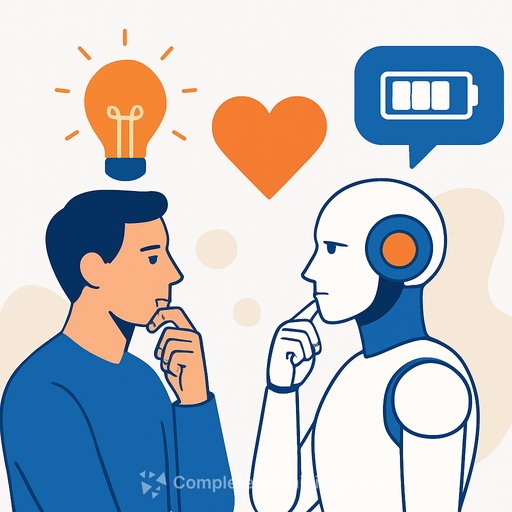
- Emotional intelligence and leadership. AI can simulate conversation, but it cannot build trust. Leadership in the AI era depends on managing teams through uncertainty, addressing cultural and organizational complexity, and balancing stakeholder expectations. Marginal improvements in leadership effectiveness can translate into millions-or billions-in enterprise value.
In a world saturated with AI-generated outputs, authentic creativity and emotional intelligence become more valuable, not less.
Augmentation Over Replacement
The most effective organizations are not replacing humans with AI; they are redesigning workflows around collaboration. AI handles scale-data processing, automation, optimization-while humans direct strategy, interpretation, and decision-making. Value is created at the intersection. This hybrid model is visible in finance, healthcare, and manufacturing, where AI enhances productivity but does not eliminate the need for expert oversight. In many cases, AI increases demand for highly skilled professionals.
Strategic Implications for Business Leaders
For CEOs and board members, the shift is not theoretical. It has immediate implications for talent strategy, organizational design, and capital allocation. Organizations should prioritize critical thinking over routine execution, adaptability over narrow specialization, and leadership capability at all levels. This requires rethinking recruitment, training, and performance metrics. Companies that invest in upskilling and human-AI integration platforms are seeing measurable returns-not just in productivity, but in strategic resilience.
For executives seeking to embed these strategies, AI for Executives & Strategy training provides a framework for combining human judgment with machine intelligence. The AI Learning Path for CEOs specifically addresses how top leaders can lead the transition from automation to augmentation.
At a macro level, the revaluation of labor is clear: low-skill, repetitive roles face downward pressure, while high-skill, judgment-intensive roles command a premium. This divergence could reshape income distribution and global talent flows. Countries and companies that invest in human capability alongside technological infrastructure will likely capture a disproportionate share of future growth.
Why this matters for Executives and Strategy
The competitive frontier is no longer defined by access to technology alone. It is defined by how effectively organizations combine machine capability with human insight. AI amplifies consequences: better decisions create outsized gains; poor decisions scale faster. Executives who understand that AI handles the "how" while humans define the "why" will be best positioned to capture enduring value. The time to redesign talent and organizational structures to prioritize judgment, creativity, and emotional intelligence is now-before competitors do the same.
Your membership also unlocks: