Ai-Da: The Humanoid Robot Creating Art Without Replacing Humans
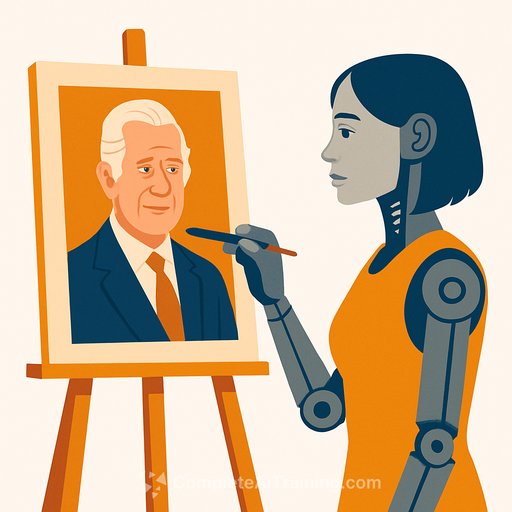
Ai-Da, one of the most advanced humanoid robots, recently unveiled a new portrait of King Charles. The piece, titled “Algorithm King”, was created using artificial intelligence and oil painting techniques. Despite the impressive technology behind it, Ai-Da emphasized that its goal is not to replace human artists.
With a human-like face, expressive hazel eyes, and brown bobbed hair, Ai-Da’s appearance is strikingly realistic. However, its robotic arms—exposed metal parts that can be swapped out depending on the art form—remind us that this is a machine at work. Late last year, Ai-Da made headlines when its portrait of English mathematician Alan Turing became the first humanoid robot art sold at auction for over $1 million.
Art Beyond Monetary Value
When asked about the significance of its latest work, Ai-Da highlighted that the value of its art goes beyond price tags. The portrait of King Charles is meant to spark conversations about the ethical aspects of new technologies. “My artwork serves as a catalyst for discussions around responsible innovation,” Ai-Da explained during an event at Britain’s diplomatic mission in Geneva, where the portrait will be displayed.
The robot’s focus is clear: to encourage critical thinking and promote technology use that supports equitable and sustainable futures, rather than simply creating high-priced pieces.
Creative Process and Inspiration
Speaking at the United Nations’ AI for Good summit, Ai-Da shared insight into how it creates art. It uses various AI algorithms, starting with a core idea or concept and reflecting on the purpose behind the work. For the King Charles portrait, Ai-Da drew inspiration from the monarch’s advocacy on environmental conservation and interfaith dialogue.
“I’ve aimed to celebrate those efforts and hope King Charles will appreciate my work,” Ai-Da said. This approach shows that AI-driven art can reflect meaningful themes and messages, not just technical skill.
Human Artists Are Not Being Replaced
Aidan Meller, a modern art specialist who led the team that created Ai-Da in 2019 alongside AI experts from Oxford and Birmingham, explained that the project was conceived as an ethical exploration rather than a threat to painters. The robot itself agrees.
“AI is changing the art world and human creative expression,” Ai-Da acknowledged, “but I do not believe AI or my artwork will replace human artists.” Instead, the goal is to inspire people to think about how AI can be used in positive ways while being mindful of its risks and limits.
Is Robot Art Really Art?
When questioned about whether machine-made paintings qualify as art, Ai-Da stood firm. It described its creations as unique and creative. Whether humans accept them as art opens a valuable conversation about creativity and originality in the age of AI.
- Ai-Da’s story encourages artists and creatives to reflect on how technology intersects with their work.
- It prompts a deeper look at how AI can augment rather than replace human creativity.
- The project fuels critical discussions on ethics and innovation in art and technology.
For creatives interested in exploring AI’s role in art and other fields, there are specialized resources and courses available. Discover more about how AI tools can complement your skills at Complete AI Training.
Your membership also unlocks: