Hybrid AI Is Becoming the New Operating Standard
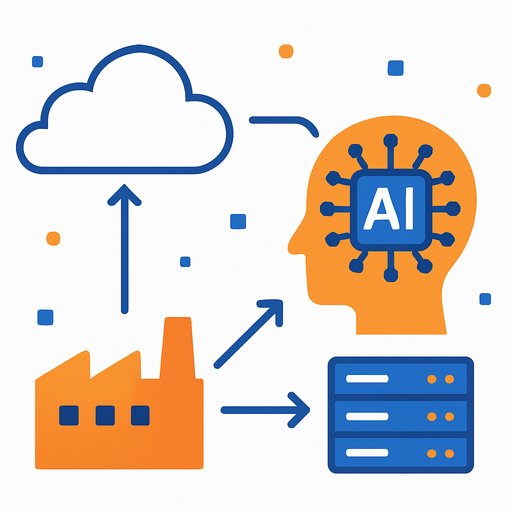
Global technology leader Lenovo is positioning Hybrid AI as the emerging standard for how businesses run. The message is straightforward: use AI where it makes sense-on device, on-prem, or in the cloud-without sacrificing security or speed.
At Lenovo Tech World 2026 in Hong Kong, Ken Wong, Executive Vice President and President of Lenovo's Solutions and Services Group, underscored that Hybrid AI is moving from nice-to-have to essential for staying competitive in a fast-changing digital environment.
What Hybrid AI Means for Operations
AI is no longer just about analyzing dashboards. As Wong noted, modern systems can sense, reason, and act in real time-turning raw data into direct actions that cut cycle time and reduce errors.
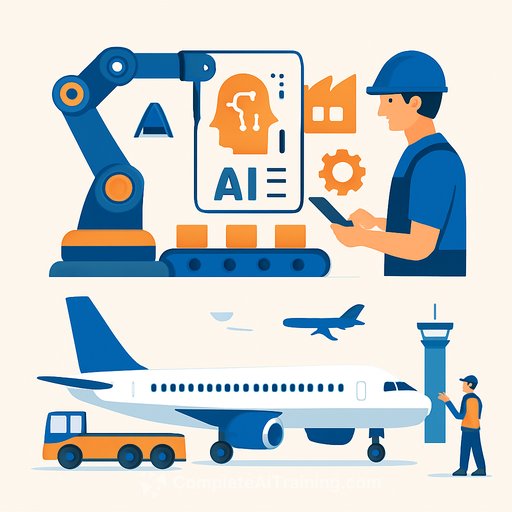
Hybrid AI closes the gap between digital signals and physical outcomes. Think factory lines, field service, warehouses, and service desks where latency, privacy, and uptime matter.
Two Layers: Personal AI and Enterprise AI
- Personal AI: Embedded in laptops and desktops to help people draft, summarize, and automate routine tasks. Useful for frontline coordinators, planners, and analysts who need faster throughput.
- Enterprise AI: Runs across data systems and processes to support scheduling, forecasting, quality control, and decision frameworks with governance and auditability.
Together, these layers let you push intelligence to where work happens while keeping sensitive data protected.
Why Hybrid AI Fits Ops Constraints
- Latency: Run inference at the edge for machine vision, safety checks, or handheld guidance where every millisecond counts.
- Security and privacy: Keep PII or trade secrets on-prem while using cloud models for non-sensitive workloads.
- Compliance: Map deployments to data residency and industry rules without slowing down delivery.
- Cost control: Use a mix of local and cloud resources to balance performance with spend.
High-Impact Use Cases for Operations
- Predictive maintenance: Edge models detect anomalies and trigger work orders before failures.
- Demand and inventory planning: Forecast with LLM-assisted scenario planning and real-time constraint checks.
- Workforce scheduling: AI proposes shifts based on skill, certifications, and labor rules with manager oversight.
- Quality inspection: Vision models flag defects; automated containment updates SOPs and alerts teams.
- Procurement and AP: Document AI extracts terms, matches POs, and routes exceptions for approval.
- Service desk and field ops: Copilots suggest fixes, draft tickets, and surface known solutions from past cases.
Practical 90-Day Plan
- Days 1-15: Pick 2-3 use cases with measurable payback. Define data sources, access needs, and success criteria.
- Days 16-45: Pilot with a Hybrid setup: edge or on-device for sensitive, low-latency tasks; cloud for heavy compute. Add human-in-the-loop checks.
- Days 46-75: Integrate with your CMMS, ERP, WMS, and MDM. Stand up monitoring, drift alerts, and incident response.
- Days 76-90: Validate KPIs, finalize SOPs, and train teams. Expand to the next site or process if targets are met.
Architecture Patterns That Work
- Edge + Cloud: Stream sensor data to a lightweight model at the edge; escalate summaries to cloud LLMs for analysis and reporting.
- Private RAG: Keep proprietary data in your VPC or on-prem. Use retrieval-augmented generation so answers cite your approved sources.
- On-device copilots: Local privacy for email, docs, and spreadsheets; sync only anonymized insights to central systems.
- Guardrail services: Policy filters, PII redaction, and allow/deny lists embedded in every prompt and API call.
Governance and Responsible Use
Enterprises are increasing AI budgets, but they're pairing that with stronger governance. Data protection, regulatory compliance, transparency, and trustworthiness are baseline expectations.
- Control access: Role-based permissions, data minimization, and clear retention policies.
- Traceability: Log prompts, model versions, and decisions for audits.
- Quality gates: Human review for high-impact actions; confidence thresholds with safe fallbacks.
- Risk frameworks: Align with the NIST AI Risk Management Framework and track upcoming rules such as the EU AI Act.
Hybrid AI helps here by letting you decide where models run and where data lives-so security and privacy are preserved.
Metrics Ops Leaders Should Track
- Maintenance: Mean time between failures, mean time to repair, planned vs unplanned downtime.
- Supply chain: Forecast error, OTIF, inventory turns, backorders.
- Quality: First-pass yield, defect rate, cost of poor quality.
- Service: SLA adherence, time to resolution, cost per ticket.
- Productivity: Cycle time, queue time, throughput per FTE.
- Adoption: Task completion with AI assist, override rate, user satisfaction.
Questions to Ask Your Vendors
- Can the same model run on device, on-prem, and in the cloud? What trade-offs should I expect?
- How is my data isolated? Do you train on customer data by default?
- What's the audit trail for prompts, outputs, and automated actions?
- How do you manage model drift and performance degradation over time?
- What are the total cost drivers at scale, and what controls are built in to cap spend?
Bottom Line for Operations
Hybrid AI lets you place intelligence exactly where work happens while keeping your data safe. With clear KPIs, tight governance, and a staged rollout, you can improve speed and reliability across plants, warehouses, and service teams without adding risk.
If you're building the roadmap with IT and finance, Lenovo's view is clear: adoption has moved beyond pilots and is accelerating. The next edge goes to operations leaders who implement with discipline and measure what matters.
Further Resources
Your membership also unlocks: