
AI news ·
Hyperscale Data outlines plan to build humanoid robotics and embodied AI infrastructure in Michigan
Hyperscale Data plans to build, train, and deploy humanoid robots entirely in the U.S. through a Michigan campus. The company aims to control the full supply chain to avoid losing manufacturing dominance as it did in other industries.
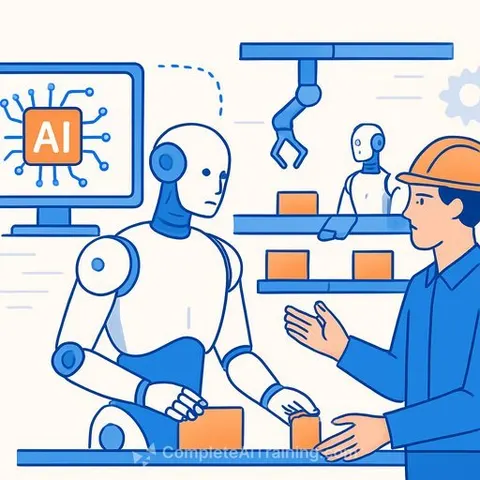
Hyperscale Data Builds U.S. Robotics Supply Chain to Keep AI Manufacturing Domestic
Hyperscale Data, a data center company, plans to develop, train, and deploy humanoid robots in the United States through its subsidiary Omnipresent Robotics. The company said it wants to avoid repeating the pattern where America invents technology, then loses manufacturing capability and supply chains to other countries.
The company holds the top partnership tier with AGIBOT, a developer of humanoid robotics platforms, and is the first American company to reach that level. AGIBOT is among the world's leading humanoid platforms.
Building in Michigan
Hyperscale Data is establishing a campus in Michigan where robots will be trained on real jobs, tested until weaknesses emerge, assembled, and deployed with software tailored to actual work conditions. The location leverages Michigan's existing industrial manufacturing base.
The campus will create engineering, technical, operator, and manufacturing jobs. Workers will learn through hands-on experience rather than classroom instruction.
Three Business Models
The company plans three revenue approaches: selling robots with software development kits, training models on customer-specific compute infrastructure, or deploying and supporting complete systems. Each project generates data that improves subsequent deployments.
Hyperscale Data intends to collect and sell embodied AI data, evaluation data, and scenario data to frontier labs developing large language models. The company said it plans to keep all data within the United States.
The Full Loop
The company's strategy centers on controlling an entire cycle: supply chain, computing power, training, evaluation, assembly, deployment, data creation, and feedback into training. Losing any part of this loop creates dependency on external suppliers for critical functions.
Executive Chairman Milton "Todd" Ault, III said the company is "not interested in repeating that story with respect to robotics," referring to America's historical loss of manufacturing dominance in other industries.
For executives building AI strategy, understanding how companies structure physical infrastructure and data ownership around AI systems offers lessons for broader organizational decisions. AI for Executives & Strategy covers these infrastructure and competitive positioning questions in depth.