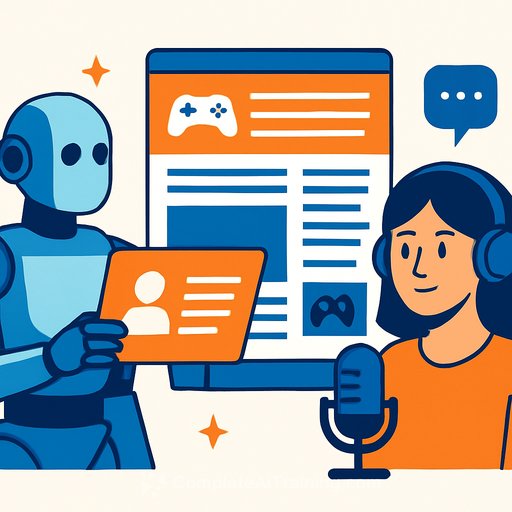
AI is flooding culture. Games still need human storytellers
Word counts don't make players care. Characters do. Hooks do. Stakes do.
Look at Zombies, Run!-a simple idea done with heart: go for a run, survive an apocalypse, and become the hero of your own story. It makes people laugh and cry while jogging, because the writing treats the listener like a person, not a data point.
Stop selling "hours of content." Start selling a story hook
"This game has 100 hours of story" is a crutch. A single clean hook beats a million words of filler. Try this: a woman walks into her home to find a man claiming to be her husband; he goes upstairs, and a different husband comes down. You want to know what happens next-that's the point.
Lead with curiosity, not volume. If players can't describe your premise in one breath, you don't have a premise. You have a pile of scenes.
Use AI, don't let it use you
AI is fine for boilerplate: item descriptions, tutorial text, placeholder banter. It's fast, predictable, and unemotional-which is exactly why it struggles with soul. Stories are how people find each other across experience. That requires taste, judgment, and a lived point of view.
If you want signal on where AI falls short at meaning, study the research on pattern-matching and originality gaps. Here's a solid primer from Stanford HAI.
If you use AI, use it like a studio intern, not a head writer. Give it tight constraints. Rewrite everything that matters.
Tip: If you're building workflows around prompts and want to keep human voice intact, these resources help you set guardrails: Prompt Engineering essentials.
Build worlds that reward cooperation, not lone-wolf fantasy
Apocalypse fiction often defaults to the gun-toting solo hero. That's lazy. People survive by coordinating, trading favors, and caring for each other under stress. Write toward that truth and your world starts to feel lived in.
Some mission arcs that prove you don't need bigger guns to raise stakes:
- Hunt down specific figurines and paints to finish an expansion of a tabletop classic-while the clock ticks and routes are risky.
- Bring an overgrown community garden back to life, plant by plant, while balancing security, seed scarcity, and weather.
- Launch a traveling library after the fall-track a missing librarian through cryptic notes scrawled in an old manuscript.
None of these are small. They show people rebuilding, which is the harder story-and the one players remember.
A practical playbook for writers and game teams
- Start with a one-sentence hook. If it doesn't create a question in the player's mind, keep editing.
- Write to verbs. Run, hide, deliver, rescue, repair. Pair each scene with a clear player action.
- Design for movement. For audio and on-the-go play, write in tight beats (20-60 seconds) with crisp scene turns.
- Measure the right thing. Track "did they finish the mission?" and "did they come back?"-not word count.
- Cast characters with edges. One defining want, one contradiction, one secret they'll protect.
- Use AI for scaffolding. Lists, naming passes, quick alt lines. Keep final dialogue and plot in human hands.
- Codify voice. Make a living style guide with do/don't examples. Protect tone like it's your art bible.
- Ship in arcs. 5-10 missions with a clear beginning, midpoint turn, and payoff. End on a hook to the next arc.
Make players feel seen
The goal isn't novelty for its own sake. It's recognition. The reason someone laughs or cries mid-run is because your character mirrors a private thought they've never said out loud.
That's the work. AI can mimic form, not intention. Intention is lived.
The standard to repeat to your team
Stop talking about the width. Talk about the quality. A clean hook, human voice, and cooperative stakes will carry longer than any content dump.
Protect the writing. The rest of the game gets better when the story does.
Your membership also unlocks: