I tried an AI facial so you don't have to - here's what actually matters for builders and writers
I went in expecting robot hands and a VR beach. I got a selfie upload, instant scores, and a blunt "perceived age: 35" - four years older than I am - in bold text on my phone.
That sting? It mattered. Not because the tech was bad, but because the delivery missed the human moment.
How the AI piece worked
The system claimed millions of training data points and produced five scores: acne 100/100, ageing lines 90/100, pores 54/100, redness 41/100, hydration 11/100. It also guessed my age (wrong, apparently).
Lighting likely skewed things, as the clinician suggested. If I'd done this alone at home, I might have spiralled. Context and reassurance matter as much as accuracy.
What the facial actually involved
The "AI-powered" part was the recommendation layer. A clinician at Nurse Nicola Aesthetics used the readout to choose products and steps, then did the work by hand.
Process: steam and deep cleanse, a peel to clear build-up, then nano-needling to push hyaluronic acid, peptides, vitamin C, provitamin B5, and lactic acid deeper. The goal was to fix my 11/100 hydration and uneven texture.
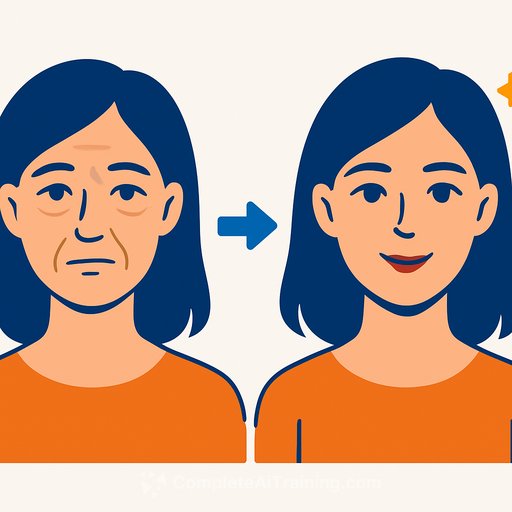
Results: immediate glow. The next day my makeup sat better than usual on my chronically dry skin. Could a skilled facialist have spotted this without AI? Probably. But the readout gave a quick, structured starting point.
The human still matters
The clinician wasn't worried about AI taking her job. Frankly, neither was I after seeing the setup. The model can be blunt, biased toward certain beauty norms, and easily thrown by lighting.
The human provided sense-making, empathy, and choices. The AI provided speed and consistency. That pairing worked.
Product takeaways for AI-enabled services
- Design for emotional safety. "Age: 35" in bold is a gut punch. Use ranges, confidence levels, and friendly microcopy. Add a "lighting may affect results" note up front, not after.
- Gate sensitive outputs. Make perceived-age and "problem areas" optional. Default off for first-time users.
- Flag poor inputs early. Detect harsh lighting, shadows, or glare and prompt a retake before showing scores.
- Explain scores in plain language. Show the features that influenced each score and offer one clear next step.
- Bias checks are non-negotiable. Test across skin tones and age groups. Publish performance notes and known limits. Consider mapping practices to the NIST AI Risk Management Framework.
- Close the loop. Track outcomes (e.g., hydration improvements, user-reported satisfaction, repeat visits) and feed that back into your roadmap, not just your model.
- Service clarity. Be explicit in booking: what the AI suggests, what the clinician decides, time required, and what success looks like.
- Pricing and funnel ethics. The facial was £200; the analysis is free. Don't let the free tool create insecurity as a conversion tactic. Build with care.
- Privacy by default. State where images are processed, how long they're stored, and how to delete them. Put that choice where the upload happens.
UX writing notes (because words leave marks)
- Soft edges on hard truths. Replace "Age: 35" with "Looks similar to 32-36 (low confidence). Lighting may affect this."
- Focus on action, not judgement. "Hydration is low. Try X and retest in 7 days" beats "Hydration: 11/100."
- Avoid one-size beauty norms. Offer "skip" on aesthetic suggestions and frame variation as normal.
- Provide a safety net. Add "Talk to a specialist" or "Message a clinician" if scores are very low or confidence is low.
- Show uncertainty on-screen. Confidence, image quality, and key assumptions should live next to the result, not in a help doc.
Was it worth it?
For me, yes - mostly because the clinician used the data well. The AI gave quick structure; the person made it useful.
For builders, the lesson is simple: speed is easy; trust is the work. If your product touches self-image, your copy, defaults, and handoffs will make or break the experience.
Quick facts
- Service: AI-guided facial by Apeer Beauty, delivered at Nurse Nicola Aesthetics (London)
- Cost: £200 for the treatment; the AI analysis is free online
- Standout result: Better hydration feel and makeup wear the next day
- Main gap: Blunt presentation of sensitive results; lighting sensitivity
For teams building with AI
If you're shipping AI features in consumer services, train your team on prompt strategy, evaluation, and safe UX patterns. Start small, measure impact, and iterate fast without losing the human layer.
Useful resources: curated tracks by role at Complete AI Training.
Your membership also unlocks: