IBM broadens AI education and patent stance as enterprise use cases grow
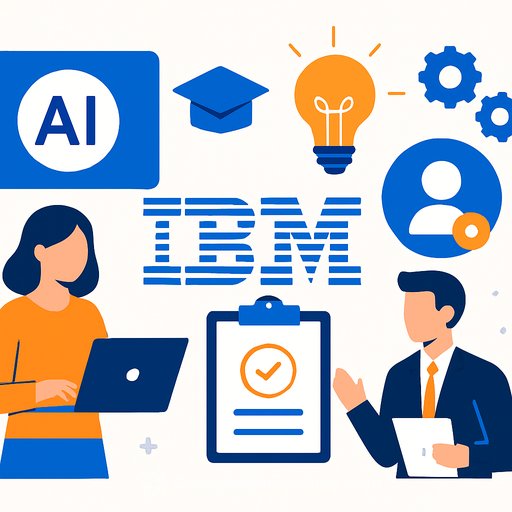
IBM is stepping up its role in AI skills development through a partnership with the UK government, with the goal of upskilling millions in practical AI capabilities. At the same time, the company is taking a leadership role in open-source patent protection through an updated Open Invention Network (OIN) 2.0 framework. On the product side, IBM is shipping new tools: agentic AI for enterprise compliance, and fan engagement platforms already seen at major events like the Grammys.
If you work in education, this is a clear signal: industry needs applied AI skills at scale, with legal and ethical literacy built in from the start. The opportunity is to translate these moves into curricula, labs, and assessments that prepare learners for real work, not just theory - consult Design resources for AI-focused course and lab planning.
What this means for educators
- Shift from AI awareness to hands-on fluency: prompt writing, data handling, evaluation methods, and workflow automation using agent-based systems.
- Teach compliance as a feature, not an afterthought: audit trails, policy checks, bias testing, and documentation.
- Bring live enterprise cases into class: regulated industries, events, and media partnerships where AI is already in production.
Open-source patents and OIN 2.0: teach the rules early
IBM's support for OIN 2.0 signals stronger protection for open-source developers against patent risk. Students who will ship software need to grasp how open-source licensing, patent pools, and contribution policies actually work.
- Introduce IP basics: trademarks vs. copyrights vs. patents, plus how open-source licenses interact with commercial use.
- Run a "policy lab" where students choose licenses for a project, justify the choice, and outline compliance steps for a real deployment.
For background on patent non-aggression in open source, see the Open Invention Network. For national AI skills context, review UK government AI initiatives here.
Use cases to bring into your classroom
Agentic AI for compliance. Think autonomous checks against policy, generating evidence, and flagging anomalies. Turn this into a lab: give students a policy set, a sample dataset, and have them design an agent workflow that runs checks, explains decisions, and logs results.
Fan engagement at major events. Personalization at scale, content moderation, real-time insights, and multi-channel orchestration. Have students map the data flows, define privacy guardrails, and measure success with clear metrics (engagement rate, CSAT, response time).
Practical moves for next term
- Week 1-2: AI literacy refresh with hands-on prompts, data quality basics, and output evaluation rubrics.
- Week 3-4: Compliance fundamentals: privacy, auditability, fairness tests, documentation templates.
- Week 5-7: Build an agent workflow for a regulated scenario (HR, finance, or healthcare sandbox).
- Week 8-9: Case study-event fan engagement. Students propose an MVP with KPIs, risks, and an ethics checklist.
- Capstone: Industry-style review where teams defend choices on accuracy, safety, legal, and cost.
Assessment ideas that map to the job market
- Portfolio: prompts, system diagrams, evaluation sheets, and agent run logs.
- Compliance packet: data map, DPIA summary, model card, and audit trail sample.
- Post-incident report: students triage a hypothetical failure and propose fixes.
Resource pointers
- AI Learning Path for Primary School Teachers - a practical pathway to upskill educators and adapt classroom AI curricula: AI Learning Path for Primary School Teachers.
Why this matters
Enterprises are asking for people who can build AI systems that are useful, safe, and defensible. IBM's moves highlight three pillars you can fold into your program now: skills at scale, clear IP and licensing literacy, and real use cases that reflect production constraints. Teach those well, and your learners graduate ready to contribute on day one.
Your membership also unlocks: