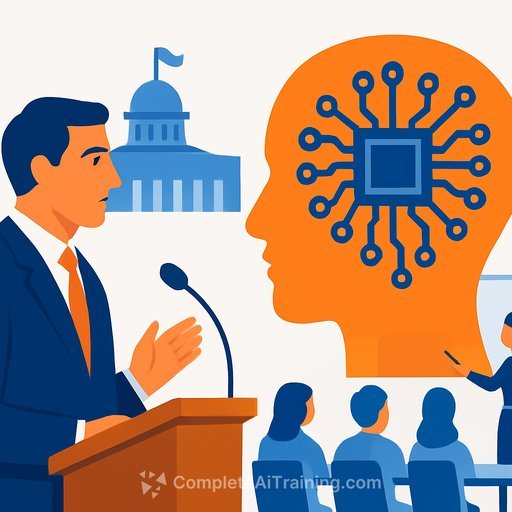
Idaho governor signs bill requiring statewide AI framework for schools
Idaho Gov. Brad Little signed legislation requiring the state Department of Education to develop guidelines for using generative AI in classrooms, marking the first formal policy on the technology in the state's schools.
Senate Bill 1227 passed without the specific restrictions that typically accompany new education mandates. State Superintendent Debbie Critchfield said the framework should target teachers as much as students, since many educators lag behind their pupils in AI familiarity.
Critchfield asked a classroom of fourth graders whether they use AI daily. All raised their hands. "The surprised group in the room were the adults," she said.
What the law requires
The framework must be human-centered, transparent, and safe. The bill defines generative AI narrowly to include text, image, and video generation, excluding AI systems designed primarily for data classification like those in autonomous vehicles.
Sen. Kevin Cook, R-Idaho Falls and a software engineer, sponsored the bill. He deliberately left the law open-ended so it could adapt as the technology changes. "We didn't tie down the bill," Cook said.
The inevitability argument
Little framed the decision as accepting technological reality rather than planning ahead. "You can make the argument that the AI genie is out of the bottle," he said. "Nobody's putting that genie back in the bottle."
He referenced Moore's Law, the 1965 observation that semiconductor components double in density roughly every two years. The pattern has held for decades, Little noted, making continued AI advancement inevitable.
Idaho schools now have a mandate to catch up. The state previously had no guidelines for classroom AI use.
Learn more about AI for Education or explore Generative AI and LLM applications.
Your membership also unlocks: