Idaho's AI Push Meets the Classroom: What Educators Need to Do Now
Idaho Falls State Sen. Kevin Cook is centering Idaho's future on three fronts: water storage, artificial intelligence, and nuclear projects. The message for schools is clear-AI and energy are tied together, and both will drive local jobs and curriculum needs.
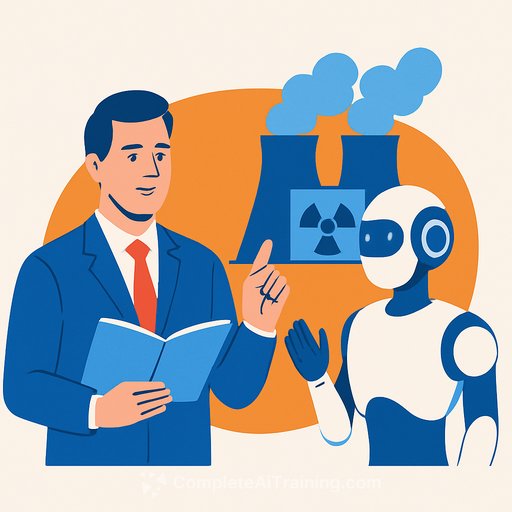
Cook, a software engineer, puts it bluntly: you can't scale nuclear without AI, and you can't scale AI without reliable energy. Idaho is already moving. Aalo Atomics has broken ground at the Idaho National Laboratory's Materials and Fuels Complex on a nuclear plant and data center to power AI projects. INL is also working with 17 national labs on the Genesis Mission to build an integrated AI platform.
Policy signals educators should watch
Nationally, President Donald Trump has made AI a top priority, signing multiple executive orders to push leadership in AI, including one that blocks states from crafting their own AI regulations. Cook supports the push and is drafting a bill for the 2026 session focused on AI education and responsible use in schools.
He's been meeting with leaders in banking, health, manufacturing, agriculture, and education to see what skills Idaho students will need. The short version: AI fluency is becoming basic literacy.
Addressing parent concerns without avoiding AI
Many parents want to keep kids away from AI because of safety concerns, especially sextortion scams. Cook argues avoidance isn't a strategy-education is. Clear guidance, boundaries, and ongoing conversations are how we make students safer and more capable.
State Superintendent Debbie Critchfield supports using AI effectively and responsibly in public schools. Idaho has added a digital literacy graduation requirement and is providing statewide professional development so teachers can integrate AI and model ethical use; districts can look to the AI Learning Path for Training & Development Managers for PD models and templates.
What this means for K-12 and higher ed
AI won't "take all the jobs," but people who learn to use it will replace those who don't. For educators, the work is practical: build curriculum, policies, and training that prepare students to enter an AI-enabled workplace.
Practical steps for schools
- Set clear classroom guidelines: Define acceptable AI use, disclosure expectations, privacy rules, and plagiarism boundaries. Require students to cite AI tools used and include prompts/outputs in appendices.
- Teach AI literacy, not just tools: Concepts to cover-how models work at a high level, limitations and bias, prompt writing, verification strategies, and data privacy.
- Assessment that reduces misuse: Mix process artifacts (drafts, iterations, sources) and oral checks. Grade thinking, not just final outputs.
- Parent communication plan: Send a one-page AI FAQ, host short evening sessions, and spell out what the school will allow and how safety is handled.
- Student safety protocols: Teach red flags, reporting steps, and never sharing explicit images. Coordinate with counselors and SROs on response plans.
- Professional development with guardrails: Short, job-embedded learning on classroom use cases, privacy, and copyright. Share vetted tools and lesson templates.
- Career connections: Tie projects to local sectors using AI-energy, agriculture, manufacturing, health. Invite guest speakers and explore internships with regional partners.
- Infrastructure check: Audit devices, bandwidth, and filtering. Plan for data governance and consent if tools require accounts.
Suggested AI unit map (adaptable by grade)
- Week 1: What AI is and isn't; where it shows up in daily life; strengths and limits.
- Week 2: Prompt writing and verification; spotting errors and bias; citing AI use.
- Week 3: Ethical use, copyright, privacy, and classroom norms; safety and reporting.
- Week 4: Project: solve a subject-area problem with AI assistance; reflect on process and outcomes.
Local context: AI needs energy-and Idaho is building both
The state's AI ambitions are tied to energy development. The INL project and the Aalo Atomics build signal long-term demand for AI skills across STEM, trades, and public services. That means more pathways for students-if schools start preparing now.
Chris Ritter, who leads scientific computing in AI at INL, says the technology could drive a shift on the scale of the industrial revolutions, with major effects on energy, national security, and science. Cook adds that AI is here to enhance human work, not replace it-and Idaho can take the lead while protecting kids.
Quick resources
Want structured courses and templates for educators?
Bottom line for schools
Idaho is aligning AI development with energy projects, and policy momentum is building. The opportunity for education is to set clear rules, teach practical skills, and give teachers the training they need. Start small, move fast, and keep students' safety and future employability at the center.
Your membership also unlocks: