The IDE Is Dead by 2026: A Field Guide for Dev Teams
"We're 9 to 12 months behind the AI curve." That warning came with a bigger claim: "The IDE is dead… it will be gone by 2026." The message is blunt because it needs to be. If your team still treats the IDE as the center of gravity, you're leaving output, speed, and market share on the table.
The old loop-think, type, debug-was built for manual throughput. It's comfortable, but it caps your ceiling. Sticking to it is like choosing a typewriter while everyone else moves to intent-driven systems that draft, test, and ship with minimal human typing.
From typing code to directing agents
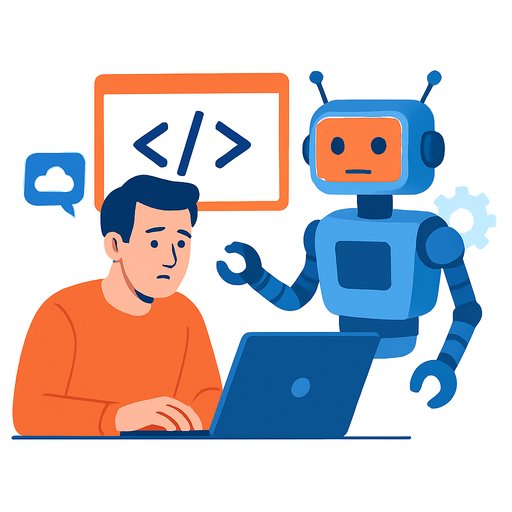
The next stack is conversational and agent-first. You set intent, provide constraints, and supervise. AI agents generate code, write tests, refactor, and spin up previews. When they're unsure, they ask clarifying questions instead of waiting for you to hit compile.
Your role shifts from line-by-line coding to high-leverage direction: define the goal, pin down edge cases, set quality bars, and monitor the system. Less "what's the syntax," more "what's the outcome, risk, and acceptance criteria."
Why this isn't just "better autocomplete"
Today's helpers-code completion, inline docs, chat in your editor-are useful but still anchored to manual input. They keep you in the same loop. The next step is multi-agent orchestration that understands context, plans work, and acts across your dev toolchain.
Projects like Amp point at that future: intent in, coordinated agents out. The goal is a partner that anticipates needs, proposes approaches, and moves work forward without waiting on you to drive every keystroke.
What changes in your stack and org
- Move from code-first to intent-first: specs and constraints become the source of truth; code is an artifact.
- Adopt multi-agent workflows: planner, implementer, tester, reviewer, and deployer agents coordinated by policy.
- Make specs machine-checkable: acceptance criteria, test scaffolds, and data contracts up front.
- Treat context as fuel: repos, tickets, logs, runbooks, and architecture notes feed your agents.
- Add guardrails: reproducible runs, policy-as-code, secret hygiene, and gated promotions.
- Instrument the AI: prompt traces, diffs, eval scores, and audit logs become first-class telemetry.
- Keep humans in the loop: code owners, risk-based approvals, and rollback plans stay non-negotiable.
A practical 90-day plan
- Pick 2-3 use cases with clear ROI (bug fixes, test generation, refactors, internal tools). Keep the blast radius small.
- Stand up an agent-friendly flow: issue → intent/spec → plan → PR → review → preview → deploy. Automate handoffs.
- Add dual approvals: human + policy/agent checks. Require green tests, vulnerability scans, and SBOMs for merges.
- Track hard metrics: PR throughput, lead time, escaped defects, MTTR, and % AI-authored code merged.
- Train the team: prompt patterns, constraint writing, verification habits, and agent orchestration basics.
- Modernize testing: higher coverage, fast suites, contract tests, and golden datasets for consistent evals.
Risks and how to handle them
- Wrong or brittle code: constrain tools, write clear specs, and enforce tests on every change.
- Security and secrets: isolate environments, scan everything, and block outbound calls by default.
- Licensing and provenance: generate SBOMs, track sources, and prefer allowlisted dependencies.
- Vendor lock-in: abstract providers, keep prompts/specs portable, and pilot at least one local model path.
- Model drift: schedule evals, compare against gold tests, and fail closed on regressions.
Skills that will matter more
- Systems thinking and architecture under constraints.
- Prompt and spec writing that is testable and unambiguous.
- Agent configuration, policy design, and tool wiring.
- Data plumbing for context: embeddings, docs, logs, and code graphs.
- Human-in-the-loop QA and incident response.
What to do this week
- Audit where your team spends time typing instead of deciding. Convert one high-churn area to intent-first.
- Spin up a thin "AI dev environment" with sandboxed repos, ephemeral previews, and required tests.
- Standardize spec templates: problem, constraints, acceptance criteria, risks, and test plan.
- Pilot one agent chain on a safe workflow (e.g., test generation → refactor → PR with summary and diffs).
This move will pick winners
Teams that adapt will ship faster with fewer defects and leaner headcount growth. Teams that cling to the old loop will feel slower every quarter. The shift isn't about replacing developers; it's about changing how we work so our effort compounds.
If you need a baseline before you go agent-first, tools like GitHub Copilot can warm up your workflows, and frameworks like the NIST AI RMF help you set sane guardrails.
Next steps and resources
- Explore curated tools for code generation: Generative Code Tools.
- Level up your team with structured practice: AI Certification for Coding.
The message is clear: by 2026, the center of software work shifts from the IDE to intent and agents. Start building that muscle now-before your competitors do it for you.
Your membership also unlocks: