If the AI Trade Stumbles, Here's What Likely Happens
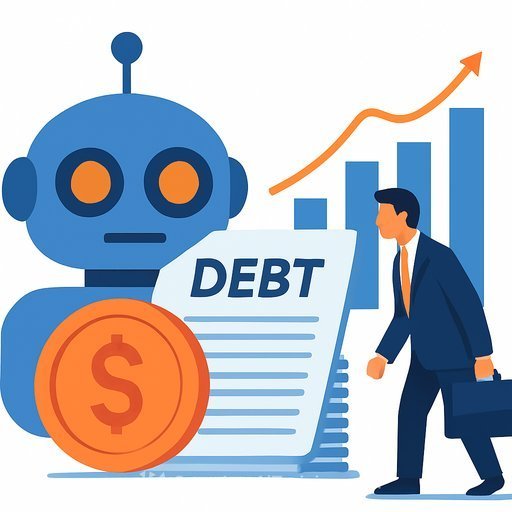
AI-linked names have driven a huge share of equity gains over the past two years. That concentration cuts both ways. If sentiment breaks, repricing won't be contained to a niche corner of tech - it will hit the indexes you quote to clients every day.
Using history as a guide and stress-testing common scenarios, here's a clear picture of what a pullback could look like and the moves that protect capital.
1) A Sharp Repricing of AI Leaders
The market is top-heavy. Nvidia, AMD, Microsoft, Alphabet, and Meta carry outsized index weight. If the crowd decides growth assumptions overshot reality, these names likely correct first - fast - and anything tied to AI infrastructure follows.
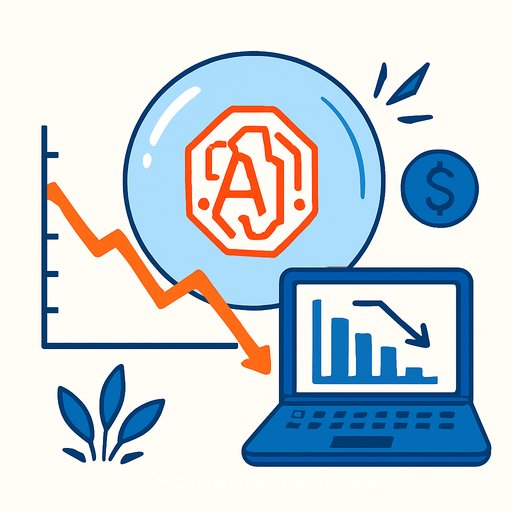
Because these companies dominate the S&P 500 and Nasdaq, even a handful of swift declines can drag the benchmarks lower. Think echo of the early 2000s in pace, not a carbon copy in fundamentals. For context on that period, see a primer on the dot-com unwind.
2) A Broader Market Correction and Rotation
If AI leadership wobbles, expect a broad index pullback in the 10%-20% range. That's what happens when the biggest weights reset expectations.
But corrections rarely hit all sectors equally. Capital tends to rotate into defensives - utilities, healthcare, consumer staples - where earnings are steadier and cash flows are easier to underwrite. Diversified portfolios feel the drawdown, but less than single-theme exposures.
3) Startup Valuations Could Cool - Quickly
Private markets have priced in relentless AI adoption. If public comps slide, late-stage valuations compress, hiring slows, and burn rates come under a microscope. Consolidation picks up as strong balance sheets buy teams and IP at a discount.
Some AI startups won't make it. The ones that do will have real customers, clear unit economics, and shorter paths to cash generation.
4) Systemic Risk? Unlikely
A 2000- or 2008-style collapse looks far-fetched. Today's AI leaders print real revenue from multiple lines of business outside pure AI bets. Nvidia, Microsoft, and Amazon can weather a downcycle far better than profitless dot-coms did.
Put simply: the fundamentals are sturdier. Corrections can still be painful, just less existential.
5) Odds of an "AI Bubble" Burst vs. a Correction
High-growth pockets tend to overshoot on the way up and overshoot on the way down. A 15%-30% pullback in leading AI names wouldn't be surprising.
A total collapse is less probable. AI is already embedded in real workflows, and productivity gains are showing up across industries. Expect volatility, not a void.
6) Playbook for Finance Pros
- Quantify concentration risk: Look-through exposure to the top 10 weights in cap-weighted funds and client SMAs. Set hard caps and rebalance rules.
- Re-underwrite growth: Pressure-test AI revenue ramps, gross margin durability, and sensitivity to capex cycles (GPUs, data centers, cloud spend).
- Favor cash and cash-flow: Prioritize balance-sheet strength, FCF conversion, and pricing power. Junky balance sheets are the first to crack.
- Map second-order effects: Semis, hyperscalers, cloud, integrators, and beneficiaries of AI opex - know who relies on whose spend.
- Build a barbell: Pair quality growth with defensives that can hold their ground if multiples compress.
- Hedge smartly: Use index or sector hedges during earnings and key guidance windows; keep sizing disciplined.
- Liquidity plan: Predefine trim levels and liquidity sources for drawdowns so you're not forced to sell at the lows.
7) What to Watch
- Order books and lead times: GPU backlogs, cloud consumption trends, and capex guidance from hyperscalers.
- Earnings quality: Revenue mix, deferred revenue trends, and incremental margins on AI products.
- Macro stress: Credit spreads, equity volatility, and EPS revision breadth across tech and cyclicals.
- Positioning: Crowding in mega-cap tech via options and passive flows; dealer gamma dynamics around big events.
Bottom Line
Expect swings. A reset in AI leaders would pull the indexes lower, but it's more likely a tough correction than a crisis. Portfolios built on cash flow, diversification, and clear risk limits will hold up best.
If you're upgrading your team's AI fluency so it survives hype cycles and adds real operating leverage, consider training for leaders and technologists such as AI for Executives & Strategy and the AI Learning Path for Technology Managers. Here's a vetted list of AI tools for finance.
Your membership also unlocks: