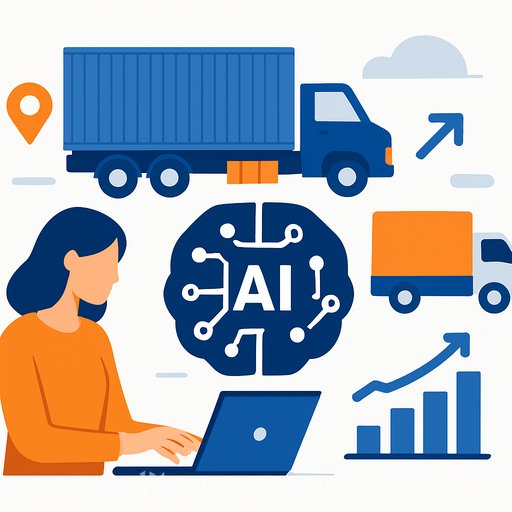
IFS Launches AI-Powered Logistics Platform to Close Supply Chain Visibility Gap
IFS, an industrial software company, announced IFS.ai Logistics, an AI platform built for enterprises managing complex transport networks across multiple carriers and regions. The platform integrates transport planning, automated execution, freight audit, and network optimization into a single system that runs within IFS Cloud alongside existing enterprise resource planning and supply chain tools.
The launch addresses a structural problem in logistics: enterprises spend 5 to 10 percent of revenue on transportation, yet most lack visibility into fragmented data scattered across carriers, legacy systems, and spreadsheets. For large manufacturers, a one-percent inefficiency in freight spend translates to tens or hundreds of millions in annual losses.
What the Platform Does
IFS.ai Logistics operates across four capability areas:
- AI-driven transport planning. The system replaces manual carrier selection with optimization across shipping modes, routes, and trade lanes.
- Automated execution. Real-time shipment visibility and exception handling reduce booking errors and operational overhead.
- Freight audit. The platform validates invoices at line-item level, applies accounting codes automatically, and flags billing discrepancies to recover costs.
- Network simulation. Teams can model what-if scenarios for carrier strategy, cost forecasting, emissions planning, and procurement consolidation.
The platform standardizes fragmented transport data into a single data model, creating one source of truth for reporting and forecasting across the supply chain.
Building on Existing Capabilities
IFS built the platform on technology from 7bridges, acquired in 2025. The company manages $2.4 trillion in critical assets for customers globally and recently acquired IFS Softeon for warehouse management. IFS.ai Logistics connects those warehouse operations to final delivery, linking inventory decisions, fulfillment, carrier selection, and freight cost management in a single operational loop.
Philip Ashton, president of IFS.ai Logistics, said customers can capture value within weeks by applying AI directly to specific logistics operations. "When you close the loop between every operational logistics decision and its financial consequence, you protect margins, improve service reliability, and increase operational agility," Ashton said.
For operations managers, understanding how to apply AI to supply chain optimization is increasingly critical. An AI learning path for operations managers covers the fundamentals of workflow automation and operational excellence-the core capabilities IFS.ai Logistics delivers. Teams working with AI agents and automation will recognize how these platforms reduce manual decision-making and create faster feedback loops between operations and financial outcomes.
Your membership also unlocks: