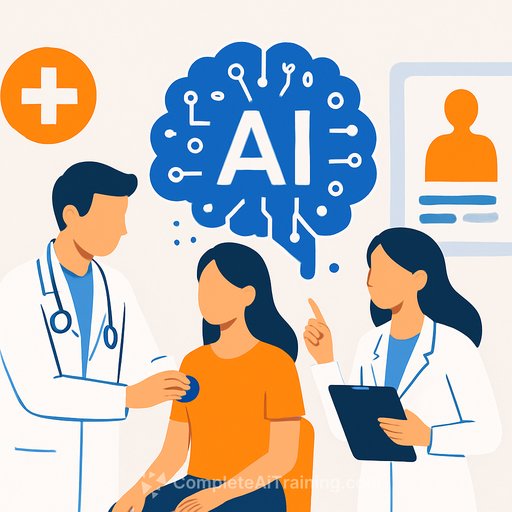
Ministry of Education sets up AI Healthcare Centre at IISc Bengaluru
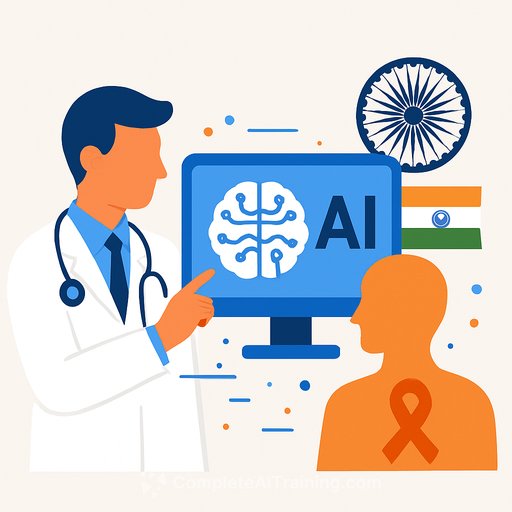
The Ministry of Education has established a new AI Centre of Excellence for Healthcare at the Indian Institute of Science (IISc). The centre-Translational AI for Networked Universal Healthcare (TANUH) Foundation-will focus on AI-driven early detection and primary care for non-communicable diseases (NCDs).
TANUH has been set up as a Section 8 not-for-profit company under IISc. It is part of a national plan to create four AI-CoEs in leading academic institutions. Nine IISc faculty members are anchoring core research across digital health, machine learning, and public health.
What this means for healthcare teams
- Point-of-care tools that flag risk early and surface next-step guidance.
- Decision support that complements, not replaces, clinical judgment.
- Personalised monitoring for ongoing management of NCDs.
- Workflow-aligned solutions built with clinicians and tested in real settings.
Early projects and clinical focus
The centre's first projects target high-burden conditions: oral and breast cancer, retinal diseases, diabetes, and mental health. These are being co-developed and tested with clinicians at partner institutions, including AIIMS, New Delhi.
"We are excited to establish TANUH. This multidisciplinary centre will deliver scalable AI solutions for non-communicable diseases exemplified by our award-winning Aarogya Aarohan app," said Prof G Rangarajan, director, IISc and chair of TANUH's board. Aarogya Aarohan is a mobile tool for early detection of oral potentially malignant disorders and oral cancer.
Responsible AI and clinical validation
All solutions are being built under responsible AI standards and evaluated with clinicians before broader deployment. For those considering pilots, look for clear validation protocols, bias checks across diverse populations, and explainability that supports decision-making at the bedside.
- Define clinical endpoints and safety thresholds before evaluation.
- Ensure consented, de-identified data with strong data governance.
- Track operational metrics: time-to-triage, follow-up adherence, and false positives/negatives.
- Plan EMR integration, handoff points, and accountability in the care pathway.
How providers can engage
- Identify NCD use cases in your setting where early risk signals change outcomes (oral screening, diabetic retinopathy, breast cancer follow-up).
- Set up a cross-functional team: clinicians, nursing leads, IT, data officers, and QA.
- Prepare small, well-annotated datasets for initial feasibility studies with strict privacy controls.
- Build AI literacy across staff and establish a review cadence with ethics and compliance.
TANUH's mandate is clear: take clinically grounded AI from lab to field, with frontline workers at the centre. For hospitals and public health programs, this is a practical path to earlier detection, consistent triage, and measurable outcomes in NCD care.
If your team is building internal AI capability, you can explore role-based upskilling resources here: AI courses by job.
Your membership also unlocks: