IIT Delhi's 'AILA' aims to run real lab experiments-like a human scientist
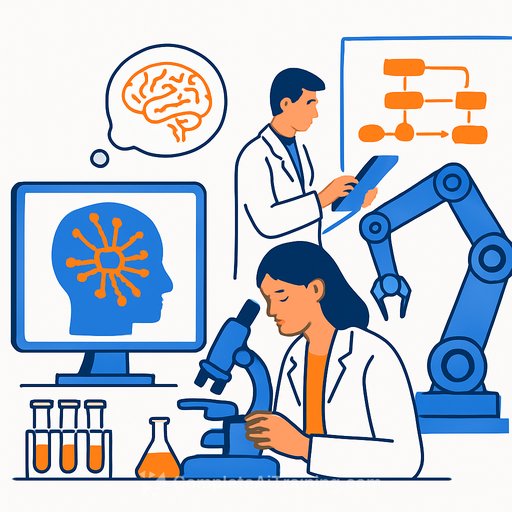
IIT Delhi researchers announced an AI agent, AILA, built to conduct real experiments in physical laboratories. The motivation is clear: models that ace materials science quizzes often fall apart in messy, time-sensitive lab situations where quick adaptation matters.
AILA targets that gap. The promise is an agent that can plan, execute, and adjust experiments in real time-not just predict answers on paper.
Why this matters to working scientists
Most AI benchmarks reward recall and pattern recognition. Real laboratories require perception, control, and situational awareness-fluids spill, sensors drift, reagents degrade, instruments hang, and protocols need on-the-fly tweaks.
An AI that can operate in that environment moves from "knowing" to "doing." That's the difference between passing a quiz and producing reproducible data.
The gap exposed
- Strong performance on materials science tests didn't translate to dependable behavior in the lab.
- Static prompts fail when conditions shift mid-run; agents need closed-loop feedback and fast decision updates.
- Success depends less on bigger models and more on grounding, interfaces with instruments, and safe control policies.
What AILA implies for lab operations
- Closed-loop experimentation: plan → run → measure → adjust, with minimal human intervention.
- Throughput and reproducibility: consistent execution across long runs, nights, and weekends.
- Safety and guardrails: constraint checks before actions; human override for high-risk steps.
- Integration work: reliable APIs to controllers, cameras, balances, pumps, heaters, and data systems.
- Data discipline: structured logging, versioned protocols, and clear provenance to trust results.
What to watch next
- Benchmarks that test real lab behavior, not just knowledge recall.
- Standardized interfaces for common instruments to reduce custom plumbing.
- Clear policies on responsibility, audit trails, and failure handling.
- Practical training for teams: agent workflows, prompt policies, safety interlocks, and QA for autonomous runs.
If you're upskilling for AI-enabled lab work, you may find curated training useful: AI courses by job and latest AI courses.
Context
AILA aligns with ongoing efforts in autonomous experimentation and "self-driving" labs seen across materials and chemistry. For a broader overview of autonomous discovery systems, see this reference from Nature on AI-guided materials discovery.
For related work and resources, see Research.
For background on the institute's research focus areas, visit IIT Delhi.
Bottom line
Quiz performance is easy. Reliable action in a live lab is hard. AILA is a step toward agents that can adapt, correct, and carry experiments to completion under real constraints-the bar that actually moves science forward.
Your membership also unlocks: