From AI to immigrant rights: What Illinois schools need to know about 2026 education laws
Illinois has new education laws in effect this month. Two themes matter most for district leaders and counsel: stronger protections for immigrant students and a clear push to manage artificial intelligence in schools with care.
Student rights regardless of immigration status
An amendment to the Illinois School Code makes it explicit: public schools cannot deny a student a free public education because of immigration or citizenship status. This fits with long-standing federal precedent and removes any doubt at the district and building level.
Confidentiality: no sharing of immigration status
The new law prohibits schools from sharing a student's citizenship or immigration status with immigration or law enforcement agencies. To comply, districts need tighter controls on data collection, storage, and requests for records.
Immediate steps for compliance (immigration-related)
- Audit enrollment forms and purge any fields requesting citizenship, immigration status, or Social Security numbers unless a specific legal requirement applies.
- Train front-office staff on enrollment scripts: acceptable documents, what not to ask, and how to respond to status-related questions.
- Centralize all law enforcement and records requests through the superintendent or legal counsel; maintain a log of all requests and responses.
- Restrict access to any legacy records that contain immigration data; update SIS permissions and retention schedules.
- Update board policies and student handbooks to reflect non-discrimination and confidentiality requirements; post notices in multiple languages.
- Create a confidential channel for students and families to report violations, and set a clear investigation and remediation process.
AI in classrooms and operations
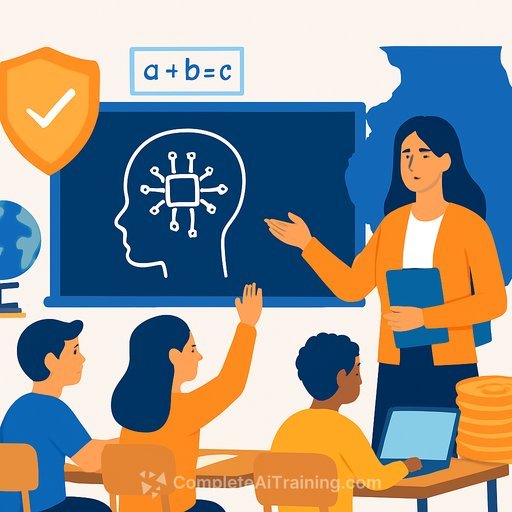
State action puts AI on the front burner for schools. Expect more classroom use, more AI-enabled tools in operations, and higher expectations around privacy, fairness, and academic integrity; see AI for Government for public-sector policy and governance context relevant to schools.
Even as specifics evolve, existing laws still apply. Privacy rules under FERPA and Illinois' SOPPA, discrimination protections, and due process in discipline all carry over to AI-supported practices; consult resources on AI for Legal when aligning contracts and compliance work.
A practical AI policy framework to adopt this semester
- Acceptable use: define where AI is allowed, required disclosures by students, and teacher guidelines for instructional use.
- Assessment integrity: set rules for AI-assisted work, due process for suspected misuse, and alternatives for students without access.
- Data governance: document what student data AI tools collect, storage location, retention, deletion, and who can access it.
- Procurement: require vendor data maps, SOPPA-compliant agreements, bias testing disclosures, and audit rights.
- Equity and accessibility: ensure accommodations, monitor disparate impacts, and provide non-AI pathways when needed.
- Communications: publish a plain-language AI FAQ for families and staff, including consent workflows where applicable.
- Professional learning: train teachers and support staff on safe use, common failure modes, and classroom workflows.
References and guidance
Board and cabinet checklist
- Adopt or revise policies on enrollment, records, law enforcement interactions, AI use, and vendor management.
- Update student/parent handbooks, staff manuals, and website notices; translate all core messages.
- Amend DPAs and SOPPA exhibits for AI vendors; verify data minimization and deletion terms.
- Stand up an incident response workflow for privacy or AI-related issues with clear escalation to counsel.
- Schedule quarterly reviews of AI tools in use, including classroom pilots and administrative systems.
What to communicate to families and staff
- Enrollment is open to all eligible students; schools will not ask for or share immigration status.
- How AI may be used in instruction and grading, and what protections are in place for student data.
- Who to contact with questions or concerns, in families' preferred languages.
If you need practical training for staff adopting AI in instruction or operations, explore focused courses and certifications on AI for Education.
This article is for general information and does not constitute legal advice. Consult district counsel to apply these requirements to your policies and contracts.
Your membership also unlocks: