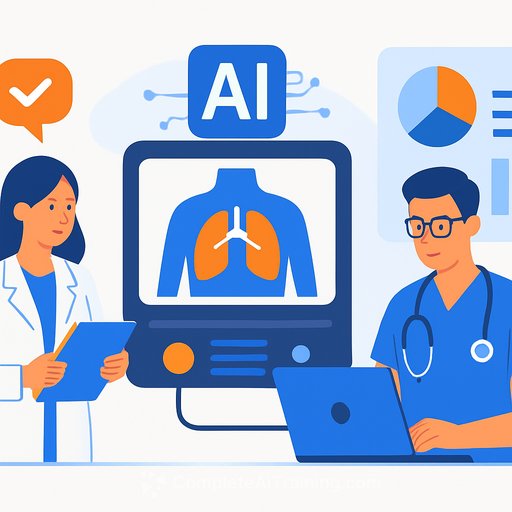
Artificial Intelligence Strategies for Implementing AI-Powered Medical Devices
AI is moving from pilot to practice across imaging, monitoring, and clinical decision support. The promise is clear: fewer errors, faster answers, and lighter administrative load.
The risk is equally clear: failed rollouts, clinician resistance, and unclear accountability. Success depends on clear goals, solid groundwork, and steady execution.
The current healthcare imperative
Healthcare systems face staff shortages, rising demand, budget pressure, and documentation overload. AI-enabled devices can help clinicians triage, detect, and decide with greater speed and consistency.
Use cases span cancer detection, cardiovascular risk, diabetic retinopathy screening, infectious disease monitoring, and process automation. Machine learning handles scale; natural language processing pulls insight from clinical notes; deep learning supports image interpretation with high accuracy.
Core implementation strategies: the TOE lens
Technology: Match the AI system to a defined clinical need. Validate data requirements, model performance, and integration with EHR/PACS and existing workflows. Favor interoperability over standalone tools. Teams developing or validating models can consult the AI Learning Path for Data Scientists to strengthen model development, validation, and integration skills.
Organization: Assess funding, leadership commitment, and staff readiness. Projects that begin without full budget allocation for licenses, infrastructure, training, and support tend to stall.
Environment: Factor in regulatory pathways, privacy laws, and professional standards. Approval timelines and required evidence vary, and they influence deployment speed and scope.
Multi-stakeholder engagement and financing
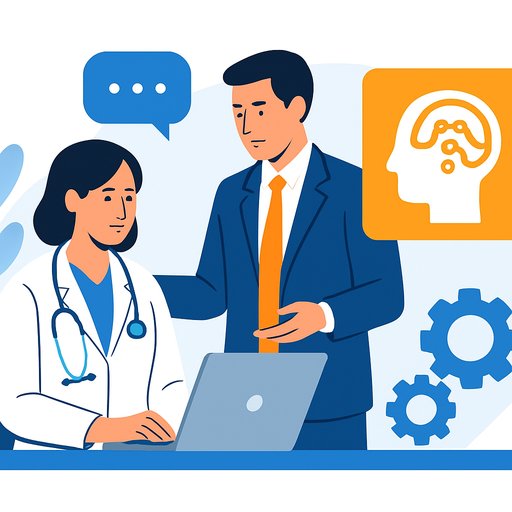
Bring clinicians, IT, biomedical engineering, data privacy, quality, and regulatory experts to the table early. Include patient representatives when the device affects the care experience.
Secure end-to-end financing up front. Incremental funding and half-measures create delays, diminish trust, and lead to unfinished implementations.
Change management and training
Clinician adoption rises when tools feel useful and easy. Show direct gains: fewer clicks, faster reads, clearer risk flags, better triage.
Pair hands-on training with real cases. For example, walk radiology teams through how AI flags findings on chest X-rays or mammograms, and where final clinical judgment still leads.
For structured upskilling by role, explore curated learning paths that map AI skills to clinical and operational jobs: AI courses by job. Training leads and organizational sponsors may also find the AI Learning Path for Training & Development Managers useful for governance, capability building, and change management.
Practical implementation examples
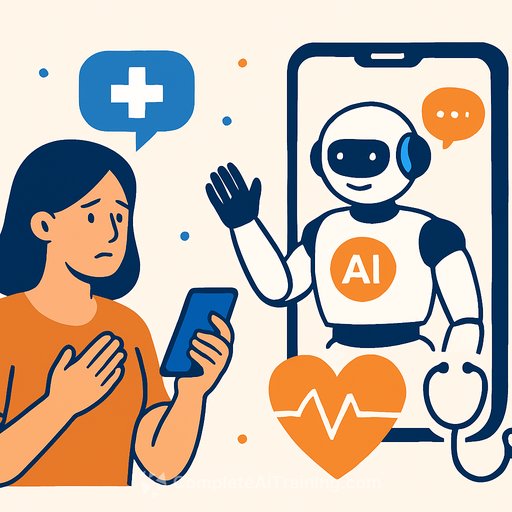
- Remote patient monitoring: Wearables and mobile apps stream vitals to cloud models that alert care teams to early deterioration in chronic disease-especially useful in rural or low-resource areas.
- AI-assisted clinical decision support: NLP auto-extracts history, meds, symptoms, and labs from the record to pre-populate notes and suggest next steps.
- Infectious disease surveillance: Models scan population-level signals to spot outbreaks and forecast spread, guiding targeted public health actions.
- Birth asphyxia detection: Signal analysis of newborn cries to flag perinatal complications for faster intervention in maternity settings with limited staff.
Critical barriers to address
1) Data quality, privacy, and security
Poor or biased training data leads to unreliable outputs. Health data breaches carry clinical, legal, and reputational consequences.
- De-identify data and document provenance.
- Use secure storage, encrypted transmission, access controls, and audit trails.
- Run routine security assessments and penetration tests.
2) Regulatory uncertainty and accountability
Liability is still evolving for AI-assisted care. Define roles: what the device recommends, what the clinician decides, and what's logged.
Track updates from regulators setting expectations for validation and post-market monitoring. For reference, see the FDA's approach to AI/ML-enabled SaMD: AI/ML SaMD Action Plan.
3) Algorithmic bias and the "black box" problem
Models trained on narrow datasets can worsen inequities and erode trust. Clinicians hesitate to act on outputs they cannot scrutinize.
- Ensure diverse, well-curated training data; document development choices.
- Validate across sites, devices, and patient subgroups.
- Monitor performance drift and disparities, and recalibrate as needed.
4) Ethical and professional concerns
Questions about autonomy, informed consent, and the human touch matter. Align with principles of beneficence, non-maleficence, justice, and respect for persons-within local cultural norms.
How to overcome implementation challenges
Establish governance and oversight
- Clinical validation committees to review accuracy and clinical utility before go-live.
- Ethics oversight to assess privacy and consent implications.
- Performance dashboards segmented by condition, modality, and population.
- Clear documentation of when AI augments versus automates decisions.
Build infrastructure and capacity
- Ensure reliable power, connectivity, and secure cloud or on-prem resources.
- Integrate AI into existing systems to reduce disruption and speed adoption.
- Invest in digital literacy, AI fluency for clinicians, and change management.
Ensure quality data and transparency
- Define data collection, labeling, storage, and access standards.
- Publish validation methods, known limitations, and intended use.
- Commit to continuous monitoring for accuracy, safety, and fairness.
Recommendations for healthcare leaders
- Fund the full lifecycle before kickoff-software, infrastructure, training, support, and post-market monitoring.
- Engage clinicians early; prioritize perceived usefulness over top-down mandates.
- Deliver practical training with real cases; show where the tool saves time or improves accuracy.
- Stand up governance-clinical, ethical, and operational-to keep patients safe and outcomes equitable.
- Invest in data quality and security before scaling deployments.
- Partner with regulators and professional bodies to align on standards and accountability.
- Measure performance across demographics and care settings; correct bias promptly.
- Plan for legacy integration and phased rollouts to maintain continuity of care.
Bottom line
AI-based medical devices can ease clinician workload, improve consistency, and support better outcomes. Getting there takes more than buying software.
The organizations that succeed identify a clear clinical use case, secure funding, involve clinicians, set up strong governance, and keep monitoring what matters. That balance-innovation with safety and accountability-builds patient trust and delivers results that justify the investment.
Your membership also unlocks: