India Will Teach AI from Class 3 by 2026-27: What Educators Need to Do Now
India plans to introduce Artificial Intelligence from class three starting in 2026-27. The Ministry of Education is building an end-to-end K-12 framework rooted in the National Education Policy 2020 to help students build in-demand tech skills for a digital economy.
This is a big systems change. The promise is clear: better personalization, lighter admin load for teachers, and stronger career readiness. The question is whether schools can execute at scale-and do it equitably.
The teacher question: readiness at scale
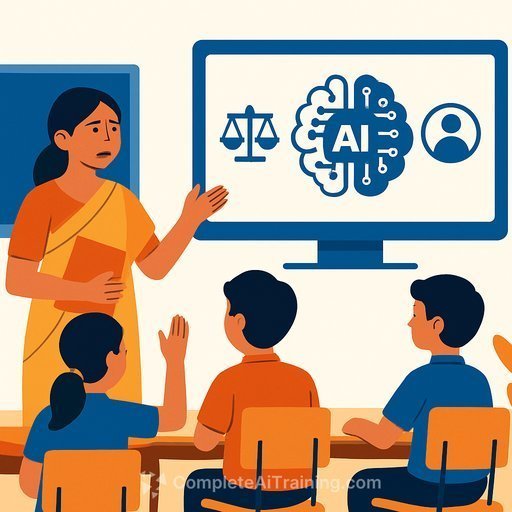
Over one crore educators will need training. Pilot programs are underway where teachers use AI tools to plan lessons, build resources, and give feedback. Since 2019, more than 10,000 teachers have been trained with support from Intel, IBM, and government institutes such as NIELIT.
The gap is practical readiness. Confidence with AI, time to practice, device access, and local-language support will decide outcomes more than policy memos.
What AI changes-and what it doesn't
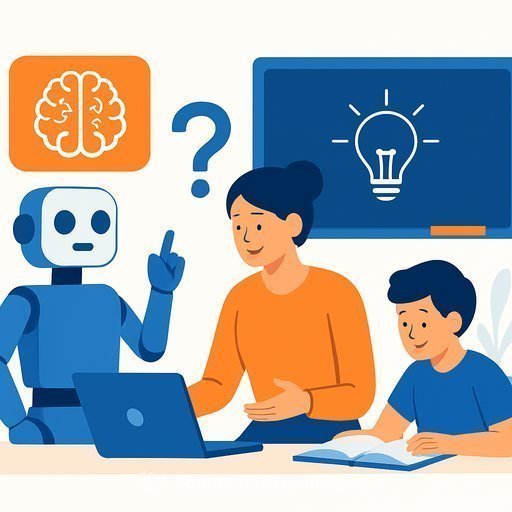
AI supports teachers; it doesn't replace them. Tools can handle repetitive work-grading objective items, attendance, drafting quizzes-so teachers spend more time coaching, questioning, and mentoring.
Personalization is the real shift. Systems can spot who needs a different explanation in algebra or who is ready to go deeper in biology, and adjust content and practice accordingly. That's a boost for engagement and for students who learn at different speeds or in different languages.
Generative AI is already here
More than half of India's higher education institutes are using generative AI for teaching and student support. Think: 24x7 chatbots for queries, quick quiz creation, and study guides shaped by past performance.
Set guardrails early: clear policies on acceptable use, citation, and assessment design that measures thinking, not prompts. Avoid over-relying on AI "detectors"; they're inconsistent and can penalize honest students.
Inclusion and accessibility
AI lowers barriers when implemented with intent. Speech-to-text, text-to-speech, translation, captioning, reading-level adjustments, and multimodal resources help learners with disabilities and non-native speakers.
For multilingual classrooms, AI can convert teacher materials into local languages and turn dense text into simple summaries. The goal is a fair shot for every learner, not just the digitally fluent.
Workforce signals you can't ignore
According to recent analysis cited by policymakers, AI may displace some tech roles in the short term while creating more roles by 2030 that demand new skills and adaptability. Preparing students early is a hedge against volatility.
For context on India's AI direction, review NITI Aayog's AI strategy paper. The takeaway: fluency with AI tools, data literacy, and problem framing will matter as much as coding.
What school leaders and teachers can do now
- Start with a baseline audit: Devices per student, bandwidth, classroom display, teacher familiarity with AI tools, and language needs.
- Run time-boxed pilots: 6-8 weeks with clear goals (e.g., reduce grading time by 30%, improve formative assessment frequency, raise completion rates for practice sets).
- Pick a few workflows first: auto-generated quizzes with teacher review, rubric-based feedback drafts, reading level suggestions, lesson outlines that teachers refine.
- Build a teacher lead cohort: 1-2 champions per department who test tools, document what works, and coach peers.
- Train for prompts and pedagogy: Effective prompts, bias checks, verification habits, and how AI fits with inquiry, mastery, and competency-based models.
- Localize content: Prioritize translation, voice-over, and examples that fit state curricula and community context.
- Write simple policy: acceptable use, data privacy, plagiarism, and how students should cite AI assistance.
- Design for access: offline-first options, low-bandwidth modes, device-sharing schedules, and printed backups.
- Measure impact: track teacher time saved, student progress by subgroup, engagement rates, and feedback from parents and students.
- Plan ongoing development: micro-learning modules, peer demos, and monthly reflection sessions with artifacts and data.
Practical classroom use-cases
- Math: Step-by-step hints for practice problems; varied question sets for mixed-ability groups.
- Science: Simulations and quick experiment explainers; alternative examples for tricky concepts.
- Languages: Grammar feedback, reading-level rewrites, translation with teacher verification.
- Social sciences: Source analysis prompts, counterarguments, and debate prep with citations.
- Special education: Text-to-speech, visual supports, and personalized practice goals.
Implementation timeline (suggested)
- 2025-26: Audit, policy draft, infrastructure upgrades, pilot in 2-3 grades, train lead teachers.
- 2026-27: Introduce AI from class 3, expand pilots, embed formative assessment with AI support.
- Ongoing: Quarterly reviews, refine tools, extend to more subjects, publish what works across schools.
Risks and guardrails
- Bias and accuracy: Require verification for facts, especially in history, civics, and health.
- Privacy: Minimize student data sent to external systems; prefer district accounts over personal logins.
- Over-reliance: Keep tasks that build reasoning, curiosity, and creativity at the center.
- Workload creep: Use AI to reduce teacher load, not add new layers. Retire old tasks as new tools arrive.
Bottom line
AI in early grades is coming, and the window to prepare is short. Schools that pilot, measure, and iterate with teachers in the lead will see real gains-especially for diverse learners.
If you need structured upskilling for your staff, explore curated options by role at Complete AI Training. Start small, share wins, and keep the human connection at the center of every lesson.
Your membership also unlocks: