AI Operating Systems Now Run Hospital Operations in India
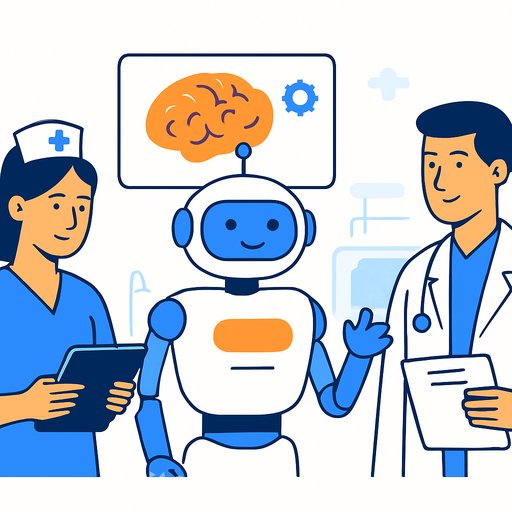
Bengaluru's SuperHealth hospital launched SuperOS last month, an agentic AI system that manages hospital operations end-to-end. The platform handles outpatient consultations, diagnostics, surgical workflows, and discharge summaries across the hospital's flagship location. It processes 15 Indian languages.
This marks a shift in how hospitals use AI. Rather than isolated tools, hospitals are now deploying full-stack systems that touch nearly every operational function.
What's Driving Adoption
Eighty-five percent of healthcare leaders plan to invest in agentic AI within two to three years, according to a Deloitte analysis published in February. Nearly 61% are already building AI initiatives.
The push stems partly from India's doctor-to-patient ratio of 1:811, according to a 2025 government report. Hospitals face pressure to move patients through the system faster while giving medical staff breathing room.
Systems in Use Now
Clearmedi Healthcare, a Noida-based chain, deployed WellnessGPT this year. The system launched with two agents: one for booking appointments and another that routes patients to specialists based on their symptoms. More agents are planned.
St. John's Research Institute in Bengaluru is building a similar system with French startup H Company. It will automate resource allocation and management in a live hospital environment, tailored to the institute's existing technology platform.
Delhi-based Tulu Health launched an AI agent platform in 2025 designed to plug into electronic health records, customer relationship management systems, and WhatsApp. The platform is being tested across multiple hospitals before wider rollout.
Blod.in, a Chennai-based blood management platform acquired by Mumbai's Lytus Technologies, uses AI to forecast blood inventory and optimize last-mile delivery for temperature-sensitive shipments. The company plans to expand to 15 more blood banks and 100 additional hospitals.
What This Means for Operations Teams
These systems reduce administrative burden on clinical and medical staff. They automate scheduling, patient routing, inventory management, and workflow coordination-tasks that typically consume operational hours.
For operations professionals, this means learning to integrate agentic AI into existing hospital systems and managing the transition from manual to automated processes. Understanding how these platforms connect to EHRs and internal databases becomes essential.
The question isn't whether hospitals will adopt these systems. It's how quickly operations teams can implement them without disrupting care delivery.
Learn more about AI for Operations and AI Agents & Automation.
Your membership also unlocks: