
AI news ·
Indian product managers face a growing skills gap as AI reshapes how products are built and managed
Indian product managers aren't worried about AI taking their jobs - they're worried about peers who use it better pulling ahead. The gap between AI-aware and AI-capable is already showing up in hiring and promotions.
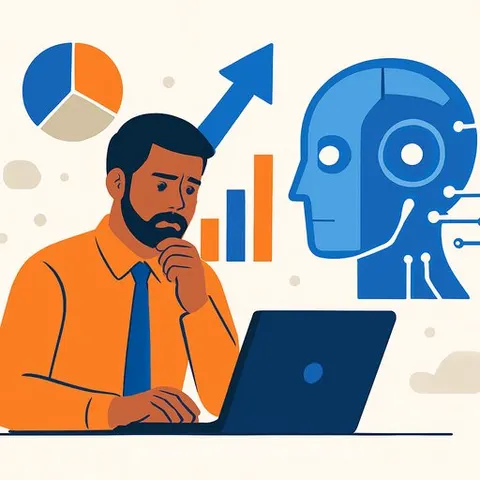
The Real AI Anxiety in Indian Product Management
Product and business managers in India face a specific professional anxiety, and it has little to do with replacement. The fear is of being surpassed by peers who have learned to work effectively with AI.
The divide separates those who understand how AI will reshape products, markets, and business models from those who treat it as another engineering function. The gap is widening fast, and the cost of falling behind will only grow.
The product lifecycle has changed
Prioritisation remains central to product management. But AI has rewritten how products behave after launch.
AI products learn and adapt throughout their lifecycle. Their behaviour may shift unexpectedly. Traditional PM methods built around clear inputs and predictable outputs no longer work. Product managers now need to prepare for changing outcomes, understand feedback loops, and test different scenarios.
AI is already accelerating early-stage development. Product managers use it to speed up ideation, synthesise user research, run competitive analysis, and build prototypes. Companies using these tools report shorter go-to-market timelines and better product-market fit.
Data and AI literacy are now baseline skills
Decision makers across strategy, operations, and growth face the same challenge: navigating a business environment shaped by AI and data-driven decisions.
Managers must ask the right questions of AI-generated insights. They need to understand how data shapes outcomes and apply those insights responsibly. Strong leadership today means interpreting data carefully and evaluating AI-driven recommendations within business context.
As AI becomes embedded in product development, managers are expected to work across engineering, data, design, and business teams. The role extends beyond defining features or managing roadmaps.
Cross-functional fluency matters more than technical depth
AI fluency in product management is not about building models from scratch. It means knowing which AI tools fit specific product goals, what data powers them, where biases or errors may emerge, and how outputs translate into business decisions.
The ability to communicate effectively between technical teams and business stakeholders is becoming increasingly valuable for product professionals. This cross-functional knowledge is what new organisations now expect.
The window is open now
India has a large pool of ambitious product and business managers who will define leadership over the next decade. Their choices today-learning to work with AI systems, using tools that change how they work, and building cross-functional knowledge-will determine their trajectory.
Moving from AI-aware to AI-capable requires action, not reinvention. Companies are already rewarding these skills in hiring and promotions.
Learn more about AI Learning Path for Product Managers or explore resources on AI for Management.