Where AI Meets Education: Why India Is Emerging as a Deep Tech Powerhouse
AI is no longer a side project in education. It's threaded into classrooms, assessments, and teacher workflows. But the bigger shift is deeper: India is moving from using AI tools to building the system-level tech that makes scalable, inclusive, and intelligent learning possible.
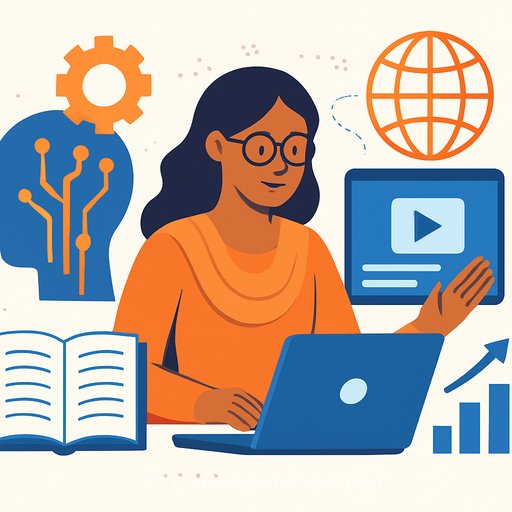
That's the real story. Deep tech is turning education from a set of apps into an operating system for how students learn and how teachers teach-at scale, on affordable devices, and across languages.
What Deep Tech Means for Education
Deep tech focuses on the foundations: new algorithms, efficient operating systems, intelligent models that run well on low-cost hardware, and secure data pipelines. It's not about replacing teachers. It's about embedding intelligence into the backbone of learning systems so educators can focus on teaching, not troubleshooting.
In practice, this looks like regional-language AI models, offline-first learning flows, cloud labs that bring advanced experiments to any classroom, and cybersecurity that protects every learner's data. The aim is simple: personalised, reliable learning that works for everyone-not just those with high-end devices or fast internet.
How the Stack Works Together
- AI and ML: Adaptive pathways, instant feedback, and personalised content at scale.
- System-level computing and OS: Smooth performance on affordable devices; better battery, memory, and app interoperability.
- Edge computing: Local processing for low latency and learning continuity during poor connectivity.
- Robotics and automation: Hands-on STEM projects that teach problem-solving, not just theory.
- AR/VR: Visualising complex ideas-from anatomy to space-without expensive physical labs.
- NLP: Voice assistance, multilingual interfaces, and contextual support for diverse learners.
- Data and security: Strong governance, encryption, and thoughtful data use to keep students safe.
- Hardware and semiconductors: Faster, more efficient devices that bring advanced tools into mainstream classrooms.
- Cloud computing: Virtual labs, simulations, and collaboration without heavy on-site infrastructure.
Why India Is Built for This
Scale and diversity force better engineering. With 250 million students and 800+ million internet users, India is a live testbed for education technology that must work across languages, bandwidth limits, and device constraints. That's why low-power models, multilingual tools, and offline-capable systems are maturing here first.
A young talent base, a fast-growing startup network, and aligned public missions are accelerating progress. Initiatives like IndiaAI and the India Semiconductor Mission are catalysing R&D, infrastructure, and industry-academia collaboration. India isn't just deploying technology-it's building frameworks that others can adopt.
What Changes Inside Classrooms
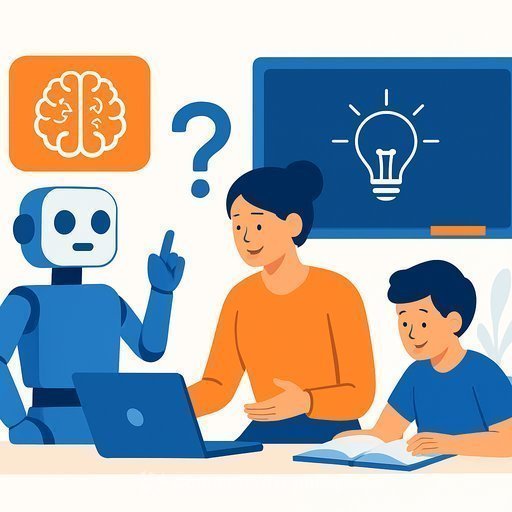
Teachers shift from content delivery to coaching creativity, reasoning, and social skills. AI takes on routine tasks-quizzes, lesson planning, progress tracking-so educators can focus on human outcomes and high-leverage mentoring.
Open, interoperable systems let apps and devices work together. Context-aware AI adapts content by language, level, and region. Cloud labs and simulations bring industry-grade projects into secondary and higher education. Alongside all this, digital ethics, privacy, and responsible use move from side notes to core curriculum.
Practical Steps for Educators and Institutions
- Audit device and OS readiness: prioritise efficiency, battery life, and app interoperability over specs on paper.
- Adopt multilingual and voice-first tools; ensure content works across major Indian languages.
- Prefer offline-first platforms with edge support so learning continues during patchy connectivity.
- Introduce cloud labs for science, coding, and design; start with small modules tied to curriculum outcomes - for coding modules, consider AI Coding Courses.
- Use AI for feedback loops: formative assessments, personalised practice, and remediation plans.
- Train teachers on prompt quality, data use, and AI-assisted lesson design; make this ongoing, not one-off.
- Set clear data policies: consent, storage, access controls, and audit trails.
- Pilot robotics and automation projects to build problem-solving mindsets early.
- Track impact with simple metrics: learning gains, time saved for teachers, and student engagement.
- For structured upskilling, explore curated AI programs for educators via courses by job or the latest AI courses.
The Bigger Picture
Deep tech is recasting education as national innovation infrastructure. Students won't just consume digital tools; they'll learn to build systems, test ideas, and work with real constraints-the same ones industry faces.
With its scale, talent, and policy alignment, India is set to influence how the next decade of learning gets built. The opportunity for educators is clear: adopt system-level thinking, use AI where it saves time and improves outcomes, and prepare learners for a future where building technology is a core skill.
Your membership also unlocks: