
AI news ·
India's GCCs embed AI across healthcare, retail and drug development as multinationals shift strategic work to India
India's tech hubs are embedding AI into core functions at major multinationals-from drug trials to influencer selection. Apollo, Novo Nordisk, and J.C. Penney are among firms running these tools in live workflows.
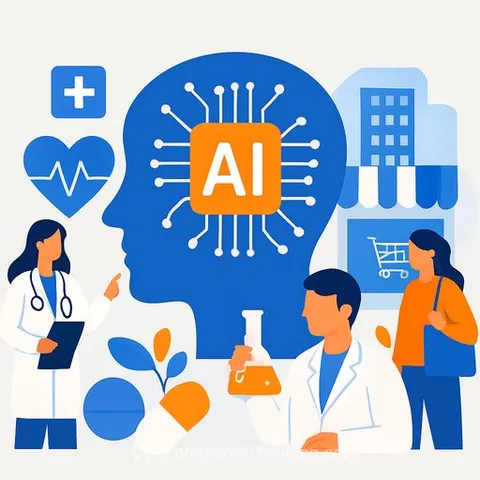
India's Tech Centers Deploy AI Across Marketing, Drug Development, and Clinical Care
Global capability centers in India are embedding artificial intelligence into core business functions at multinational firms, moving beyond back-office work into strategic decision-making across marketing, healthcare, and pharmaceuticals.
The shift reflects how these centers have evolved from cost-efficient outposts into innovation hubs. Companies are now using AI to automate repetitive tasks while improving speed and precision in operations that previously required extensive manual work.
Where AI is Already Running
In healthcare, Apollo Hospitals deployed an AI clinical assistant built with Microsoft. The system gathers patient data and generates insights for doctors, freeing up roughly 20% of their time while improving patient care outcomes.
Kimberly-Clark, maker of Huggies diapers, is using AI tools to identify and evaluate social media influencers for product campaigns. The systems help accelerate marketing workflows and identify audience expansion opportunities.
In consumer retail, Catalyst Brands-which owns U.S. department store J.C. Penney-uses AI-generated imagery to create product visuals and videos from its Bengaluru center. This approach reduces the cost and logistics of physically transporting inventory across geographies for photo shoots.
Pharmaceutical companies are deploying AI across drug development. Denmark's Novo Nordisk uses AI to draft regulatory documents, analyze safety data, and support commercial analytics. Other drugmakers like Amgen and AstraZeneca are using similar tools to identify clinical trial participants faster and reduce safety reporting timelines.
The Strategic Shift for Marketing Teams
For marketing professionals, this trend has direct implications. AI is now handling influencer selection, content creation, and campaign optimization-work that previously fell to marketing teams or external agencies.
The systems aren't experimental. They're embedded in workflows that drive real business decisions and customer acquisition. This means marketers need to understand how these tools work, what data they use, and how to interpret their recommendations.
Enterprise software firm Workday illustrates the broader change. The company's India operations now co-build AI tools for payroll, hiring, and finance alongside global teams, rather than handling isolated modules. This model is spreading across industries.
What This Means for Your Role
As AI for Marketing becomes standard infrastructure, marketers are shifting from executing campaigns to evaluating and directing AI-driven workflows. Understanding Generative AI and LLM tools-how they select influencers, generate content, and analyze audience data-is becoming essential.
The capability centers driving this work are hiring and training staff who can bridge marketing strategy with AI systems. The professionals who understand both the business goals and the technical constraints of these tools will have the most influence over how campaigns actually run.
IBM India is also expanding beyond enterprise software, deploying AI-enabled systems with academic institutions and local authorities. Workday's India president noted the company treats these centers as full innovation partners: "It's about building the entire model together," not assembling pre-built modules.