Higher Education in India: What 2025 Set in Motion - And What You Should Do Now
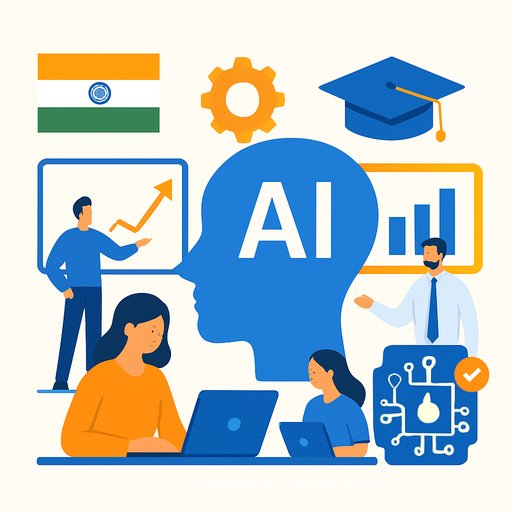
India's Education Ministry has flagged three big shifts: liberalising open schooling, issuing AI guidelines for teaching, and reworking technical education standards to prioritise jobs and entrepreneurship. The Viksit Bharat Shiksha Adhishthan (VBSA) Bill, 2025 is the lever meant to make this possible.
How transformative was 2025? It set the foundation. The real test is 2026 execution: a cleaner regulatory setup, employability as the north star for technical programs, and a wider on-ramp for learners through an expanded open schooling network.
VBSA Bill, 2025 - Why it matters
The Bill, introduced in the 2025 Winter Session, is headed to a joint Parliamentary committee. Officials want it passed by the end of the Budget Session. The proposal would also subsume the functions of the National Council for Teacher Education, simplifying lines of authority for teacher education and implementation.
For administrators, this means fewer silos, clearer accountability, and faster policy rollout-if the transition is managed well.
Technical education: Jobs and entrepreneurship first
Officials have called for technical standards that centre on employability and the ability to start and run ventures. That means curriculum, internships, and assessment must tie directly to market skills, not just credits.
- Map each program to explicit job roles and startup competencies; refresh outcomes annually with industry input.
- Embed work-integrated learning (apprenticeships, co-ops) and capstones that solve real problems for MSMEs.
- Offer micro-credentials for high-demand skills; let students stack them into degrees or diplomas.
- Set placement, apprenticeship, and startup formation as outcome metrics; publish them program-wise.
- Link incubators and innovation labs to coursework, with credits for viable prototypes and fundable ideas.
Teacher education and AI: Clear rules, practical use
Guidelines on AI in teaching are in the works. Expect guardrails on assessment integrity, data privacy, bias, accessibility, and procurement-plus direction on where AI makes sense (lesson planning, feedback, remediation) and where it doesn't (grading high-stakes exams without human oversight).
- Appoint an institutional AI lead; draft an acceptable-use policy for faculty, staff, and students.
- Pilot AI for formative feedback, differentiated support, and lesson preparation; record time saved and learning gains.
- Train teachers on prompt quality, citation, and verification; bake academic integrity checks into workflows.
- Set data governance rules for any AI tool: minimal data collection, clear retention, audit trails, and opt-outs.
- Provide low-tech alternatives for students without reliable devices or bandwidth.
- For structured upskilling, see curated options in AI courses for educators and teams or explore AI Design Courses focused on curriculum and assessment design.
Liberalising open schooling (NIOS): Wider on-ramps, lower dropouts
The Ministry is considering an expansion of the National Institute for Open Schooling (NIOS) so more institutions-not just schools-can host open schooling, including ITIs. This could make flexible pathways mainstream and reduce dropout rates.
NIOS already provides Open Basic Education (for ages 14+) equivalent to Classes 3, 5, and 8, along with secondary, senior secondary, vocational, and life-enrichment programs. Reference: NIOS official website.
- Identify ITIs, polytechnics, community colleges, and NGOs that can serve as NIOS study centres.
- Use RPL (Recognition of Prior Learning) to credit work experience and reduce time-to-completion.
- Offer local-language support, evening/weekend schedules, and modular assessments.
- Integrate open schooling with state scholarship schemes and dropout tracking for targeted re-enrolment.
- Connect vocational open schooling with apprenticeships and local industry demand.
What to prepare for in 2026
- Track formation of the joint Parliamentary committee and invite submissions; prepare your institutional feedback now.
- Plan the NCTE transition: program approvals, accreditation timelines, and data reporting could change.
- Expect new employability-linked standards from regulators; draft bridging modules to close skill gaps fast.
- Budget for teacher training, AI pilots, and work-integrated learning; leverage CSR and state skill missions where possible.
- Upgrade MIS to capture outcomes (placements, apprenticeships, startup activity) at the program level.
Risks to manage
- Quality: keep external examiners, independent audits, and moderated assessments.
- Integrity: proctoring and alternative assessments for AI-heavy contexts; clear misconduct policies.
- Equity: device access, language support, and offline pathways for open schooling and AI use.
- Overlap: define who approves what during the VBSA transition to avoid delays.
- Workload: timetable protected hours for teacher training and course redesign.
Your 90-day checklist
- Constitute a VBSA/AI/Open Schooling task force with clear owners and timelines.
- Audit programs against job roles; add at least two high-impact skill modules per program.
- Draft and approve an AI acceptable-use policy; start two low-risk AI teaching pilots.
- Identify three potential NIOS partners (ITI/polytechnic/NGO) and begin MoUs.
- Sign two new apprenticeship or industry project MoUs tied to credit-bearing courses.
- Publish a one-page stakeholder brief explaining what changes are coming and why.
2025 set the direction. Use early 2026 to convert intent into systems: clear standards, trusted tools, and pathways that carry learners from first credential to first paycheck-or first customer.
Your membership also unlocks: