2026: From pilots to production-AI enters legal workflows in India
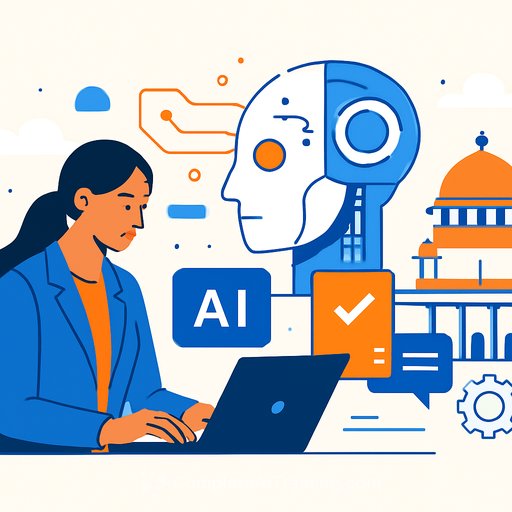
After a year of pilots, India's top law firms are moving from trial runs to everyday use of AI - see AI for Legal resources on governance and firm workflows. Clients want faster turnarounds, deeper analysis, and sharper pricing. The brief for 2026 is clear: fewer new tools, more redesign of how work actually gets done.
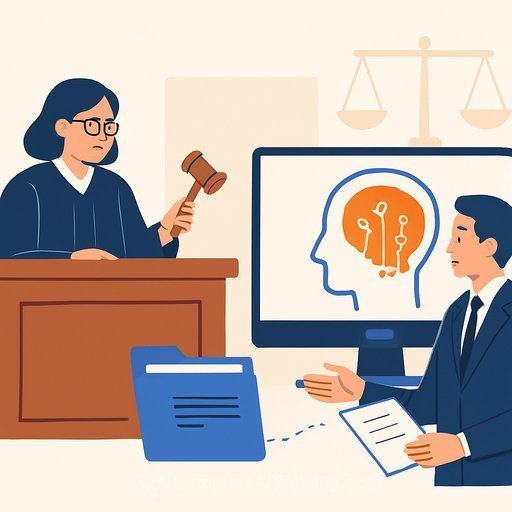
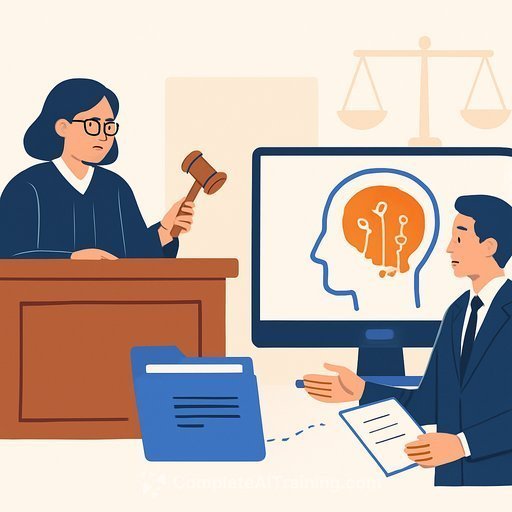
This shift sits next to stricter oversight. A Supreme Court panel is examining guardrails for AI in legal processes, which will influence how firms build and audit their systems. The firms that win will focus on speed, accuracy, predictability-and proof.
What changes in 2026
- Stop buying more apps; rewire workflows end to end.
- Move from "AI can help" to "AI is embedded in how we draft, review, and deliver."
- Treat governance as part of delivery, not an afterthought.
Use cases moving to production
- Due diligence: first-pass issue spotting, clause comparison, and risk tagging.
- Contracts: drafting from playbooks, deviation flags, and negotiation notes.
- Research: source-backed answers with citations and quick authorities check.
- Litigation prep: brief outlines, fact summaries, chronologies, and exhibit lists.
- Knowledge: retrieval over internal precedents and KM notes, not public web guesses.
- Pricing and scoping: matter templates, budget models, and change-order triggers.
Governance that clients will expect
- Data controls: encryption, data residency, zero-retention settings, and PII scrubbing.
- Isolation: firm VPC or equivalent; clear separation between matters and clients.
- Human in the loop: named reviewer, approval steps, and sign-off logs for all AI outputs.
- Evidence: source citations, retrieval snapshots, and versioned prompts for audit.
- Testing: bias checks, red-team scenarios, and accuracy benchmarks against baselines.
- Vendor risk: DPAs, model lineage disclosures, incident SLAs, and kill-switch plans.
Talent and org design
- Practice AI leads: own workflow design, quality gates, and client communications.
- Legal engineers: connect DMS, KM, and model layers; maintain prompt libraries.
- Review pods: senior associate + subject expert for rapid QA and escalation.
- Training: prompt patterns, citation discipline, and tool fluency for every associate.
- Incentives: credit for automation, not just hours; track reuse of playbooks and templates.
Pricing and client conversations
- Be explicit: where AI is used, how it's reviewed, and the impact on fees.
- Shift to fixed-fee or outcome-backed pricing where throughput gains are material.
- Share the productivity dividend while protecting margin with tighter scope control.
- Add AI QA time as a defined task code instead of hiding it in general research.
A 90-day rollout plan
- Pick 3 workflows with high volume and repeatable patterns (e.g., NDA review, diligence checklists, research memos).
- Baseline metrics: cycle time, error rate, rework, and write-offs.
- Design: map steps, insert AI tasks, define human review, and set exit criteria.
- Build: retrieval over firm knowledge, prompt templates, and redaction defaults.
- Pilot: 10-20 matters with daily QA; fix failure modes fast.
- Go-live: publish playbooks, dashboards, and client-facing disclosures.
KPIs that matter
- Cycle time per task and per matter.
- Accuracy vs. gold-standard samples; rework rate.
- Variance: fewer surprises in budgets and timelines.
- Write-downs/write-offs; matter profitability.
- Client satisfaction scores and renewal rates.
What GCs will ask in RFPs
- Which models and controls do you use? How do you separate client data?
- Do you keep audit logs, citations, and prompt histories?
- What human review steps are mandatory? Who signs off?
- What is the fee impact and how will you prove quality?
- How do you handle cross-border data and vendor incidents?
Regulatory watch
Expect more direction on disclosure, source integrity, and auditability as the Supreme Court's panel studies AI use in legal work. Track updates and be ready to align internal playbooks with any formal guidance.
Stack choices that reduce risk
- Private deployment where possible; otherwise enforce zero data retention.
- Retrieval from your KM and DMS; block model calls without source grounding.
- Automated redaction before model input; block uploads from unsecured sources.
- Standard prompts with version control; prohibit ad-hoc prompts for regulated matters.
Bottom line
2025 was about experiments. 2026 is about workflow redesign, measurable quality, and clear billing. Build the guardrails, prove the gains, and make it easy for clients to say yes.
Need structured upskilling for your team? See role-based options here: AI courses by job role.
Your membership also unlocks: