Indonesia courts Indian tech leaders to build a stronger semiconductor and AI stack
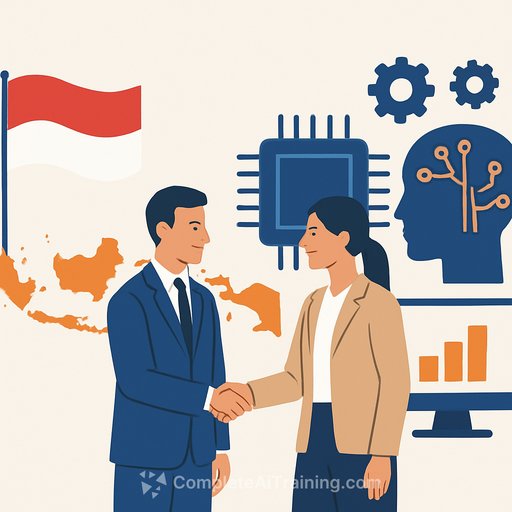
Indonesia is moving to tighten its semiconductor and AI supply chain by exploring partnerships with Indian technology firms. During the AI Impact Summit 2026 in New Delhi (Feb. 18-20), Deputy Minister for Communication and Digital Affairs Nezar Patria met with executives to push for technology transfer, workforce development, and co-building critical infrastructure.
The goal is straightforward: accelerate domestic capability while plugging Indonesia more deeply into the global digital supply chain. For builders and technical leaders, this signals upcoming demand for assembly/testing talent, AI server integration, and data center readiness.
Why this matters for IT & Development
- Closer ties with India's ecosystem could fast-track OSAT (assembly and test) capacity and AI infrastructure builds in Indonesia-new roles, new tooling, and faster procurement cycles.
- Technology transfer talks mean hands-on training, documented processes, and reference architectures that your teams can leverage to shorten implementation time.
- A stronger upstream materials position-silica sand for chipmaking-supports a downstream push into higher value products, building a more resilient local semiconductor pipeline.
Key discussions and partners
- Tata Group (Tata Electronics): Building India's first semiconductor assembly and test facility. Potential cooperation centers on assembly/test capabilities, knowledge transfer, and standing up high-yield lines.
- Netweb Technologies: Known for AI-focused servers. Conversations focused on AI infrastructure buildouts-think GPU clusters, storage, networking, scheduling, and on-prem inference setups.
- Qualcomm, Intel, Salesforce, Meta: Dialogues covered AI deployment, public service modernization, and sustainable digital infrastructure-areas where integration patterns, security, and governance will matter.
Indonesia's materials advantage
Indonesia has abundant critical minerals, including silica sand used in chipmaking. The strategy is to shift from raw exports to downstream processing, capturing more value at home while laying the groundwork for a national semiconductor ecosystem.
For practitioners, expect more attention on vendor qualification, local supply integration, and standards alignment across packaging, testing, and AI server interoperability.
Local talent showing real outcomes
On the sidelines, Indonesian students won the Intel Global Competition Award with two AI projects focused on real-world impact-agriculture and health.
- Agrify: An AI-driven web platform. Its "Plant Doctor" feature diagnoses plant diseases instantly, then generates smart farming schedules based on weather and market data to raise smallholder productivity.
- SITANGGAP: A rapid stroke symptom capture system that analyzes facial expressions and voice to flag early stroke indicators following the international NIH Stroke Scale (NIHSS). The goal: faster public response and better outcomes.
Both projects track to the United Nations Sustainable Development Goals on health and reducing inequality-clear examples of AI solving practical problems at scale.
What this means for your roadmap
- Plan for AI infra growth: Audit power, cooling, and network designs for AI servers. Prepare for mixed GPU generations and multi-vendor stacks.
- Codify knowledge transfer: As cooperation matures, expect playbooks, SOPs, and golden configs. Assign owners for documentation, MLOps patterns, and yield dashboards.
- Focus on interoperability: Standardize around container orchestration, model serving frameworks, and observability stacks that can move between clouds and on-prem.
- Build the talent pipeline: Prioritize training for assembly/test, firmware, HPC networking, and data engineering. Pair senior engineers with trainees to accelerate ramp-up.
- Strengthen data governance: Public sector use cases will demand strict controls. Bake in privacy, model audit trails, and secure supply chain practices from day one.
What to watch next
- Formal MoUs and pilot lines: Signals that assembly/testing and AI clusters are moving from talks to implementation.
- Local vendor ecosystems: Packaging materials, test equipment, and AI server service partners entering the market.
- Skilling programs: Government- or industry-backed certifications focused on OSAT, HPC, and MLOps.
- Public service deployments: Early AI rollouts in citizen services-look for procurement notices and open standards commitments.
Keep building
Indonesia is setting the stage for a sustainable, competitive position in semiconductors and AI. For IT and development teams, the window to prepare is open-tighten your infrastructure plans, upskill your teams, and align with standards that make integration smoother across borders.
Your membership also unlocks: