Indonesia's Media in 2026: AI Speed, Human Judgment, and What PR Teams Should Do Next
Indonesia's newsrooms are entering 2026 with AI embedded in daily workflows. The upside: faster research, cleaner transcripts, quick weather and sports updates, and stronger SEO. The risk: manipulated content and credibility hits if verification slips.
For PR and communications leaders, this isn't a tech story. It's a trust story. Here's what the latest industry dialogue signals for your playbook.
What's changing inside newsrooms
Media expert Nurhassan Murtiaji notes that AI now acts as a daily assistant-helping with rapid research, transcription, and templated updates. That means news moves faster and often with fewer costs, while editors get more signal and less noise.
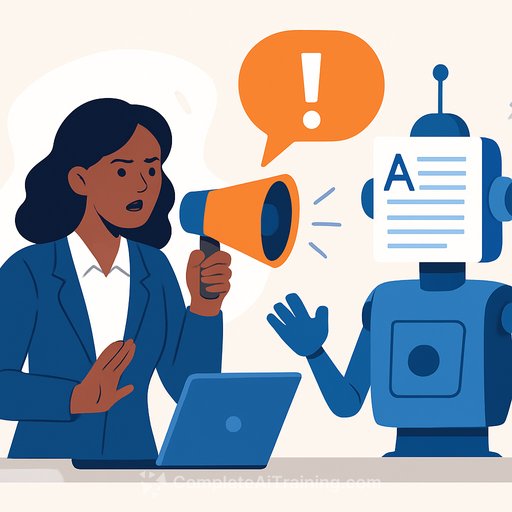
AI practitioner Afis Yafril adds that creative support is growing too: voice cloning for radio, plus original, royalty-free music. The catch is clear-keep a human in the loop. AI can assist, but journalists still provide the context, tone, and judgment audiences trust.
The risk PR leaders must plan for
According to Asep Setiawan, 2026 will be a "battle" year for verification as deepfakes and political disinformation spread across social platforms. Mainstream media will lean harder on law and ethics to filter signal from noise.
- Expect tougher verification standards from editors and producers.
- Assume your content will be checked against the Indonesia Press Law and the Journalistic Code of Ethics.
- Prepare for rapid response when synthetic or manipulated content targets your brand or executives.
Practical playbook for PR and communications
- Set policy and labels: Define when and how your team uses AI. Add clear disclosures when AI assists content creation, especially in public-facing materials.
- Human-on-the-loop: Require editorial checkpoints for sensitive topics, quotes, or data claims. No fully automated publishing for high-stakes content.
- Verification stack: Keep a source log, run reverse image/video searches, and use deepfake detection on critical assets before release.
- Synthetic media rules: Don't use voice cloning or synthetic likeness without explicit consent and legal review. Document approvals.
- Crisis prep: Build escalation paths for suspected deepfakes. Align legal, comms, and security on response windows and public statements.
- SEO with integrity: Use AI for briefs and outlines; keep humans for narrative, nuance, and facts. Fact-check everything that sounds "too neat."
- Data hygiene: Scrub confidential info before feeding tools. Lock vendor settings to prevent training on your inputs.
- Measurement: Track speed-to-statement, correction rates, and sentiment lift. Reward accuracy and clarity-not just volume.
- Upskill the team: Make AI literacy part of onboarding and quarterly training. Curate short courses for PR-specific use cases. See options by role at Complete AI Training.
What this means for your media relationships
Editors will value sources who respect verification, disclose AI use, and send assets that are easy to validate. Provide raw files, timestamps, consent records, and context in your press kits. This reduces friction and builds trust with newsrooms under time pressure.
Expect higher standards for transparency. If AI helped produce a quote, image, or clip, say so. Clear labeling protects your credibility-and helps journalists do their jobs.
Bottom line
2026 looks like a year of digital maturity for Indonesia's media. The winners will move fast while staying verifiable, transparent, and human-led. For PR teams, that's the path to durable trust-and better coverage when it counts.
Your membership also unlocks: