Seven-Minister Joint Decree Sets Clear Guardrails for AI in Education
Jakarta - The Indonesian government has issued a Joint Ministerial Decree (SKB) uniting seven ministries to set practical rules for using digital technology and Artificial Intelligence (AI) across all education levels, from early childhood to higher education, and within family learning at home.
"The Coordinating Ministry for Human Development and Cultural Affairs coordinated seven ministries to regulate AI use in formal education, from early childhood to higher education, as well as informal family settings," said Coordinating Minister Pratikno during the signing in Jakarta.
Key Rules You Need to Know
- Age-appropriate use: Tighter limits on screen time and content for younger learners. More flexibility for older students and higher education.
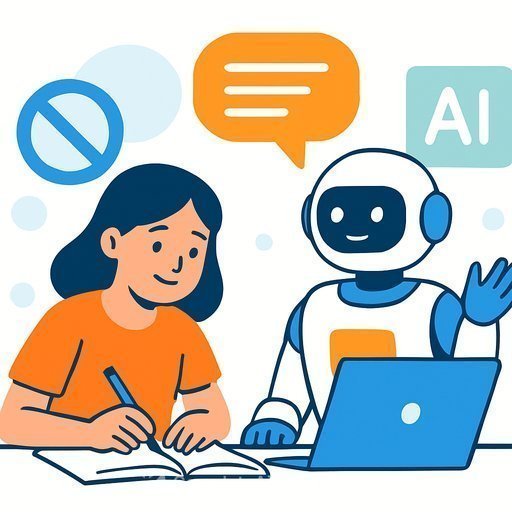
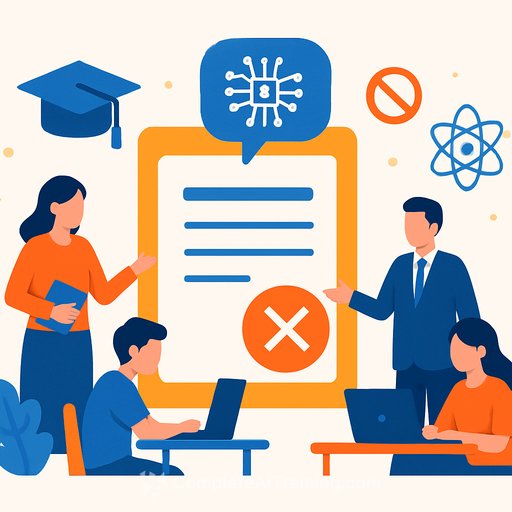
- No "instant AI" in primary/secondary: Tools that give direct answers to assignments are prohibited. AI that supports learning through simulations and guided practice is preferred.
- Scope: Applies to formal schooling and family-led learning at home.
- Purpose: Use the upside of technology while reducing psychological and cognitive risks from early or unsupervised AI exposure.
Who's Involved
This cross-sector policy involves the Coordinating Ministry for Human Development and Cultural Affairs and seven ministries: Home Affairs, Religious Affairs, Basic and Secondary Education, Higher Education, Communication and Digital Affairs, Population, and Women's Empowerment.
What Education Leaders Should Do Next (30/60/90-Day Plan)
- First 30 days
- Issue a school/agency AI memo: define age bands, screen-time expectations, and the ban on instant-answer tools for assignments.
- Appoint an AI lead and form a small working group (curriculum, IT, counseling, legal/compliance).
- Inventory current tools; build an allowlist and blocklist aligned with the decree.
- Update acceptable use and academic integrity policies to cover generative AI.
- Map student data flows; require vendor disclosures on data use, retention, and model training.
- By 60 days
- Run controlled pilots for approved use cases (e.g., science simulations, language practice, skill drills).
- Train teachers on prompt design for learning, classroom supervision, and assessment integrity.
- Set device and content controls (screen time, content filters, age-gating) with IT.
- Establish escalation paths for incidents (misuse, harmful content, data exposure).
- By 90 days
- Adopt procurement standards (see checklist below) and bake them into RFPs and renewals.
- Roll out student digital literacy modules on AI limits, citation, and academic honesty.
- Host family sessions on AI at home: supervision, screen time, and conversation starters.
- Publish impact metrics (learning outcomes, usage patterns, incident counts) and review quarterly.
Procurement and Risk Checklist (Use Before You Buy)
- Feature controls: Disable direct-answer modes for graded work; enable "explain, don't answer" settings.
- Data protection: Clear stance on training on student data (default: no), retention limits, deletion on request, and breach response times.
- Access and safety: Age gating, content filters, profanity/abuse filters, and admin logs for audits.
- Transparency: Documented model sources, update cadence, and known limitations.
- Assessment integrity: Tools must support originality checks and teacher review workflows.
- Equity and inclusion: Accessibility features, local language support, and bias testing reports.
- Interoperability: Admin dashboards, export of prompts/responses, and SSO integration.
- Operational readiness: Uptime SLAs, support response times, security certifications, and offline/low-bandwidth options where possible.
Classroom Uses That Fit the Decree
- Interactive simulations for science, civics, or economics that let students experiment and reflect.
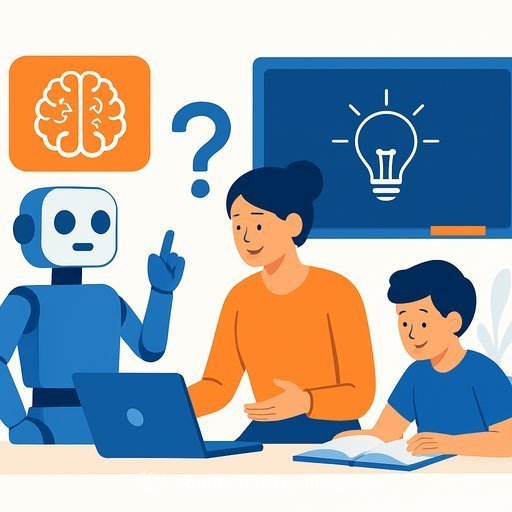
- Guided practice with hints and step-by-step reasoning instead of final answers.
- Language and reading support that explains vocabulary and structure without writing essays for students.
- Teacher co-planning: rubric drafting, question banks, and lesson outlines that teachers edit.
- Career exploration and safe scenario role-plays (with teacher supervision).
Practices to Avoid
- AI-generated answers submitted as student work, including paraphrased content without citation.
- Unsupervised AI use by early learners or use during tests unless explicitly approved.
- Uploading sensitive student data into general-purpose chat tools.
- Relying on unvetted browser extensions or plugins in shared devices.
Governance, Accountability, and Communication
- Publish your AI use policy on the school/agency site and in student handbooks.
- Create an incident channel for teachers, students, and parents; commit to clear response times.
- Run quarterly reviews with representatives from teaching, IT, counseling, and legal/compliance.
- Track outcomes: learning gains, time-on-task, academic integrity cases, and well-being indicators.
- Provide ongoing training and refreshers as tools and risks change.
Helpful Resources
- AI for Education - practical ideas, tool comparisons, and policy notes for schools.
- AI Learning Path for Policy Makers - frameworks for governance, risk, and cross-ministry alignment.
Bottom line: The decree sets a clear line: protect young learners, keep integrity intact, and use AI where it teaches thinking, not cheating. Set your policy now, pilot safely, and buy only what you can control.
Your membership also unlocks: