Infosys Launches AI Agent for Energy Operations: Faster Calls, Fewer Manual Reports
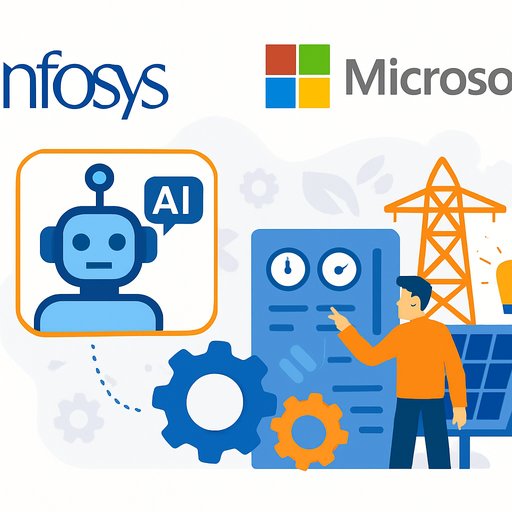
Announced Nov. 6, 2025, Infosys introduced an AI Agent built on Infosys Topaz, Infosys Cobalt, Microsoft Copilot Studio, Azure OpenAI (Foundry models), and ChatGPT4o. The goal is simple: convert real-time field data into clear recommendations, automate reporting, and support safer, more reliable, and more efficient operations.
For operations leaders, this means less time chasing data and more time making decisions that move production forward.
What it does
- Use a conversational interface to pull signal from well logs, images, plots, and tables.
- Auto-generate daily and shift reports with consistent structure and fewer manual edits.
- Provide predictive insights and early warnings so teams can plan work, reduce errors, and avoid delays.
- Surface instant answers to recurring questions, from parameter limits to past incident summaries.
Why operations teams care
- Improved safety and reliability through timely alerts and context-rich recommendations.
- Better wellbore quality and more consistent execution.
- Optimized performance and reduced non-productive time (NPT).
- Fewer manual handoffs and clearer documentation.
How it's built
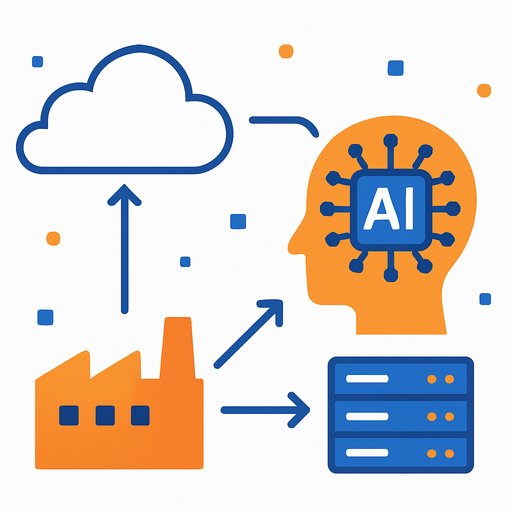
The stack blends Infosys Topaz and Infosys Cobalt with Microsoft Copilot Studio, Azure OpenAI (Foundry models), and ChatGPT4o. Conversational AI sits on top of your existing data sources to deliver insights where work happens.
The outcome: field data translated into actions with less friction and more context.
What the partners are saying
Microsoft's Stephen Boyle noted that partnership is central to applying AI in industry, combining domain expertise with cloud and AI to improve safety, reliability, and operational outcomes.
Infosys' Ashiss Kumar Dash highlighted the volume and speed of operational data in energy and positioned the AI Agent as a way to turn raw inputs into usable insights through conversational AI and predictive analytics.
How to pilot in 60-90 days
- Scope: Pick one asset or field. Define three decisions the assistant must answer in seconds (e.g., parameter setpoints, risk flags, daily plan conflicts).
- Data: Connect real-time streams plus historical reports (well logs, images, plots, tables). Agree on data freshness and retention.
- Workflows: Map daily and shift reports. Codify SOPs into prompt templates and escalation rules.
- Alerts: Set thresholds and recipients. Decide who can acknowledge, override, or escalate.
- Metrics: Track time-to-decision, report cycle time, NPT trend, and rework/incident rates. Review weekly, adjust prompts and thresholds.
Governance and risk
Keep a human in the loop for high-impact calls. Log prompts, data sources, and outputs. Validate model suggestions against engineering judgment before changing setpoints or plans.
The company also included forward-looking statements. For details, see filings with the U.S. SEC.
Where to learn more
- Company details and offerings: Infosys.
- Build team capability: role-based AI upskilling for operations teams at Complete AI Training.
Bottom line: if your team spends hours compiling reports and chasing context across systems, this kind of assistant can cut the noise and keep attention on decisions that protect safety, improve wellbore quality, and reduce NPT.
Your membership also unlocks: