
AI news ·
Infrastructure AI expands autonomous agent platform targeting global facilities management market
Infrastructure AI expanded its Galaxy Agentic Operating System to manage buildings, energy, and utilities through autonomous AI agents. The platform targets hospitals, airports, and commercial real estate in a market worth trillions globally.
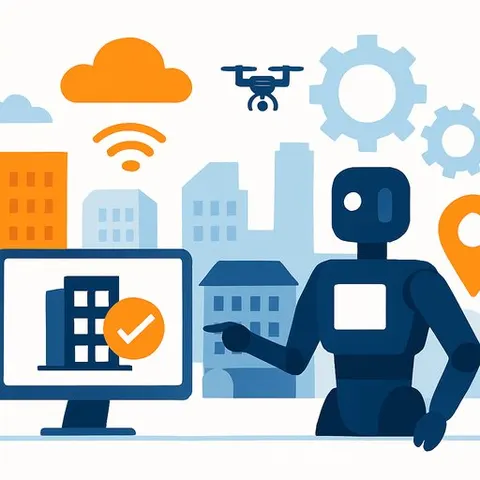
Infrastructure AI Targets Facilities Management with Autonomous Operating System
Infrastructure AI announced an expansion of its Galaxy Agentic Operating System (GAOS), positioning the platform to manage buildings, energy systems, and utilities through autonomous AI agents rather than traditional control systems.
The Somerset, New Jersey company is targeting the facilities management sector-commercial real estate, hospitals, airports, hotels, schools, transportation systems, and utilities-a market spanning multiple trillions of dollars globally. The shift reflects a fundamental change in how buildings and infrastructure operate.
From Manual Operations to Autonomous Management
Facilities management has historically relied on fragmented systems, siloed teams, and reactive maintenance. Operators monitor thousands of alarms and data points manually, responding to problems after they occur rather than preventing them.
GAOS replaces this model with specialized AI agents that autonomously monitor conditions, predict equipment failures, coordinate responses across systems, and execute corrective actions in real time. The system handles HVAC optimization, energy management, predictive maintenance, asset lifecycle management, security, workforce coordination, and procurement.
At the platform's core is the Infrastructure Intelligence Interphase (III), an AI-driven operational environment designed to replace traditional dashboard-based building management systems with autonomous orchestration.
What Managers Should Know
The operational benefits claimed include reduced costs, improved energy efficiency, minimized downtime, extended equipment lifecycles, and greater resilience. The system records all operations and AI-driven actions on a blockchain-enabled ledger to ensure transparency and accountability.
Infrastructure AI is deploying GAOS across commercial real estate, healthcare facilities, industrial operations, airports, utilities, and smart city environments. The company's co-founder Dilip Rahulan said autonomous intelligence embedded directly into infrastructure operations enables facilities to "monitor, learn, optimize, predict failures, coordinate operations, and continuously improve performance in real time."
Managers overseeing facilities operations should understand that AI agents and automation are moving beyond pilot phases into production systems. Understanding how autonomous agents coordinate complex operations-and what governance structures support them-will increasingly affect facility management strategy and staffing decisions.
For operations teams, the shift from reactive maintenance to AI-driven operations means rethinking workflows, data integration, and how human operators interact with autonomous systems rather than replacing them entirely.