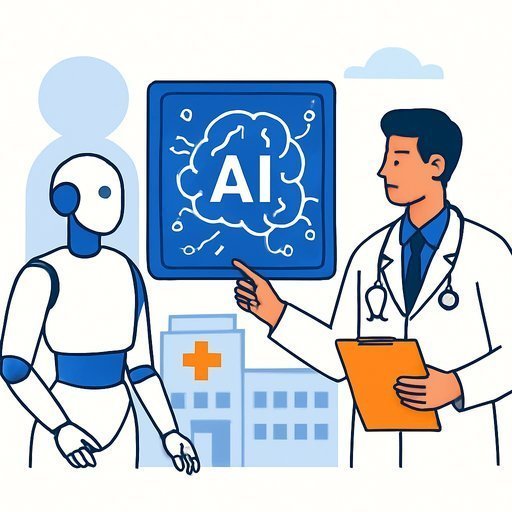
AI meets public healthcare: Inside India's first government AI clinic
Last updated: January 04, 2026 | 14:28 * 3 min read
The Government Institute of Medical Sciences (GIMS), Greater Noida has opened India's first government-run AI clinic. The unit pairs artificial intelligence with genetic screening to flag risk early, interpret imaging and lab results, and estimate recovery outcomes for conditions like cancer and heart, kidney, and liver disease.
"The clinic will use artificial intelligence along with genetic screening to analyse blood tests, imaging scans and other clinical data," said Brigadier (Dr) Rakesh Kumar Gupta, Director of GIMS. He added the initiative will also create opportunities for healthtech startups by bringing innovation closer to both patients and clinicians.
What is an AI clinic?
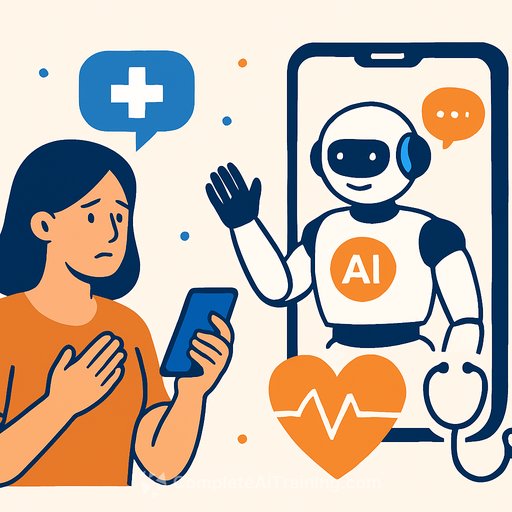
An AI clinic is a service layer inside a hospital or as a standalone unit that uses algorithms and automation to support diagnosis, treatment planning, and ongoing patient management. Systems analyse patient data in near real time and surface decision support to clinicians, improving access and consistency of care-especially where specialists are scarce.
Inside the GIMS model: how it works
- Inputs: X-rays, ultrasounds, CT/MRI, pathology slides, blood tests, and relevant genetic markers.
- AI tasks: Pre-reads imaging, flags abnormalities, prioritises critical cases, auto-structures reports, and generates risk scores and outcome predictions.
- Clinician workflow: Doctors review AI findings, confirm or override, and use insights to triage, counsel patients, and plan therapy.
- Expected impact: Faster reporting, fewer missed findings, more consistent decisions across departments.
How AI clinics improve patient care
- Faster and more accurate medical imaging: AI detects fractures, lung nodules, and subtle tumours sooner and helps prioritise urgent cases. Studies indicate up to 40% efficiency gains for radiologists.
- Smarter pathology: Automated tissue analysis accelerates turnaround and highlights patterns the human eye may miss, letting specialists focus on complex cases.
- Early cancer detection: Lower false positives and negatives in breast and lung screening translate to earlier starts on treatment and better outcomes.
- Personalised treatment: By factoring medical history, lifestyle, and genetics, AI supports dosing, therapy selection, and lifestyle guidance. In oncology, treatment matching has shown 20-25% better success rates.
- Genomics and precision medicine: Large genomic datasets reveal biomarkers and likely treatment response, helping reduce side effects.
- Remote monitoring and prevention: Wearables and apps track vitals and alert care teams to worsening trends, curbing complications and readmissions.
Why this clinic matters
- First of its kind: India's first AI clinic inside a government medical institute.
- Public healthcare focus: Brings advanced diagnostics into the government system, not just private centres.
- Early disease detection: Strong tilt toward preventive and predictive care, beyond treatment alone.
- Startup ecosystem boost: Creates a real-world testbed for healthtech solutions.
- Scalable model: A template that other state-run hospitals can adapt.
Where else are AI clinics being used?
- India: AI tools are present in select private hospitals and labs, but not as a dedicated government clinic.
- Global: The US, UK, China, and South Korea use AI extensively in radiology, pathology, and cancer screening.
- Public systems: The UK's NHS runs AI programs in imaging and early cancer detection, though not always as standalone clinics. See the NHS AI Lab.
Policy and procurement checklist for government hospitals
- Define high-impact use cases first (e.g., chest X-ray triage, stroke CT, breast screening, sepsis alerts).
- Require local clinical validation and continuous quality monitoring; track sensitivity, specificity, and time-to-report.
- Human-in-the-loop by design: clinicians remain the final decision-makers with clear override and audit trails.
- Equity and bias reviews across age, sex, and socio-economic groups; publish performance by subgroup.
- Data protection and consent aligned with the DPDP Act; clear retention, de-identification, and access controls.
- Interoperability with HIS/RIS/LIS and national standards (e.g., FHIR); plan for vendor-neutral archives.
- Cybersecurity hardening, role-based access, and incident response plans.
- Procurement clarity: on-prem vs. cloud, data residency, licensing, support SLAs, and total cost of ownership.
- Workforce enablement: targeted training for radiology, pathology, clinicians, and IT/biomed teams; change management built in.
- Start with a pilot, publish outcomes, then scale in phases based on evidence and budget.
What's next
- Pilot phase: GIMS will monitor performance and accuracy before a wider rollout.
- Expansion potential: The model can extend to other government medical colleges and district hospitals.
- Policy impact: Results may inform national guidelines on AI use across public healthcare.
For health leaders who want to go deeper
- Ethics and governance frameworks: WHO guidance on AI for health.
- Upskilling pathways for clinicians and administrators: AI courses by job role.
Your membership also unlocks: