Inside the Law School's AI Lab: Students Ship a Free Tool for Renters
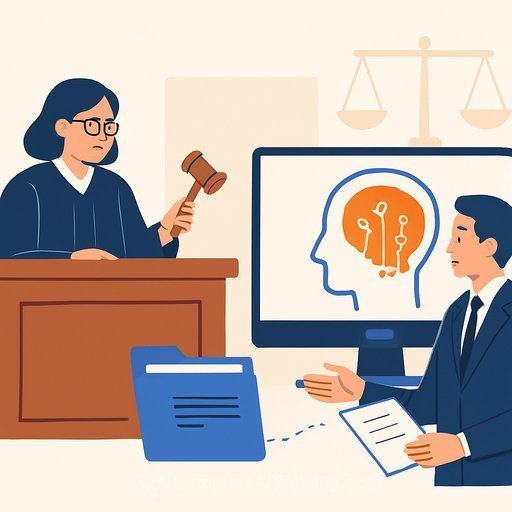
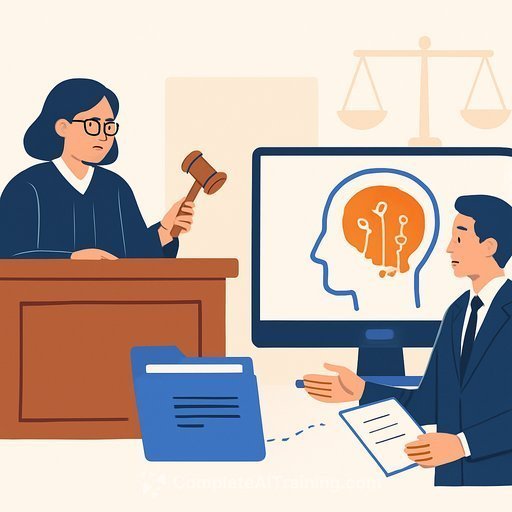
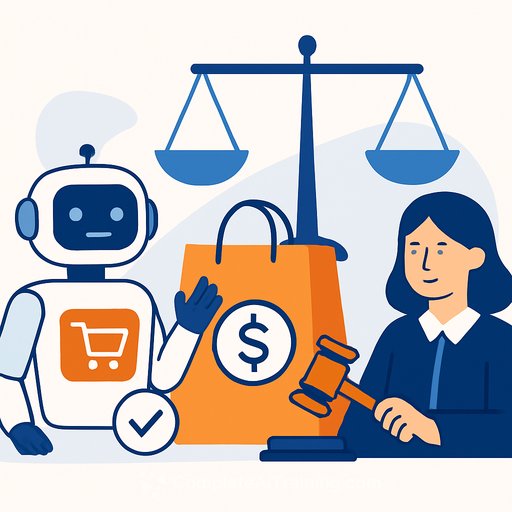
UChicago Law piloted an AI Lab that did what most courses don't: build and release a real product. The result is LeaseChat, a free chatbot that helps renters make sense of leases and tenant rights across jurisdictions.
The workshop was led by Kimball Dean Parker, JD'13, CEO of SixFifty. The focus was simple: teach law students to scope, build, and distribute an AI legal tool with measurable public impact.
Why this matters for legal professionals
Landlord-tenant rules vary by state, city, and even county. Most renters can't afford counsel for routine issues, yet they still need reliable plain-language information.
LeaseChat helps close that gap. And the team made one boundary crystal clear: it provides legal information, not legal advice.
How the lab ran-like a start-up
Students were assigned roles based on their strengths. When Parker learned that student Adan Ordonez could code, he asked him to lead on prototyping. Ordonez built a working version in days using AI tooling.
The class pivoted as models improved over the quarter. Instead of building a custom database, they doubled down on Prompt Engineering because they didn't see meaningful accuracy gains from layering AI over their own data.
Distribution lessons: partnerships to PR
Early outreach to partners and influencers didn't land. So the team shifted to media. Drawing on prior PR experience, student Marley McAliley secured coverage on NBC News Chicago and Telemundo Chicago, which quickly expanded reach.
Student perspectives
"I had this opportunity to make a positive impact in my community in this very tangible way," McAliley said. "With LeaseChat, we had to make it very clear that the tool does not provide legal advice, it can only offer legal information, and that's an important distinction."
LLM student Alfredo Taboada, previously in private practice in Colombia, saw how accessible modern AI has become. "This technology is transformative and every single lawyer needs to have some understanding of it," he said. "I did not realize that the barrier of entry is so low-you get good at AI just by literally using it."
Ordonez put it bluntly: "If you become an expert at using AI tools and you are an expert in the law, you will have double the weapons to work faster and more efficiently."
Practical takeaways you can apply now
- Run short build sprints. Give a small, cross-functional team a clear legal use case, a week, and a decision-maker to remove blockers.
- Test before you build a database. Today's top models plus smart prompts may beat a lightweight custom corpus for many consumer-facing use cases.
- Be explicit about scope. Put "information, not legal advice" everywhere. Add jurisdictional cues, citations where possible, and escalation paths to human help.
- Own distribution. If partnerships stall, try PR, targeted newsletters, and community orgs. One strong media hit can outperform weeks of cold outreach.
- Measure real use. Track session quality, common questions, and failure modes. Use that data to refine prompts, add guardrails, and improve disclaimers.
- Teach the team. Nontechnical lawyers can learn prompt strategy fast. Pair one technical lead with subject-matter experts to move quickly and safely.
What LeaseChat is doing now
Since launch, LeaseChat has analyzed leases daily and assisted hundreds of renters. Parker is working with cities and counties to refer people to the tool and is seeking a long-term host to keep improving it.
The AI Lab returns this fall with a new access-to-justice problem for the next cohort.
For legal teams exploring similar tools
- Start with a narrow scope (e.g., security deposits or late fees) and expand once accuracy holds.
- Add jurisdiction detection early. Even a simple user prompt for state/city reduces wrong turns.
- Institute human review for edge cases. Offer clear handoffs to legal aid or pro bono clinics.
- Document known limits. Publish model version, last update date, and known weak spots.
Helpful resources
For statutory overviews and renter rights basics, see the U.S. Department of Housing and Urban Development's tenant resources: HUD Tenant Rights.
For guidance on building and governing legal AI tools, see curated materials on AI for Legal.
If you're upskilling your team on prompt strategy and practical AI for legal work, browse curated programs by role: Complete AI Training - Courses by Job.
The bottom line
This lab proved that small legal teams can ship useful AI tools fast-without perfect data pipelines-if they focus on a clear problem, strong prompts, and disciplined distribution. And they can do it while keeping ethical lines bright and client interests first.
Your membership also unlocks: