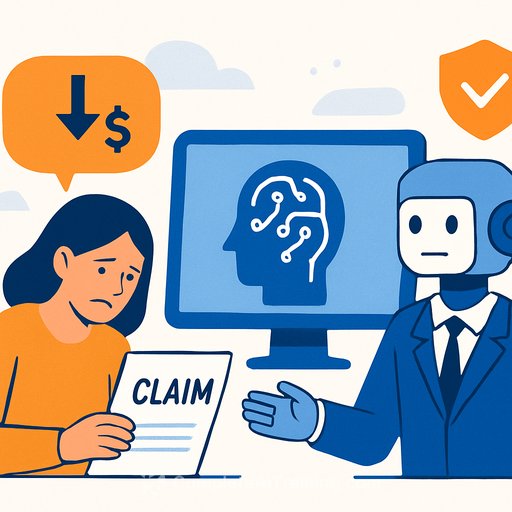
Insurance Claims Now Processed by AI-and Payouts Are Shrinking
Insurance companies increasingly use artificial intelligence to evaluate claims instead of human adjusters. These algorithms analyze crash reports, medical records, vehicle damage, and claim histories to calculate payouts and flag suspected fraud. The result: faster decisions and lower compensation for claimants.
AI Algorithms Generate Systematically Lower Offers
Insurance insiders report that AI-generated payouts are significantly smaller than those a human adjuster would approve. The algorithms operate within fixed mathematical formulas and cannot account for case-specific factors that adjusters consider.
This creates a compounding problem. As claimants accept low AI offers without pushback, the average payout for that claim type drops. A truck accident valued at $150,000 by a human adjuster might be assessed at $100,000 by AI. Once enough victims accept the lower amount, that becomes the new baseline-and the original higher standard disappears from institutional memory.
Most claimants assume the AI offer represents fair value because they lack context to challenge it.
Fraud Detection Flags Legitimate Claims
AI systems deny claims at higher rates than human reviewers, citing suspected fraud. Insurance fraud does cost the industry billions annually, but algorithms cannot distinguish between genuine patterns and legitimate ones.
Multiple claims within a short period may trigger fraud flags, even when each claim is valid. A human adjuster can evaluate the specific details. An algorithm simply recognizes the pattern and denies coverage.
Damage Assessment Misses Hidden Problems
AI analyzes vehicle damage photos by comparing them to similar accidents. This approach fails when internal damage exists despite minor external signs. A parking lot bump can misalign a vehicle's suspension. Damage to one component often cascades to adjacent parts in ways that vary by model.
The algorithm sees a scratch and estimates a low repair cost. The actual damage runs deeper.
Training Data Perpetuates Historical Bias
Machine learning algorithms reproduce patterns from their training data. If past claims data undervalued certain injuries or claim types, the algorithm will repeat those decisions at scale.
Subjective factors like pain, long-term complications, and quality-of-life losses resist mathematical formulas. Yet these damages drive the actual value of a claim. When an algorithm cannot quantify them, they disappear from the calculation.
Legal Representation Remains Essential
AI claims processing is now standard across the industry. Challenging an algorithmic decision requires presenting evidence, expert testimony, and legal arguments that override the initial estimate.
An attorney increases the likelihood of higher compensation by introducing factors the algorithm cannot weigh. Every case has a maximum payout; skilled negotiation moves the final amount closer to it.
For insurance professionals managing claims or claimants navigating the system, understanding how AI shapes these decisions is critical. Learn more about AI for Insurance and AI for Legal to better understand algorithmic decision-making in this space.
Your membership also unlocks: