Why insurers are ending "silent AI" coverage
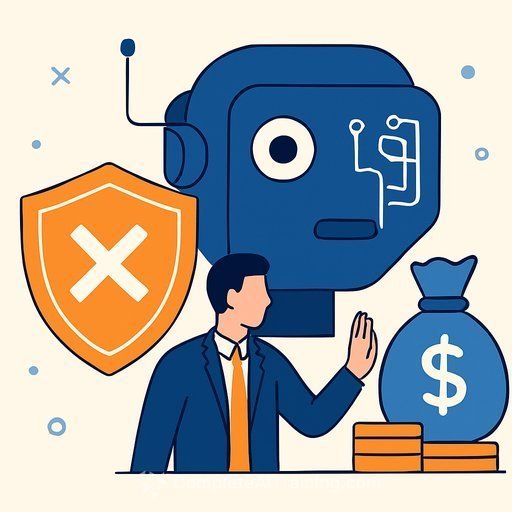
AI is changing risk profiles fast, and carriers are phasing out "silent AI" coverage that once sat implicitly in cyber, liability, and professional indemnity policies. Just like early cyber, losses have been absorbed under traditional wordings, but ambiguity is creating uncomfortable gray areas at claim time.
The market is moving to explicit endorsements and exclusions that name AI, define triggers, and set boundaries. A few standalone AI products are emerging for SMEs, while large tech firms often self-insure. As claims data improves, AI risks will fold back into mainstream lines with clearer terms and pricing.
What "silent AI" looked like
- Cyber: Network security and privacy triggers sometimes pick up AI-related incidents, but first-party data loss and intangible asset impairment are often outside scope.
- Tech E&O/PI: Algorithmic errors, outages, or service failures can sit here, yet wording may not squarely capture autonomous decision-making or model drift.
- General Liability: Bodily injury and property damage are in play, but pure financial loss is typically excluded-leaving pricing errors or allocation mistakes uninsured.
Where the gaps appear
- Is the loss caused by an "autonomous" decision or human oversight? Many wordings don't say.
- Model error versus implementation error-coverage can hinge on definitions that weren't written with AI in mind.
- Training data issues (IP, privacy) and first-party exposures often fall between policies.
- Pure financial loss, loss of use, and algorithmic bias claims can be partially or fully outside cover.
What's changing in policy wordings
- AI-specific endorsements/exclusions: Defining "AI system," "autonomous decision," and "algorithmic error," with clearer triggers.
- Scope clarity: Tighter terms around first-party vs. third-party loss, especially data loss, business interruption, and intangible asset impacts.
- Dependency mapping: Clearer treatment of third-party models, APIs, and AI service providers in "computer system" and "outsourced IT" definitions.
Underwriting is getting deeper
- Detailed questionnaires on AI governance, human-in-the-loop controls for high-impact decisions, model validation, and monitoring.
- Evidence of data provenance, vendor due diligence, incident response plans, and audit logs for explainability.
- Carriers acting as risk partners-coverage contingent on maintaining specific controls and oversight.
Regulation is setting the floor
Rules will drive liability allocation and disclosures, especially for "high-risk" AI. Expect wordings to align with regulatory definitions and documentation requirements.
- EU AI Act: classification, obligations, and enforcement will influence risk transfer and claims handling. Read the overview.
- NIST AI Risk Management Framework: fast becoming a reference for governance controls. See the framework.
What to do before your next renewal
- Map your AI use cases: For each system, document purpose, decision criticality, autonomy level, data sources, third-party providers, and fail-safes.
- Trace coverage triggers: Align use cases to cyber, tech E&O/PI, GL, and any standalone AI endorsements. Flag first-party data loss, pure financial loss, and IP/privacy exposures.
- Tighten governance: Human-in-the-loop for high-impact decisions, model testing and bias checks, output monitoring, and red-teaming. Keep audit trails.
- Prep an underwriting pack: Architecture diagrams, RACI for AI oversight, policies, testing evidence, KPIs (accuracy, drift, bias), incident playbooks, and vendor contracts with indemnities.
- Review wording line by line: Definitions of AI, autonomy, "computer system," data, and "bodily injury." Watch for new exclusions and sublimits on algorithmic decisions.
- Choose a placement strategy: Broaden cyber and tech E&O with AI endorsements or consider a standalone AI product if you're an SME with concentrated AI exposure.
What this means for carriers
- Invest in claims taxonomy for AI-related events to build credible pricing and reserving data.
- Standardize definitions and questionnaires; train underwriters and adjusters on model risk and AI failure modes.
- Link capacity and pricing to verified controls; expand risk engineering for AI-enabled operations.
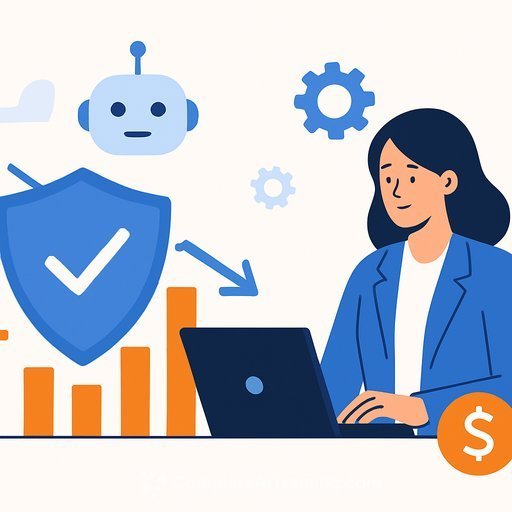
Clearer policy language, stronger governance, and better underwriting data will reduce uncertainty and keep coverage aligned with real AI risk-so insurance can do what it does best: support safer adoption without surprises at claim time.
If your underwriting, claims, or risk teams need practical AI literacy, see curated learning paths by role: AI Learning Path for CIOs, AI Learning Path for Regulatory Affairs Specialists, and AI Learning Path for Project Managers.
Your membership also unlocks: