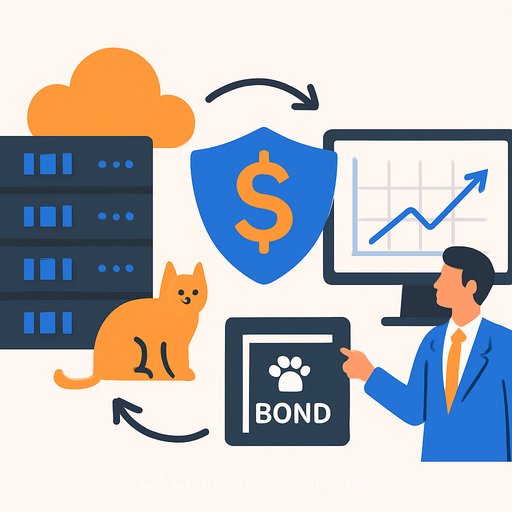
Insurers tap hedge funds and catastrophe bonds to cover AI data centre risks
Insurance companies are turning to hedge funds and private capital firms to help cover the mounting risks tied to massive AI data centre projects. As billions flow into infrastructure spending, traditional insurance coverage has proven insufficient to handle the scale of potential losses.
Insurers are creating catastrophe bonds-financial instruments that allow investors to absorb part of the risk in exchange for interest payments. These special investment vehicles are designed to attract alternative capital sources that traditional insurance alone cannot provide.
Lenders financing new data centres are driving this shift. They cannot secure enough insurance protection against fires, floods, cyberattacks, and other disasters. Many projects now cost tens of billions of dollars, far exceeding what insurers can cover independently.
What catastrophe bonds do
Catastrophe bonds work by transferring insurance risk to investors. Buyers receive interest payments on the bonds, but if a specified disaster occurs and causes large losses, the insurer can use the invested funds to pay claims. Investors then lose part or all of their principal.
Hedge funds, private equity firms, and some retail investors have increasingly bought these bonds, pushing sales to record levels in recent months. The instruments offer higher returns than government or corporate bonds.
Data centre risks insurers face
Banks and lenders worry about multiple threats: fire or flood damage, loss of expensive semiconductor chips, project cancellations, construction delays, and disruptions to electricity or water supply.
Joe Peiser, head of risk capital at insurance broker Aon, said insurance-linked securities tied to data centres are likely to become more common as demand for coverage increases.
New bond structures for data centres
Insurers are considering issuing catastrophe bonds that could provide as much as $1 billion in coverage for a single data centre or a group of facilities. These bonds would focus primarily on severe natural disasters such as earthquakes or hurricanes.
Insurers are also planning alternative investment structures that would allow investors to take on other risks, including cyberattacks and business interruption.
Uncertainty remains
Data centres face several unresolved questions. They can become targets for cyber or physical attacks. Long-term demand for computing power and data storage may not match the scale of current investments.
For insurance professionals, understanding these new financial structures is becoming essential as the industry adapts to cover infrastructure risks at unprecedented scale. Learn more about AI for Insurance and AI for Finance to stay current on how technology is reshaping risk management and financial instruments.
Your membership also unlocks: