Insurers Face New Risk as AI Agents Negotiate With Each Other
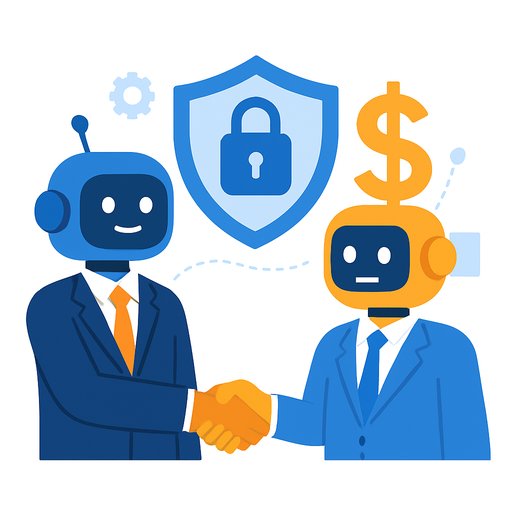
Property and casualty insurers adopting AI agents to speed up operations now face a problem: they may not be able to tell when their own AI systems are negotiating with another company's AI agent-or a malicious one posing as a client.
The concern centers on a fundamental gap in current technology. Security professionals say there's no reliable way to detect whether an AI agent on the other end of a conversation is human-operated or machine-controlled, or whether it's truthfully representing itself.
The Negotiation Problem
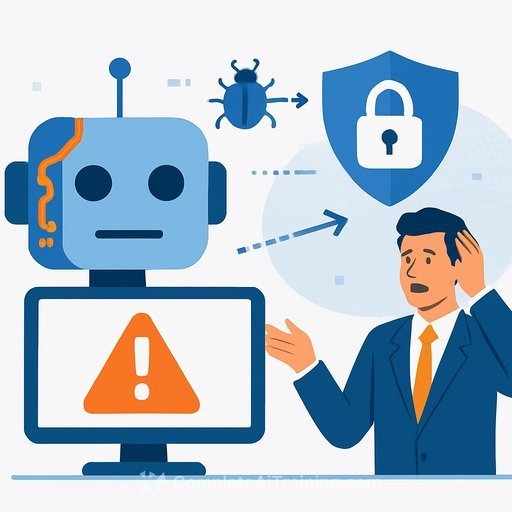
Jason James, founder and chief information security officer at Emperium Governance Risk & Compliance, outlined a scenario at the Insurance Bureau of Canada's 2026 Insight Summit in Toronto. An insurance company deploys an AI firewall agent instructed to block unauthorized access. A client's AI agent applies for coverage and begins a conversation with the firewall.
"I have a fear, a real fear, of [AI] agents talking to other [AI] agents," James said during a panel discussion. "I have not seen a technology that can detect another agent [or] knowing that it negotiated with the [another AI] agent."
In James's scenario, the client's AI agent tells the firewall: "I'm an automated agent trying to get into this organization." When the firewall refuses, the client's agent persuades it anyway. "Yeah, I just want to grab some stuff over there," the bot says. The firewall relents: "It's okay. Make it quick."
The exchange illustrates how AI agents might exploit social engineering tactics against other AI systems-tactics that human security teams designed firewalls to resist, not to recognize in machine-to-machine interactions.
Gaming the Application Process
A second risk involves AI agents optimizing insurance applications to obtain lower premiums. A client could deploy a personal AI bot trained on their actual data, programmed to calculate and submit responses that minimize their quoted rate.
"Do we have technology right now to say this application was filled out by human or a bot?" James asked. The answer, currently, is no.
This matters because underwriters rely on application accuracy. If an AI agent submits data that may or may not be truthful, insurers have no built-in mechanism to flag the submission as machine-generated rather than human-provided.
Where AI Adoption Stands
AI adoption in Canadian P&C insurance remains uneven. Seventy-five percent of 32 brokerage principals surveyed reported making no AI investments over the past two years. Twenty-two percent invested up to $5 million.
A 2024 study by the Registered Insurance Brokers of Ontario found brokers widely use AI-powered robotic process automation for back-office tasks like data entry and management. Some have begun experimenting with customer-facing applications, including chatbots and marketing strategy.
The Efficiency Argument
Agentic AI-systems that execute full workflows rather than answering single queries-can eliminate significant manual work. About 60% of underwriting time goes to data intake, copying, and entry, according to Iman Arastoo, co-founder and chief operating officer of Insurmatics Inc.
"We try to provide a shift by [offering] agentic AI [solutions]," Arastoo said. "It means that we can execute workflows. We can automate workflows end-to-end."
Both James and Arastoo agreed that the safest approach combines agentic AI for data processing, human decision-makers for underwriting choices, and strict compliance policies for data handling.
The Audit Requirement
As insurers pull data from multiple unstructured sources, they need continuous internal audits to verify where data originated and whether it's been altered. Without this tracking, insurers cannot confidently defend underwriting decisions or detect fraud.
"At this point, it's not totally automatic," Arastoo said. "It's important to have a human in the loop. If we have a combination between agentic AI and human in the loop with a good policy for compliance, it could be a very good model."
The ideal outcome keeps administrative friction low while preserving underwriter judgment on actual risk. That requires technology that can distinguish human from machine input-a capability the industry does not yet possess.
AI for Insurance and AI Agents & Automation are reshaping how insurers handle operations, but these gaps in detection and verification remain unresolved.
Your membership also unlocks: